
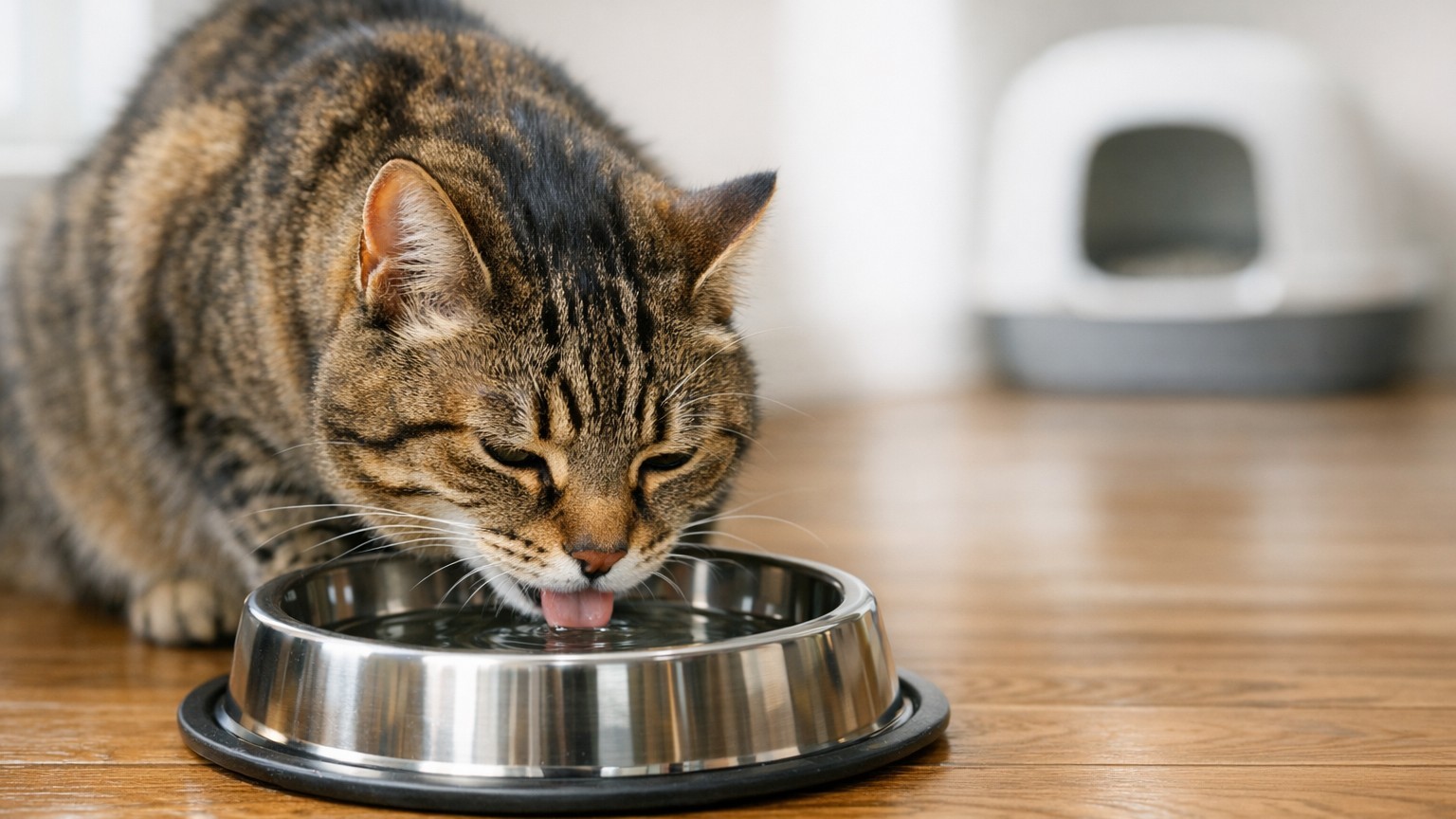
The litter box and the water bowl, side by side in a neat little corner, it seems logical, space-saving, tidy. Millions of cat owners do it. The problem is that cats have spent thousands of years evolving to find exactly that arrangement deeply, instinctively wrong. And the consequences, forming in silence over months and years, can be genuinely serious.
Key takeaways
- Your cat’s instincts are screaming that water near the toilet is contaminated—even though it’s perfectly clean to you
- Chronic dehydration from poor water placement sets the stage for a painful, sometimes fatal urinary emergency
- The fix costs almost nothing, but the consequences of ignoring it can mean emergency vet bills and serious kidney damage
A survival instinct your cat never forgot
Cats instinctively separate their food and water from potential sources of contamination. In the wild, they would carry prey away from water sources to prevent their drinking water from being tainted, a behaviour that persists strongly in domestic cats. The litter box, in your cat’s mind, represents exactly that kind of contamination risk. Feline behavioural experts recommend placing several water bowls filled with fresh water in different locations around the home, specifically away From the Litter box, because that is a source of bacteria your cat will naturally avoid.
Cats instinctively avoid standing water for several reasons, the most important being that stagnant water can harbour viruses and bacteria, while running water is usually much cleaner. Combine that with proximity to a toilet area, and you have created a water station your cat’s brain is essentially wired to refuse. When bowls sit near the litter box, odours can drift into the water, and many cats simply refuse to drink from water that smells wrong, no matter how clean it looks to us. The cat isn’t being difficult. It’s being a cat.
There’s an added layer to this instinct that many owners miss: cats are descendants of desert-dwelling predators, and their bodies adapted to survive in arid environments where water sources were scarce and often contaminated. To avoid ingesting bacteria and parasites that thrive near food sources, wild cats developed a natural instinct to keep their drinking and eating areas separate. That instinct is still running, full speed, inside your sofa-dwelling tabby.
What forms in silence when a cat doesn’t drink enough
A cat drinking less than it should doesn’t immediately look unwell. That’s precisely what makes this so insidious. Unlike dogs, cats often fail to recognise when they need to drink, making it easy for them to become dehydrated. Low water intake leads to concentrated urine, and concentrated urine sets up the ideal conditions for crystals and stones to form in a process called urolithiasis.
Waste materials become concentrated inside the bladder, which is especially common if a cat is dehydrated or eating primarily dry food. These crystals can only be seen under a microscope, but over time they can get bigger, eventually becoming stones as large as the bladder itself. Crystals and stones have the potential to change the flow of urine and can result in kidney damage or a complete urinary blockage, which can be fatal in cats. A blockage is not a slow, manageable problem. Urinary blockages arising from larger stones are a medical emergency. A partial blockage is painful; a complete blockage prevents the release of urine entirely, which is fatal if left untreated.
Feline lower urinary tract disease (FLUTD) is an umbrella term used to describe a group of problems associated with the lower urinary tract of cats, usually seen in middle-aged, overweight cats that get little exercise and have little or no outdoor access. Cats may be predisposed to these conditions through dehydration, especially when fed kibble-only diets, stress, obesity, and inappropriate diets. The placement of that water bowl, next to the litter tray for years, quietly nudging your cat away from hydration, fits neatly into that risk profile.
Chronic dehydration increases the chance of a cat developing urinary tract problems. Without the optimal amount of water flowing through the urinary tract, bacteria have an opportunity to grow and multiply. Always consult your vet if you suspect your cat has any urinary symptoms, this is not something to manage at home alone.
Practical changes that actually work
The fix is simpler than the problem. Put your cat’s food bowls somewhere other than right next to the litter box. But distance matters more than most owners realise. Feline behavioural guidance suggests moving water sources well across the room, not just a few feet away. Place water bowls in various locations throughout your home, away from food bowls and litter boxes, this gives your cat multiple opportunities to drink and caters to their preference for choice.
Cats tend to drink more from running water, so a pet fountain can help. Feeding more wet food also naturally boosts hydration and keeps urine diluted. Cats are designed to get most of their water from their food source, wild prey is about 70% water. Most tinned food contains at least 75% water, while dry food contains only around 10%. If your cat is on an exclusively dry diet, this gap is significant.
The bowl material matters too. Stainless steel or ceramic are ideal, as they are durable, hygienic, and odour-free. Plastic bowls can absorb smells and scratch easily, harbouring bacteria and deterring cats from drinking. Bowls that are too deep or cramped can cause “whisker fatigue,” a sensory overload that deters cats from eating or drinking comfortably. A wide, shallow bowl in a quiet corner, far from the litter tray, is the kind of upgrade that costs almost nothing but changes everything.
Warning signs you should not ignore
Cats suffering from urinary tract problems often display frequent urination, straining to urinate, blood in the urine, and urinating outside the litter box. In some cases, a cat may also show signs of pain or discomfort while urinating. These symptoms should never be ignored, as they can indicate serious underlying health problems requiring prompt veterinary attention.
A dirty litter box can also contribute to urinary tract infections in cats, since bacteria from waste can cause infections, and cats may hold their urine to avoid a dirty box, leading to bladder irritation. Scooping daily and deep-cleaning the tray weekly is not optional hygiene, it directly reduces the risk of illness. Scoop at least once a day. Combine that with a water bowl placed properly across the room, and you are doing far more for your cat’s long-term health than any supplement or fancy food topper could achieve.
One detail worth knowing: the annual incidence of FLUTD in British cats is believed to be around 1%. That sounds modest until you consider how many cats are quietly symptomatic without their owners realising, a cat drinking too little, a litter box they find unpleasant to use, urine becoming gradually more concentrated over months. The biology is patient. The damage accumulates long before anyone sees a sign.
Sources : justcatcafe.com | avma.org