
Steatitis. That’s the word the vet used, and it’s the medical term for something far more brutal than it sounds: your cat’s own body fat turning hard, inflamed and painful, simply because of a daily tin of tuna. If you’ve been sneaking your cat tuna as a “treat” every single day because those pleading eyes are impossible to resist, you’re not alone, and you’re not a bad owner. But you might be doing quiet, cumulative damage that takes months to surface.
Key takeaways
- A common daily treat is triggering a painful inflammatory condition in cats’ body fat that vets see regularly
- Mercury builds up silently in your cat’s system, causing neurological symptoms that develop so gradually you might miss them
- Plain tuna lacks essential nutrients cats need, and can create a behavioral trap that makes them refuse balanced food
The condition hiding behind those puppy-dog eyes
When a cat eats a lot of unsaturated fats without adequate vitamin E to counteract them, the fat stored in its body becomes inflamed, a condition called steatitis or yellow fat disease that causes the cat’s body fat to harden into painful, lumpy deposits under the skin. This isn’t a rare fluke reaction. Research published in The Journal of Nutrition confirmed the direct link: cats fed diets containing tuna oil without sufficient vitamin E developed steatitis, while cats given vitamin E alongside the tuna oil were completely protected. The mechanism is almost cruelly simple. Tuna is packed with polyunsaturated fatty acids, brilliant for a cat’s coat in small doses, but it’s naturally low in the vitamin E needed to stop those fats oxidising once they’re stored in the body.
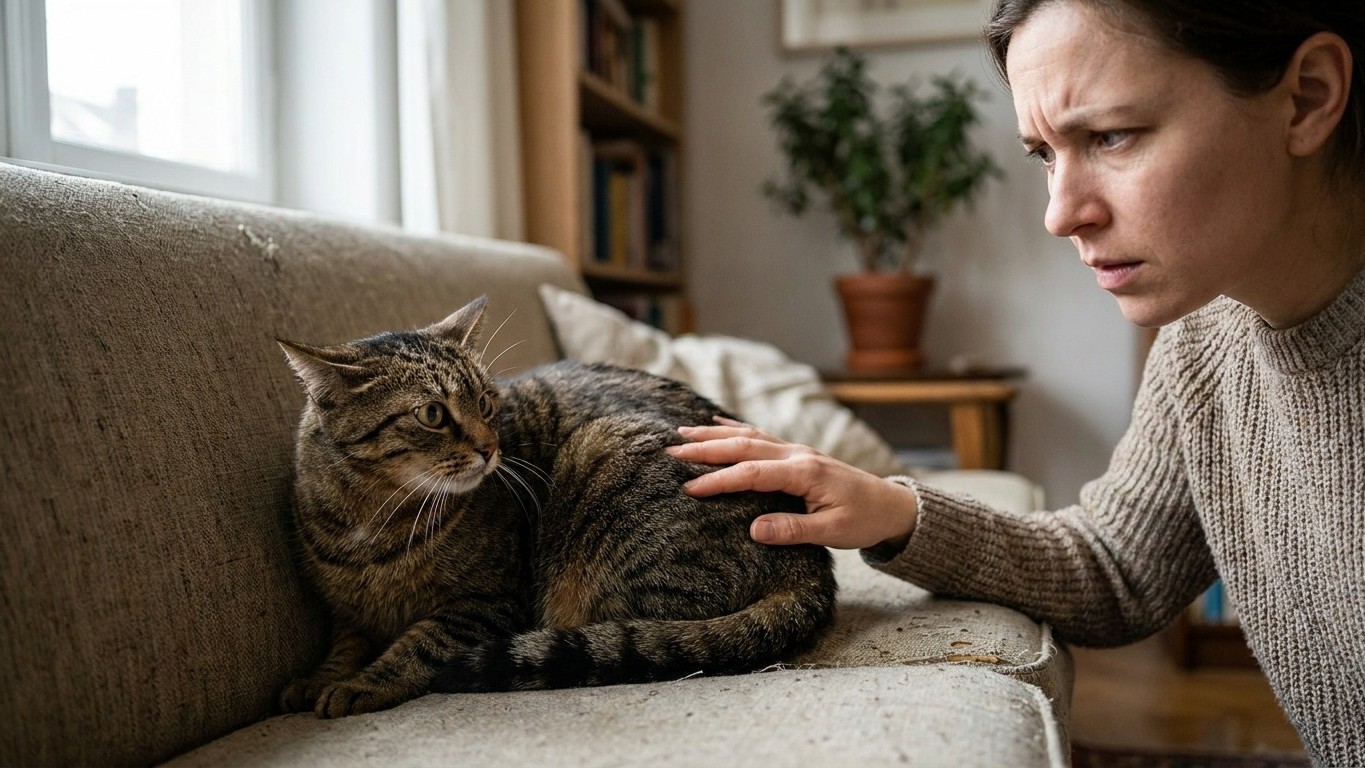
The result is that the cat’s own body fat turns yellow, hard, and painful to the touch, with affected cats becoming lethargic, painful when handled, especially around the abdomen and chest, and sometimes stopping eating entirely. Vets don’t consider this some obscure textbook curiosity, either. This is not a theoretical risk; veterinarians regularly see steatitis in cats whose owners feed them a tuna-heavy diet out of love. That last bit stings a little, doesn’t it? Out of love. That’s exactly how this happens: nobody sets out to hurt their cat with a “healthy” fish treat.
Mercury: the slow, invisible build-up
Steatitis isn’t the only thing brewing under the surface of a daily tuna habit. Tuna sits high on the ocean food chain, which means it accumulates methylmercury from every smaller fish it’s eaten over its lifetime. When a cat eats tuna as its main diet, it ingests far more mercury on a body-weight basis than a human does, so out of concerns about mercury poisoning, an expert in veterinary nutrition advises against feeding cats tuna on a daily basis. Given that an average cat weighs roughly the same as a bag of sugar, a serving that seems trivial to us can represent a genuinely significant dose for them.
Chronic mercury exposure in cats can cause hindleg rigidity, tremors, lack of coordination, abnormal behaviour, blindness, and convulsions, and these symptoms develop gradually, which makes them easy to miss in the early stages. That gradual creep is precisely why so many owners don’t connect the dots until a vet does it for them. Not every tuna is equal here, either: chunk-light (skipjack) tuna has less than half the mercury of albacore. If your cat has been having the “posh” white tuna every day, the risk is considerably steeper than with the cheaper tinned stuff. Interestingly, farmed tuna contains lower levels of mercury than wild-caught fish, and chunk light tuna made from smaller fish like skipjack live in shallower waters and consume less prey during their lifetime, so mercury concentrations are significantly lower.
Beyond the two big culprits: taurine, thiamine and a fussy eater for life
Even setting aside steatitis and mercury, plain tuna simply isn’t built to be a cat’s dinner. Cats require taurine, an amino acid essential for heart health and vision, and while tuna contains some, it’s not present in amounts sufficient to meet a cat’s total daily needs when used as a primary food source. Feed it too consistently and the nutritional foundation starts to crack. If tuna displaces a nutritionally balanced cat food, a cat can develop thiamine deficiency within weeks. Thiamine, vitamin B1, keeps the nervous system running properly, and symptoms of thiamine deficiency include loss of appetite, poor coordination and twitching, with the most common sign being that cats can bend their neck downwards so their chin almost touches their chest.
Raw tuna makes matters worse still, since tuna contains an enzyme called thiaminase that breaks down thiamine, though cooking largely neutralises this particular threat. Then there’s the behavioural fallout, which is the trap that got you here in the first place. Tuna has a strong, pungent smell and rich flavour that many cats find irresistible, and cats are drawn to the high protein content and distinctive scent, sometimes developing a strong preference for tuna to the point where they’ll refuse other foods. It’s a genuinely vicious cycle: the more tuna a cat gets, the more it holds out for tuna, and the harder it becomes to reintroduce a properly balanced diet.
What a sensible tuna habit actually looks like
None of this means tuna belongs on a permanent blacklist. Tuna is best treated as an occasional treat, and treats should make up no more than 10% of a cat’s daily caloric requirement, so as a rough guideline, if you want your cat to eat tuna, only give a very small amount once a week. When you do offer it, stick to fish packed in spring water rather than oil or brine, drain it thoroughly, and skip anything with added flavourings or seasoning. Reserve it as a rare, genuine treat rather than a daily ritual, choose skipjack over albacore where you can, and never offer it raw.
Cat food genuinely labelled as a complete tuna-flavoured meal is an entirely different matter, since manufacturers add the vitamins and minerals, including vitamin E and taurine, that plain tuna lacks. If your cat has already developed a serious tuna fixation, don’t go cold turkey overnight; blend it gradually with their proper food over a week or two until the balance shifts back in favour of complete nutrition. And if you’ve noticed your cat becoming reluctant to be touched, hunching when you stroke their belly, or stumbling more than usual, don’t wait for the symptoms to build. Book a vet appointment. Steatitis responds well to treatment when caught early, but the longer that daily tin keeps going, the harder your cat’s body has to work to cope with what was never meant to be a meal in the first place.
Sources : now.tufts.edu | catfoodcheck.com