
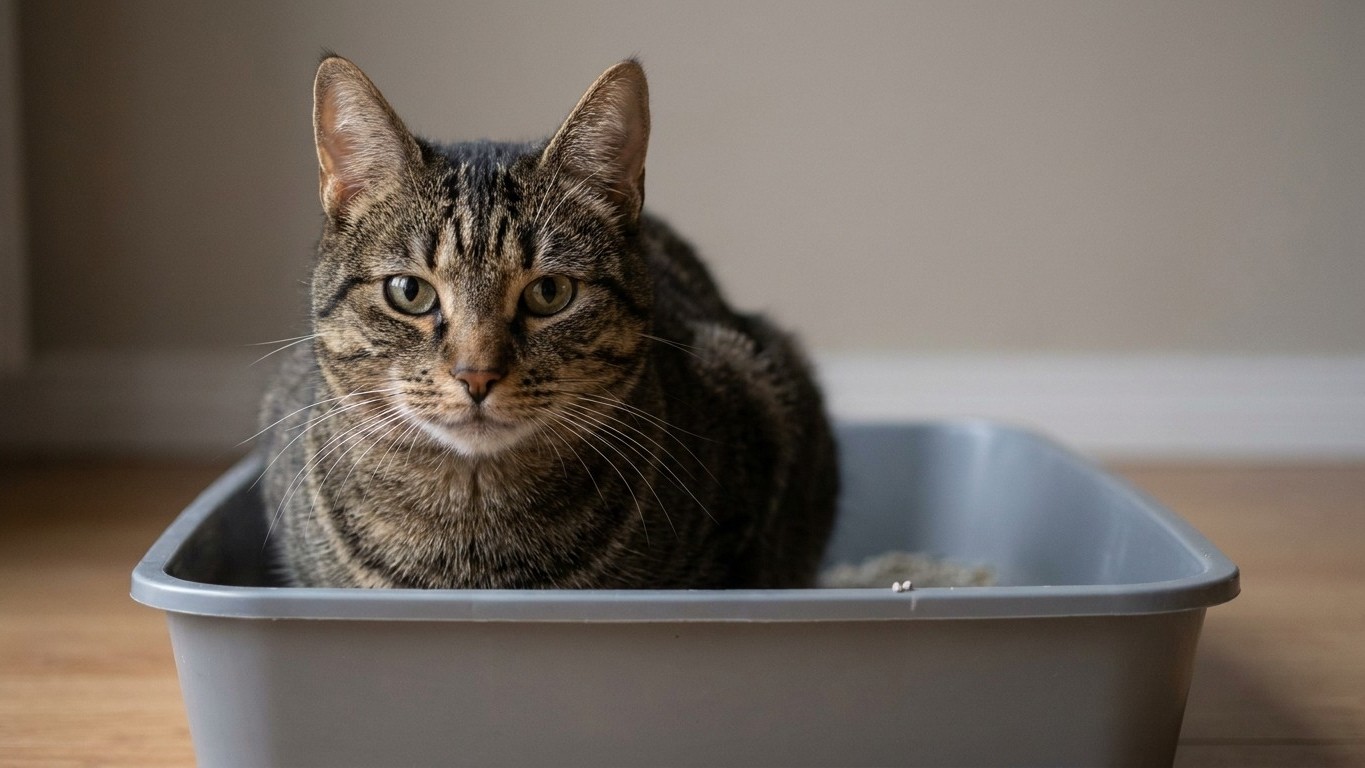
Your cat locks eyes with you from the litter box, completely unfazed, staring as if daring you to look away first. For years, most of us laughed it off as classic feline oddness. Turns out, that steady gaze is one of the most loaded forms of communication in your cat’s repertoire, and the explanation says a great deal about your relationship with them.
Key takeaways
- Your cat’s litter box stare isn’t random weirdness—it’s a loaded form of communication rooted in ancient survival instincts
- When relaxed and soft-blinking, that gaze is actually your cat appointing you as their sentinel during a vulnerable moment
- A sudden change in litter box behavior or an intense, frantic stare could signal painful health conditions like UTIs or feline cystitis
A moment of profound vulnerability
Using the bathroom is a vulnerable time for any mammal, and for cats, the instinct to stay alert during elimination is effectively ingrained in their DNA, in the wild, this could leave them susceptible to attacks. That’s the real context for Everything that follows. Your sofa-lounging, treat-demanding companion is, underneath it all, still operating on the survival logic of a small predator who is equally capable of becoming prey.
In the wild, a cat instinctively covers their droppings to avoid possible detection from predators, often choosing sand or dust as their medium. At home, your cat doesn’t face many predators, but still mimics this same pattern of behaviour, imprinted through generations of survival. The litter box, then, isn’t just a convenience, it’s the domestic echo of a deeply ancient ritual. And during that ritual, your cat needs to know the room is safe.
When your cat stares at you while defecating, it’s not random. It’s communication, vulnerability, and trust all wrapped into one act. Think of it less as a staring contest and more as your cat appointing you as lookout. They’ve decided you are capable of alerting them to danger. That, in feline terms, is a compliment.
What the stare is actually saying
Cats may stare to confirm their human is acting as a sentinel during a vulnerable moment. As long as the cat appears relaxed, there’s no cause for concern. Relaxed is the operative word here. A cat who is blinking softly, sitting comfortably in the box, and glancing at you between bouts of litter-rearranging is simply checking in. A cat who looks tense, crouches without producing anything, or cries out is an altogether different story.
There’s a second layer too, and it has to do with learned routine. This behaviour often stems from learned association. Many cats connect elimination with post-bathroom interactions, such as a treat, petting, or playtime, waiting for their expected reward much like a dog anticipating a walk. If you’ve ever cooed at your cat emerging from the tray, or given them an affectionate fuss, you may have inadvertently trained them to hold eye contact while they’re in there. Well done. You’ve created a bathroom-gaze ritual.
On some occasions, cats gaze at their owners to show affection. According to a study published in the journal Scientific Reports, slow blinking, observed in cats and humans, can be a sign of trust. So the next time your cat offers you a slow blink mid-squat, try returning it gently. You’re both, in the strangest possible way, bonding.
When the stare is actually a warning sign
Not every gaze from the litter box is endearing. The behaviour shifts meaning entirely when it’s paired with distress, and this distinction matters enormously. Cats are masters at hiding Discomfort, so staring at the litter box could be a sign of pain or illness. Conditions such as urinary tract infections, bladder stones, or constipation can make using the litter box uncomfortable or even painful.
A cat in pain may seek extra attention as a coping mechanism. They might stare intensely because they want you to notice something is wrong. The litter box stare of a suffering cat tends to be fixed and frantic rather than soft and social. If your cat frequently enters her litter box and seems to produce only small amounts of urine, she may have a urinary tract infection, see a veterinarian to rule out this possible medical problem.
Feline interstitial cystitis is a neurological disease that affects a cat’s bladder. Cats with cystitis will attempt to urinate frequently and may look as if they are straining, but with little success. They may lick themselves where they urinate, and they may have blood in their urine. Feline interstitial cystitis is very serious and can be life-threatening, and must be treated immediately by a veterinarian. These are the moments when misreading the stare has real consequences. Always consult your vet if anything about the litter box pattern suddenly changes.
While occasional staring during elimination is normal, certain patterns warrant attention. If your cat suddenly begins fixating on you during bathroom breaks after never doing so before, it could signal discomfort or anxiety. Equally worth watching: a cat who circles the box repeatedly without entering, or one who uses the box far more frequently than usual.
Making the litter box a place your cat actually trusts
If the stare is benign, great, but the environment around the box still matters. Place litter boxes in accessible locations, away from high-traffic areas and from places where the cat might feel trapped. In a multi-storey home, you may need a box on each floor. Keep boxes away from busy, loud, or intimidating places, like next to your washing machine or your dog’s food and water bowls.
Most cats prefer uncovered boxes, they offer better air circulation and visibility. Enclosed boxes can trap odours and may feel unsafe. That last point is worth sitting with. From a cat’s perspective, a hooded box limits their sightlines entirely. They can’t see what’s coming. For an animal whose entire litter box psychology is rooted in vigilance, that’s the opposite of reassuring.
Providing as many boxes as there are cats in the house, plus one, decreases competition and gives each cat a box of their own. In multi-cat households, a cat might stare at the litter box to assert dominance or ensure no other animal is encroaching on their space, this behaviour is more common where competition for resources is intense. A second or third box placed well away from the first can dissolve a territorial standoff overnight.
Scoop waste daily and fully clean the box weekly using unscented soap and warm water. Cats are very clean animals, and a dirty litter box is one of the top reasons they stop using it. And if you’ve ever wondered why your cat immediately uses the box the second you’ve finished scooping, that’s territory maintenance in action, your cat may be re-marking their scent, checking to ensure their presence is still acknowledged in the area.
One underappreciated nuance: if your cat was startled or frightened while using the box, they may associate it with danger and seek a new spot entirely. A washing machine that spins mid-visit, a dog bursting through the door, even a loud car outside, all of these can tip a previously content cat into litter box avoidance. Location and calm matter just as much as cleanliness.
Sources : catster.com | sci.news