
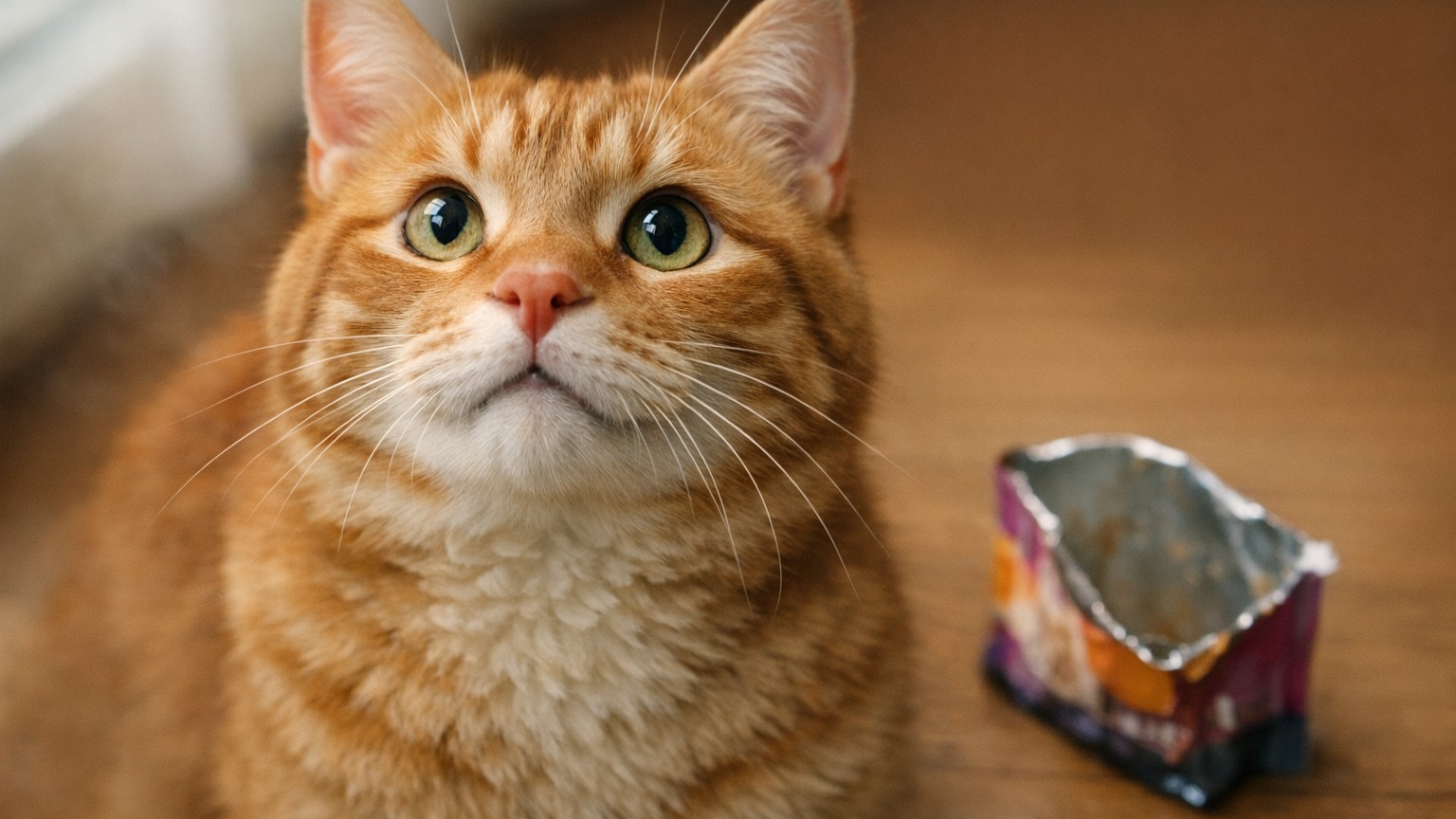
My cat Mochi spent two summers doing something I found deeply baffling. Rather than turning her nose up at her food bowl in the heat, as everyone told me cats do, she seemed to eat more wet food than usual. She’d wolf down her pouch, then sit beside the empty bowl giving me the slow, expectant blink of a cat who feels genuinely wronged. I assumed she was just greedy. I cut back her portions. I felt smug about my responsible cat-parenting. Then a routine vet appointment changed everything, and I spent the drive home feeling like the world’s worst cat owner.
Key takeaways
- Most cats eat less in summer—but some do the opposite. What’s really going on?
- Your cat might be cleverly compensating for a biological system that wasn’t built for hot weather
- The dehydration warning signs vets see are shockingly easy to miss—until it’s too late
What most cats actually do in summer, and why Mochi confused me
Research from the University of Liverpool’s School of Veterinary Science found that cats eat approximately 15% less food during summer, with vets concluding that the extra effort to keep warm in winter and the temptation to rest during hot summer days contributed to the swing in activity levels across the year. This four-year study followed 38 ad-libitum-fed adult cats of various breeds, ages and genders, recording individual food intake on a daily basis. So the science is fairly clear: most cats quietly ration themselves when the temperature rises.
The biology behind it makes complete sense. In the colder months, cats need energy to produce body heat and stay warm. In the warmer months, they no longer need that extra energy since the ambient temperature helps them maintain their internal temperature. Cats tend to retreat from the summer heat, leading to a decrease in physical activity, and they may avoid outdoor activities altogether, preferring shaded, cooler areas within the home. This behavioural shift can directly impact appetite as they become less active and have a reduced need for caloric intake.
But here’s where Mochi’s behaviour was hiding something genuinely clever. If a cat is eating more wet food than usual during the summer months, this may actually be an attempt to increase their water intake. Cats, unlike dogs, are not enthusiastic drinkers. They evolved as desert animals whose bodies were designed to get most of their hydration from prey, not from a water bowl, meaning that even under normal conditions, cats don’t feel a strong urge to drink. Mochi wasn’t being greedy. She was quietly, desperately self-medicating against Dehydration.
The hidden hydration crisis hiding in plain sight
During summer, a cat’s water requirement goes up, but their drinking habits rarely change to match. Higher temperatures mean more water is lost through grooming and respiration. The numbers are stark: canned wet food is around 80% water, while dry food is only about 6 to 10%. A cat eating extra pouches of wet food in July isn’t misbehaving, she’s compensating for a system that simply wasn’t built for hot British summers.
Cats don’t have a strong thirst drive, so it’s important to ensure they don’t become dehydrated in hot weather. This is the bit that keeps vets up at night, because the signs of early Dehydration are easy to dismiss. The most common signs of dehydration in cats include dry gums, lethargy, a dry nose, a loss of appetite, changes in skin texture, panting and decreased urination. A quick home check is worth knowing: you can gently pinch the skin at the back of your cat’s neck and let go, in a well-hydrated cat, it snaps back immediately. If it returns slowly or stays “tented,” dehydration may already be setting in.
The trickier situation is when increased drinking signals something beyond the summer heat. If a cat’s water intake increases dramatically (more than 50% above normal) or is accompanied by other changes like weight loss, increased urination, or reduced appetite, this could indicate kidney issues or diabetes, conditions seen more frequently in summer due to dehydration risks. In diabetic cats, the body struggles to regulate blood sugar levels, leading to excessive thirst and urination. The weather, can mask a medical issue hiding underneath. Always speak to your vet if you notice a sudden or dramatic change in your cat’s drinking or eating habits — it’s not worth guessing.
What to actually do about it this summer
The good news is that supporting a cat through summer eating changes is largely straightforward, once you understand what’s driving them. Incorporating more wet food into a cat’s diet during the summer months will boost hydration, though wet food spoils faster in the heat, so this is worth keeping in mind. Leaving a pouch out for hours on a warm day is a genuine risk; offer smaller portions more frequently instead, and remove anything uneaten after thirty minutes.
Make sure your cat has plenty of water bowls, positioned away from their food and litter trays. Some cats prefer to drink running water, so a cat water fountain may encourage them to drink more. This isn’t gimmickry, it reflects how cats naturally drink in the wild, from moving streams rather than still puddles. Indoor cats are not immune to seasonal shifts either: windows allow indoor cats’ brains to react to daylight changes that trigger behaviour and metabolic responses, and activity levels may still decrease in the summer despite cooler indoor temperatures. Even a cat in an air-conditioned flat can feel the pull of the longer days.
If a cat’s lethargy and reduced appetite do not seem to improve in the late evening, between 9 and 11pm, this warrants a little more concern. A healthy cat should perk up as temperatures drop at night, it’s one of the clearest signs that what you’re seeing is normal seasonal adaptation rather than something more serious. If your cat hasn’t eaten anything in 24 to 48 hours, get them checked by a vet in case there is a medical cause behind the loss of appetite.
As for Mochi, she was fine, thoroughly, embarrassingly fine. She’d simply worked out that a second pouch of tuna in jelly was a more efficient hydration strategy than sitting by a water bowl she found insufficiently interesting. The vet’s actual advice was to add a second water fountain and stop rationing her wet food in July. She now has three water sources around the flat, drinks from exactly none of them voluntarily, and continues to stare at her empty bowl with the conviction of a cat who has been deeply, personally wronged. Some things science cannot fully explain.
Sources : perfect-fit.co.uk | news.liverpool.ac.uk