
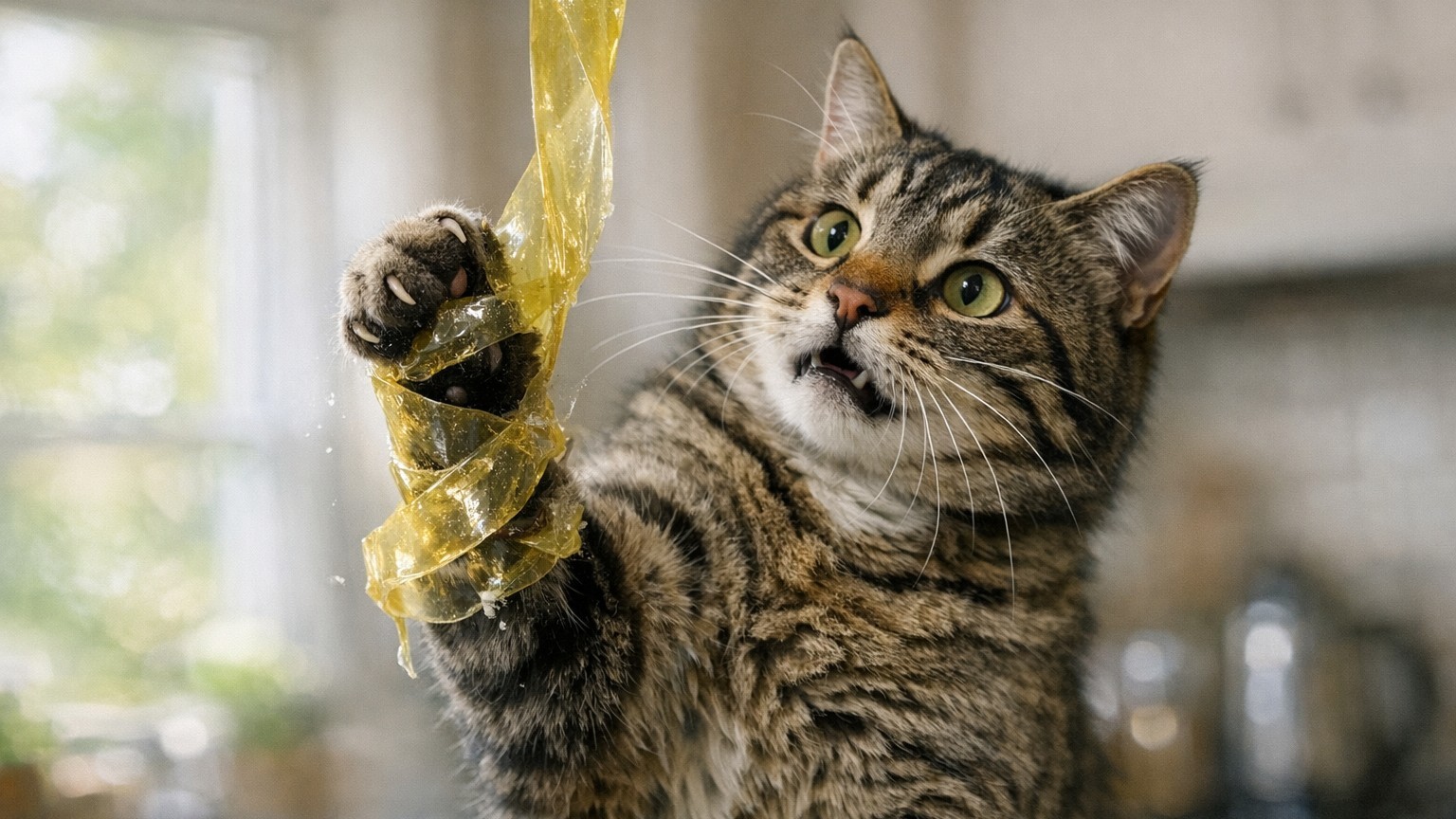
June is peak fly season in the UK, and the sticky fly ribbon dangling from a kitchen ceiling feels like a perfectly sensible solution. Cheap, chemical-free, no batteries required. Then your cat bats it once, gets a paw stuck, panics, wraps the entire thing around their ear, and suddenly you have a very distressed animal covered in industrial-strength adhesive and a kitchen that smells of regret. The real mistake wasn’t hanging the ribbon. It was hanging it where a curious cat could reach it.
Key takeaways
- Most modern fly ribbons aren’t poisonous, but some contain insecticides that become dangerous when cats groom their contaminated fur
- The real danger isn’t the glue itself—it’s the panic and thrashing that can cause serious skin damage as your cat fights to break free
- A cat that’s been stuck once often goes back for a second attempt out of pure curiosity, making placement everything
What fly ribbons are actually made of
Flytraps such as fly ribbons do not usually contain any poisonous or toxic ingredients and consist of an adhesive such as rosin and mineral oil. That’s genuinely reassuring news. The panic many pet owners feel in that moment, convinced their cat has just licked something lethal, is, in most cases, disproportionate to the actual risk. The only potential health effects for animals and humans are vomiting, cramps, or diarrhea if the flypaper is ingested. A mildly upset stomach is unpleasant, but it’s a very different story from poisoning.
The historical picture is more alarming, though. For much of the 19th and early 20th century, flypaper was made with arsenic. Modern flypapers are typically non-toxic today, but older formulations were genuinely hazardous. A Victorian-era fly strip was essentially a death strip for anything that touched it. We’ve come a long way.
Here’s where it gets more complicated for modern shoppers: although some brands don’t use any toxins to kill flies, other brands do use a poisonous insecticide mixed with the glue. When you buy fly paper, check the product ingredients to make sure there aren’t any toxins. Pest strips are sometimes made with a porous strip impregnated with an organophosphate insecticide, a class of chemicals that can be seriously harmful to cats. The lesson: don’t assume all fly ribbons are equal. Turn the packet over and actually read it before you hang anything in a room your cat frequents.
The real danger: panic, not poison
While non-toxic, a cat can panic if a fly glue trap gets stuck to the fur or paw, which could result in injury if not dealt with immediately. This is the part that catches most owners off guard. The glue itself may be harmless, but the cat’s reaction to being suddenly, inexplicably stuck to something is not. Cats that thrash, claw, or attempt to bite themselves free can cause real skin damage. If a cat has the adhesive stuck close to their skin or gets it on sensitive areas like paw pads or the nose and mouth, it could remove layers of skin.
The sticky substance will have to come off your cat at some point if it gets on the coat; the last thing you want is for your cat to get his tongue stuck to his fur while self-grooming. This scenario sounds almost comic until it happens, and then it’s a very stressful few minutes for both of you.
Cats and dogs can get adhesive on fur and paws, which can cause skin irritation or require veterinary removal, sometimes needing sedation. If the strip contains insecticide and the pet grooms itself, ingestion increases the toxicity risk. That last point is worth sitting with. A ribbon that looks non-toxic on the shelf can become a real problem the moment your cat starts methodically licking their contaminated fur, as cats invariably will.
What to do if your cat gets stuck
The single most important thing is to stay calm. Remain calm if you see your cat tangled up in flytrap glue. Your cat can hurt himself if he gets riled up from being stuck, and the glue could rip the skin. It’s often best to gently restrain your cat with a towel to calm him down before you begin removing the glue.
If your cat is stuck fast and you can’t loosen the ribbon easily, try rubbing vegetable oil into the ribbon where it’s touching fur. The oil should break up the glue and help you loosen your cat’s fur from the ribbon. Once that’s done, a bath or spot clean with water and pet-safe dish soap can remove any oil and glue residue. Never pull or tug at the fur. Vegetable oil, olive oil, mineral oil, and baby oil are all effective and safe options. Never use chemicals or solvents, as these can be toxic to cats and may cause severe skin irritation or burns.
Once the glue is off, check the skin carefully. Once you have successfully removed the flytrap, look your cat over completely to check for any wounds or skin exposure. If you find a wounded area, treat it with saline solution or a cat-safe antiseptic to cleanse the area after bathing, then seek professional advice from your vet to ensure further care isn’t required. If your cat is getting very stressed, agitated, is in pain, or the fly trap is not easily removed, contact your vet for assistance rather than persisting at home. This is not the moment for DIY stubbornness.
Keep a close eye on them afterwards. Monitor for signs like excessive drooling, vomiting, or lethargy, which require veterinary attention.
Smarter ways to deal with summer flies when you have a cat
The fly ribbon itself was never the problem. Placement was. Sticky fly traps attract and catch flying insects like houseflies and gnats. These traps are non-toxic and work best placed on an interior window where flying insects hang out, but up and away from pets. A high window frame, a spot above the extractor fan, or tucked behind a ceiling light fitting, anywhere a cat cannot reach by jumping, swatting, or (and this is always underestimated) simply leaping enthusiastically off a kitchen worktop.
If you’d rather avoid the ribbon format altogether, UV bug zappers attract flying insects using light. For family homes, make sure the trap is enclosed so that kids or pets can’t touch the electric grid. Some models include a non-toxic glue pad instead of an electric zap, offering safer options. These enclosed designs are worth considering if you have a cat who treats every new object as a personal challenge.
On the botanical side, lavender and lemon balm are pet-friendly plants that mosquitoes dislike. Oregano contains carvacrol, a natural insect repellent, and basil is an aromatic fly deterrent. A pot of basil on a sunny kitchen windowsill pulls double duty, it deters flies and provides a genuinely useful herb. Not every pest solution needs to involve adhesive.
One thing nobody tells you about cats and fly ribbons: the average cat is not deterred by prior experience. Having been stuck once, many will bat the ribbon a second time out of sheer curiosity about what happens. The real upgrade isn’t finding a different trap, it’s accepting that in a home shared with a cat, nothing dangling at swatting height is truly safe from investigation, and planning accordingly.
Sources : walmart.com | justanswer.com