
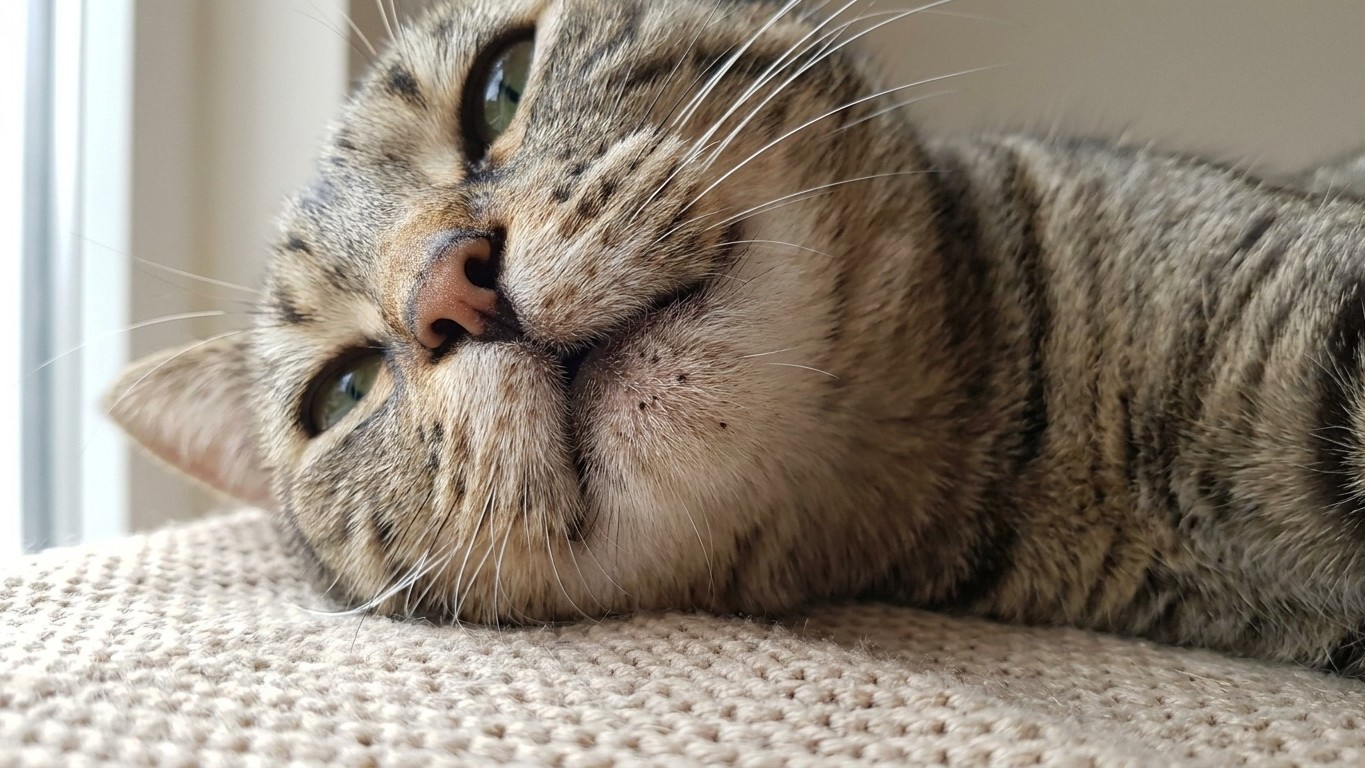
Those gritty black flecks on your cat’s chin aren’t grime at all. They’re plugged hair follicles, a condition vets call feline chin acne, and no amount of scrubbing with a damp cloth will shift them, because you’re not dealing with surface muck. You’re dealing with blocked pores.
It’s an easy mistake to make. Mild cases resemble dirt on the cat’s chin, but the “dirt” won’t brush off. That’s the giveaway many owners miss for months, sometimes years. I’ve heard from readers who spent ages dabbing at their cat’s chin with cotton wool, convinced they just weren’t rubbing hard enough, when actually they were trying to clean something that isn’t dirty in the conventional sense at all.
Key takeaways
- What you thought was dirt on your cat’s chin has been resisting your cleaning efforts for a very specific reason
- A simple swap in your cat’s feeding setup might prevent this condition from developing in the first place
- Nearly half of affected cats develop painful infections if the condition goes untreated—and it’s not what you think it is
What’s Actually Happening Under That Fur
Feline acne is related to the overproduction of keratin, and that keratin becomes trapped inside the hair follicle. Think of it less as dirt sitting on top of the skin and more as a plug forming inside it. If this excess keratin is trapped in the hair follicle, comedones (blackheads) form, and pustules may form if bacteria infect the comedones. In more stubborn cases, cat acne is characterised by folliculitis, inflammation and infection of the hair follicles, and furunculosis, rupture of hair follicles and leakage of keratin into surrounding tissues, leading to larger sores like boils.
Oddly, vets still haven’t pinned down a single definitive cause. We don’t know what causes it, though studies have shown that multiple cats in the same household can develop chin acne, suggesting a trigger of sorts rather than a genetic or inherited cause. One theory that keeps cropping up involves the skin’s own oil supply. Some research points to increased production of sebum, an oily substance made in the skin’s sebaceous glands, and this overproduction may predispose follicles to becoming clogged. There’s even a viral angle worth mentioning: some research data suggests that a virus, possibly associated with the upper respiratory tract, may make a cat more likely to get chin acne.
Here’s a fact I find genuinely reassuring for worried owners: this has nothing to do with age, tidiness, or breed. Any cat can develop acne because it’s not associated with age, breed, or sex. So no, you haven’t been neglecting your cat. Your ginger moggy and the neighbour’s pedigree Persian are both fair game.
Why Plastic Bowls Keep Coming Up
If your vet mentioned your cat’s feeding bowl during the appointment, there’s good reason for that. Eating or drinking from plastic containers is a recognised trigger, and while it’s commonly been suggested that cats are “allergic” to these containers, recent research suggests that plastic containers harbour bacteria due to irregular surfaces. Under a microscope, plastic that looks perfectly smooth to us is actually riddled with tiny scratches, and those grooves become bacterial hideouts every time the bowl gets a quick rinse rather than a proper scrub.
Swapping the bowl really does seem to make a measurable difference for a lot of cats. Cat acne can often be prevented by using non-plastic food and water bowls for your feline friend. Stainless steel, glass, and sealed ceramic are the materials vets recommend instead, precisely because they don’t have that porous surface. It’s a five-minute fix that costs less than a vet consultation, so there’s genuinely no reason not to try it alongside whatever treatment your vet prescribes.
Grooming plays a part too, and not always in the direction you’d expect. Self-grooming distributes sebum evenly throughout the body, and when cats don’t groom adequately, oil can accumulate in the hair follicles and become clogged. But researchers admit there’s a chicken-and-egg problem here: it isn’t clear whether cats develop acne because of poor grooming habits or whether chin acne makes cats less inclined to groom themselves. Older cats, cats with dental pain, or those carrying a bit of extra weight around the middle often struggle to reach their own chin properly, which only compounds the buildup.
What To Actually Do About It
The single biggest mistake owners make once they realise it isn’t dirt is trying to pop or pick at the blackheads, treating them like human spots. Don’t. Don’t try to pick the black scabs on your cat’s skin as that can cause a more serious infection. Squeezing forces bacteria deeper into the follicle rather than out of it.
What does help is gentle, consistent cleaning with the right products, not force. You can treat cat chin acne by using an antibacterial wash like chlorhexidine or dilute peroxide, applying it with a cotton ball and cleaning the affected areas gently. A warm compress beforehand softens things up nicely: dampening a facecloth with warm water and placing it on your cat’s chin for a few minutes is most helpful with mild acne and may reduce swelling. For anything beyond mild blackheads, though, this is a job for your vet rather than the internet. Severe acne with extensive secondary infection will need antibiotic therapy, and your vet may select the right antibiotics after doing sensitivity tests on the bacterial culture from the chin.
Diagnosis Matters More Than people assume, too, because chin acne has impersonators. Other conditions that may look similar to chin acne include fungal infections, allergies, dental disease, mite infestations, other skin diseases, or cancer. A vet can rule these out quickly with a skin scrape or cytology, which is far safer than months of guesswork with a flannel.
One statistic worth knowing before you decide it’s “just cosmetic”: almost half of cats with blackheads will develop painful papules, pustules, and even cellulitis, a deep-tissue infection that can lead to scarring. That’s not a reason to panic over a few specks, but it is a reason to book that vet check sooner rather than later, and to finally retire that plastic bowl gathering scratches by the skirting board.
Sources : ladynpet.com | vetsaglik.com