
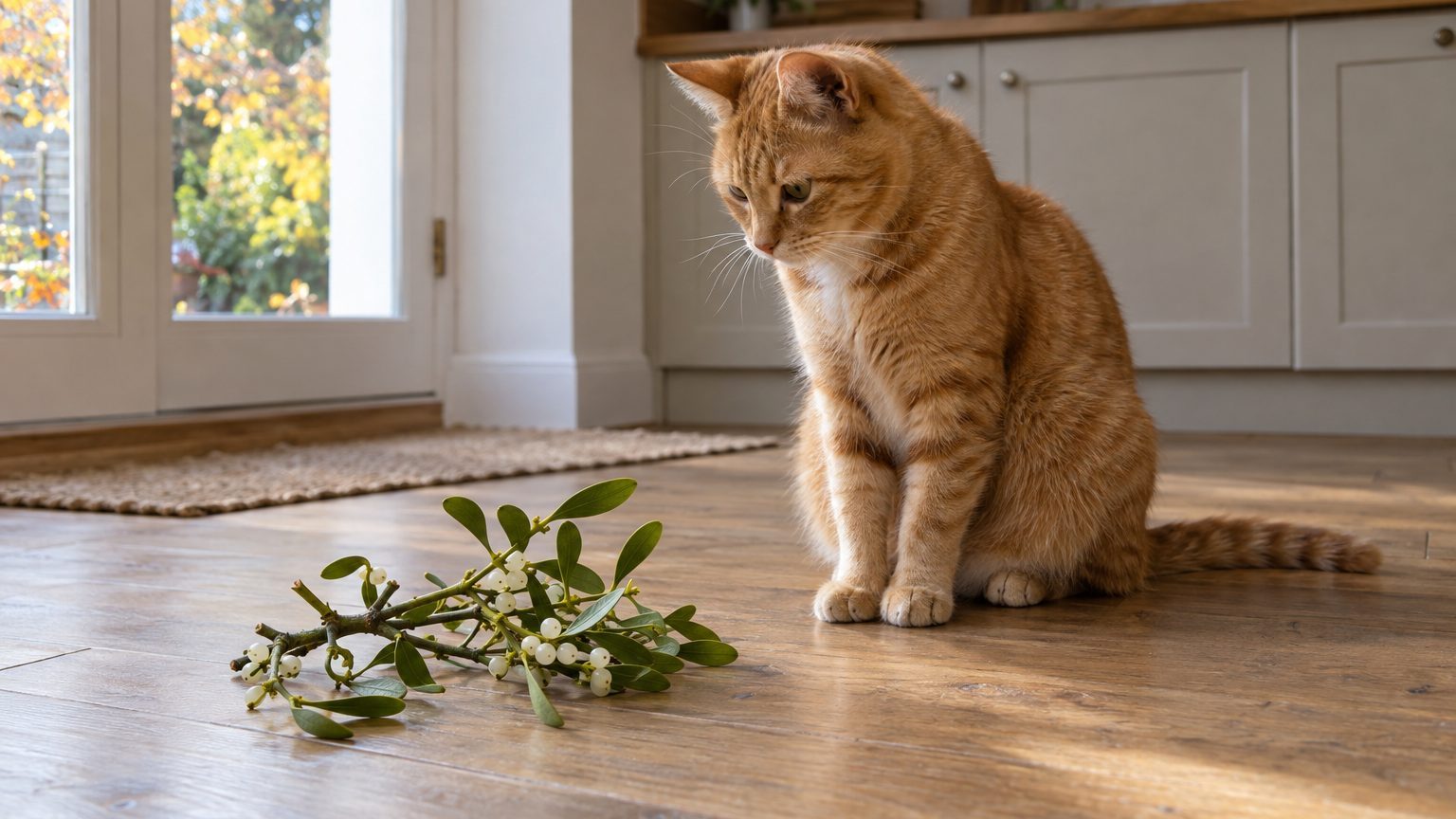
Yes, mistletoe is poisonous to cats, and the berries are the part most likely to cause trouble. The plant most Britons hang over the doorway at Christmas is European mistletoe (Viscum album), and every part of it, from leaves and stems to the sticky white berries, can upset a cat’s system. Most cases are mild to moderate, but a cat that has chewed a fair amount deserves a phone call to the vet.
Don’t wait for symptoms.
- Every part of European mistletoe, including the leaves, stems and berries, contains toxins that can upset a cat’s stomach.
- The most common signs are drooling, vomiting, diarrhoea and reduced appetite.
- Larger amounts can slow the heart, lower blood pressure and cause tremors or seizures.
- Do not induce vomiting at home; call your vet or an out-of-hours clinic straight away.
What makes mistletoe toxic
European mistletoe contains compounds called viscotoxins and lectins, which irritate the gut and can affect cells throughout the body. The berries get the blame because they are small, soft and tempting to a curious cat, but the leaves and stems carry the toxins too. Concentrations vary between plants and between parts of the same plant, so there is no reliable “safe” amount to quote.
Severity depends on how much was eaten, the size of the cat and the individual animal. A kitten or an elderly cat with kidney or heart problems is at greater risk than a robust adult. Many cats nibble a leaf, drool a bit and carry on, while others end up with a miserable few days.
Not all mistletoe is the same, either. American species, sometimes sold as Phoradendron, contain a different toxin profile, and some of the plastic and silk decorations sold in shops carry no plant toxin at all (though they bring their own hazards, which I’ll come to). If you’re unsure what you bought, treat it as the real thing.
Symptoms to watch for
The most common signs are gastrointestinal. Expect drooling, vomiting, diarrhoea, loss of appetite and a cat who looks sorry for herself, hiding under the bed or sitting hunched. Abdominal discomfort can make a normally affectionate animal flinch when you touch her belly.
Larger amounts can cause more worrying signs. Reports in veterinary toxicology literature describe a slow heart rate, low blood pressure, wobbliness, tremors and, in severe cases, seizures. These are less common, but they are the reason a vet wants to hear about any substantial ingestion.
Timing is slippery.
Signs can appear within a few hours, but some cats show nothing for a while, and a cat that seems fine after an hour has not necessarily escaped. If you saw her chewing the plant, or find stripped stems and scattered berries on the floor, act on what you know rather than on how she looks at that moment.
What to do if your cat has eaten mistletoe
Start by removing the plant and any remaining pieces so she can’t go back for more. Gently wipe her mouth with a damp cloth if there are bits of berry stuck to her fur or lips, and offer a little fresh water. Do not try to make her sick. Home remedies such as salt water are dangerous, and inducing vomiting in cats is not something to attempt without veterinary direction.
Ring your vet straight away, or an out-of-hours clinic if it’s a bank holiday or the evening, which at Christmas it very often is. Have the details ready: roughly how much she may have eaten, when, her weight, her age and any existing health conditions. A photo of the plant, or a piece of it in a bag, helps the vet identify exactly what you’re dealing with.
The Veterinary Poisons Information Service is available to vets in the UK, and your practice can consult it for advice on dosing and treatment. That is another reason to phone the clinic rather than searching forums, because they can reach specialist toxicology guidance that you can’t.
Treatment depends on the case. A vet may induce vomiting under supervision if the ingestion was recent, give activated charcoal to limit absorption, and offer fluids and anti-sickness medication. Cats with heart or neurological signs may need to stay in for monitoring. Most animals treated promptly make a good recovery.
When it’s an emergency
Go to the vet immediately, without waiting for a callback, if your cat is collapsing, trembling, having a seizure, struggling to breathe, or seems unusually sleepy and unresponsive. Persistent vomiting, or a cat who refuses water, also justifies an urgent visit, since dehydration moves fast in small animals.
Keeping Christmas safe for a curious cat
Cats climb, bat and chew. A sprig hung from a ceiling hook is usually out of reach, but a wreath on a low table or a bunch fallen from a doorframe is fair game. Berries that drop onto the carpet are the real danger, because they roll, and cats love anything that rolls.
Hang mistletoe in a room your cat doesn’t enter, or skip it and choose an artificial version. Check that fake ones don’t have small detachable parts, wire or glitter that could cause choking or a blockage. Real plants should be pruned and swept regularly so fallen leaves and berries don’t collect underneath.
Mistletoe isn’t the only festive plant to watch. Lilies are the most dangerous seasonal bloom for cats, and even a little pollen licked off the fur can cause acute kidney failure, so they should never be in a house with a cat. Holly and ivy can cause stomach upset, and poinsettia sap is a mild irritant rather than the deadly threat folklore suggests. If you’re building a cat-friendly Christmas, lilies are the ones to bin first.
Keep your vet’s number, and the out-of-hours emergency number, on the fridge before the festivities begin. Veterinary practices often run reduced hours between Christmas and New Year, and knowing exactly where to go at 9pm on Boxing Day can save precious time.
One last nuance: the folklore that a cat will “know better” than to eat a poisonous plant is a myth. Cats are obligate carnivores and often leave plants alone, but boredom, curiosity and the lure of a dangling or rolling object override instinct more often than owners expect.