
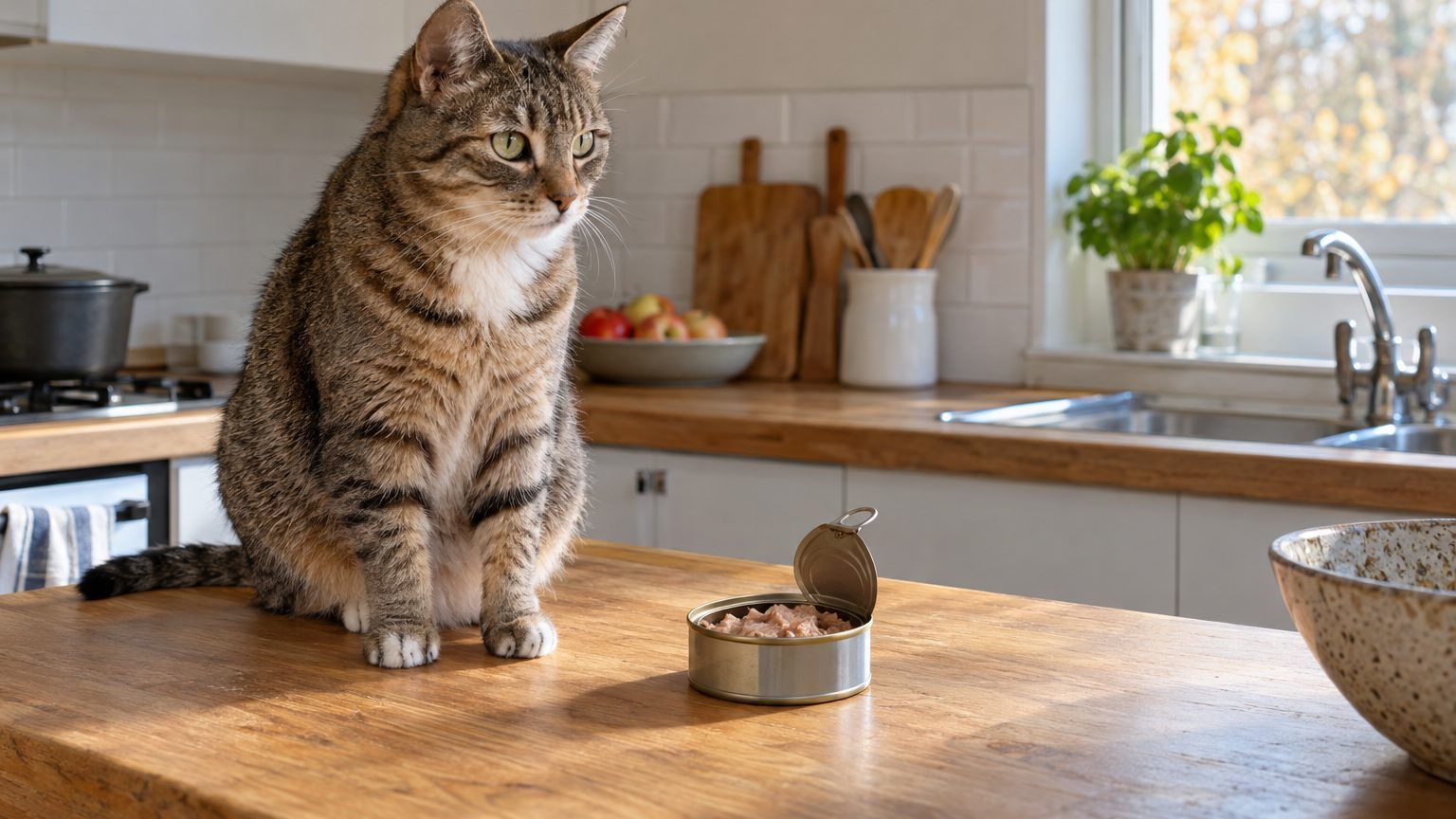
A cat can eat tuna in brine, but it shouldn’t be a habit, and the brine is the reason. Tinned tuna packed in salted water carries far more sodium than a cat needs, so a small, occasional forkful is the limit. Spring water is the safer tin, oil is the trickier one, and none of them should stand in for proper cat food.
- Tuna in brine carries far more sodium than a cat needs.
- Spring water tuna is the safer tin, with less salt and no added oil.
- Plain cooked tuna in small amounts is acceptable as an occasional treat.
Why brine is the weakest choice
Brine is simply water with a good deal of salt dissolved in it. Cats are small animals with modest sodium requirements, and a tin that tastes pleasantly seasoned to us can represent a surprisingly large dose for a four-kilogram body. Salt also makes fish more appealing, which is part of the problem, because a cat that has tasted it will often nag for more.
Too much sodium makes cats thirsty and puts extra strain on the kidneys and heart. For a healthy adult, a lick of brine from a stray flake is unlikely to cause trouble. For a cat with kidney disease, heart disease or high blood pressure, it is a different matter entirely.
Check the label.
If you only have a tin in brine in the cupboard, drain it thoroughly and rinse the fish under a cold tap for a few seconds before offering a teaspoon or so. Never pour the liquid over their food as a “gravy”. The tin liquid is where most of the salt sits, and rinsing removes a fair share of it, though not all.
Spring water, sunflower oil and the rest
Tuna in spring water is the better pick for a cat. It has no added oil, usually much less salt than the brine version (though some brands still add a little, so read the ingredients), and a flavour cats tend to adore. Look for tins that list only tuna and water.
Oil is a mixed bag. Tuna in sunflower or olive oil adds extra fat and calories, which matters for an indoor cat already inclined to creep up the scales. Oily fish can also upset a sensitive stomach, with loose stools the usual result. Occasional oily tuna won’t harm most cats, but I’d treat it as the least sensible option for regular use, and drain it well.
Then there are the flavoured tins, the ones with sauces, herbs, onion or garlic. Onions, garlic and related plants in the allium family are toxic to cats, so tuna with any of these is off the menu completely. Tuna “in tomato sauce” or with chilli and spices belongs to the same category: a person’s lunch, not a cat’s.
Fresh, plain, cooked tuna with no seasoning is also fine in small amounts, and it avoids the salt issue altogether. Raw fish is a poor idea, partly because of bacteria and partly because some raw fish contains an enzyme that breaks down thiamine (vitamin B1), which cats need.
Nutritional gaps and mercury
The bigger issue with tuna isn’t the tin, it’s what’s missing from it. Cats are obligate carnivores with specific needs for nutrients such as taurine, certain vitamins and the right balance of calcium and phosphorus. Complete cat foods are formulated to supply those, and a tin of human-grade tuna is not. A cat living mainly on tuna can slide towards deficiencies over time, even while looking perfectly happy at the bowl.
Mercury is the other consideration. Tuna are large, long-lived predatory fish, and mercury accumulates up the food chain, so they tend to carry more of it than smaller fish like sardines. Different tuna species vary, with albacore generally higher than skipjack, which is why the latter is often labelled “light”. The Food Standards Agency gives guidance on fish and mercury for people, and the same logic applies to a cat that eats tuna frequently, only on a far smaller body.
There’s also a curious welfare wrinkle. Cats can become fixated on tuna, turning their noses up at their ordinary meals in the hope that the good stuff will reappear. Vets often describe this as a learned fussiness, and it’s much easier to prevent than to undo.
How often is too often
There’s no official weekly allowance for tinned tuna, and I won’t invent one. A sensible rule of thumb many vets use for any treat is that extras should make up no more than around 10 per cent of daily calories, with the rest coming from a complete and balanced cat diet. For tuna, that realistically means a teaspoon or two as an occasional treat, not a daily ritual.
Tuna also has a handy practical use. A little flaked fish can tempt a poorly cat to eat, or help hide a tablet, but check with your vet first, particularly if your cat has kidney problems, a heart condition, diabetes or a history of urinary issues.
Watch for warning signs after tuna: vomiting, diarrhoea, unusual thirst or lethargy. If any appear, or if your cat has been eating a lot of tinned fish for weeks, ring your vet and tell them exactly what has been on the menu.
One last practical point: tinned fish made specifically for cats is a different product from the tuna on your shelf. It’s balanced with added nutrients, so if your cat loves the flavour, a complete tuna-flavoured cat food gives them the taste without the gaps, and it’s the version I’d reach for first.