
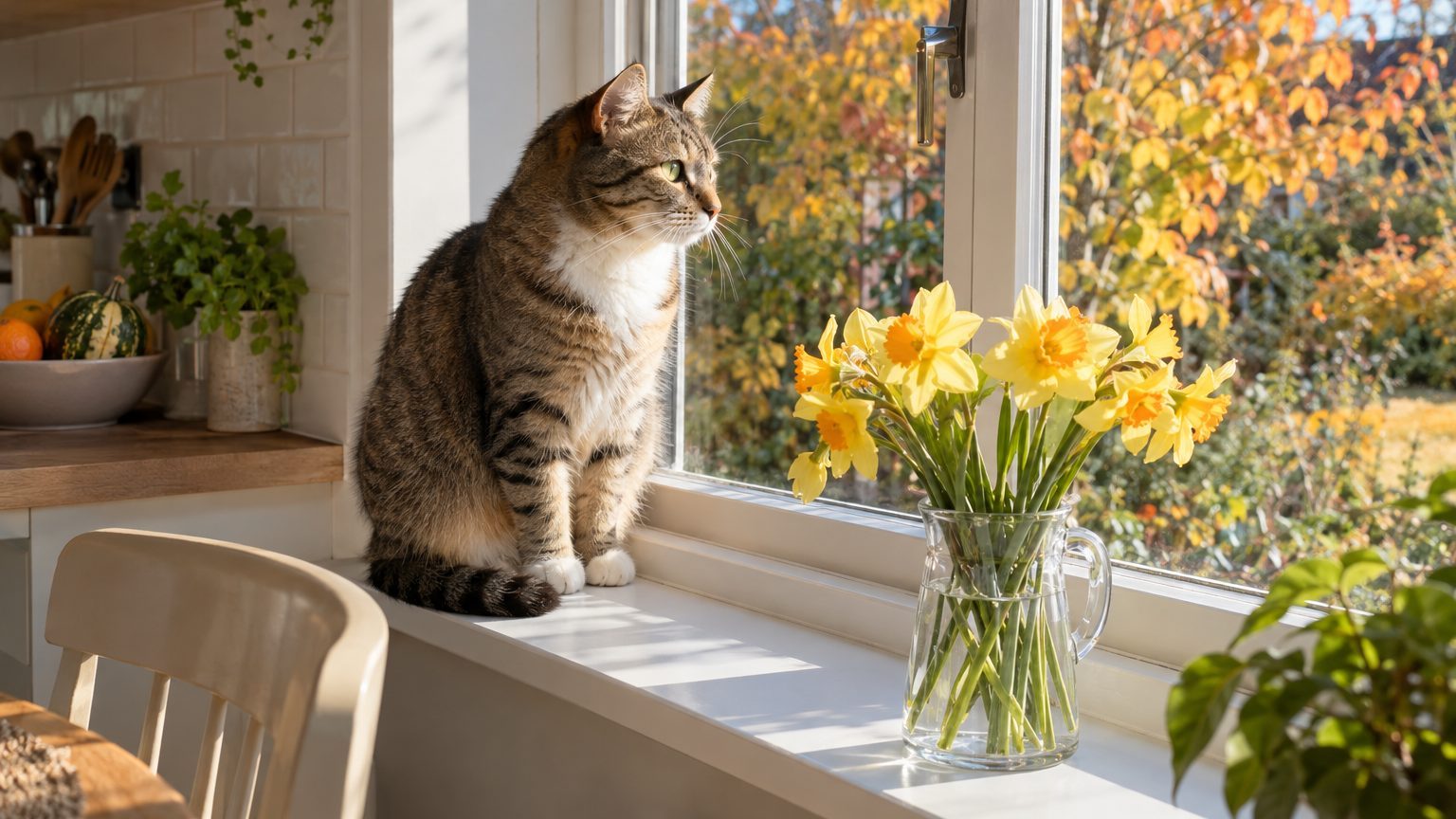
Yes, daffodils are poisonous to cats. Every part of the plant (bulb, stem, leaf, flower) contains toxins, and the bulb holds the highest concentration. Even the water from a vase of cut daffodils can make a cat unwell.
Cats Protection and the Cats Protection-listed lists of toxic plants all place daffodils (Narcissus) among the plants to keep away from cats, and the Veterinary Poisons Information Service in the UK treats them as a recognised cause of poisoning in pets.
- Every part of a daffodil contains toxins, and the bulb holds the highest concentration.
- Vase water from cut daffodils can make a cat unwell.
- Early signs include drooling, vomiting and diarrhoea, and any suspected ingestion needs a vet call.
What makes daffodils toxic
The main culprit is a group of alkaloids, with lycorine the best known. Lycorine irritates the gut lining and triggers vomiting, which is the plant’s own defence against being eaten. Daffodils also contain calcium oxalate crystals, tiny needle-shaped structures concentrated in the sap and just beneath the skin of the bulb.
Those crystals explain the first signs you may notice. A cat that chews a stem or leaf can experience immediate mouth irritation, leading to drooling, pawing at the face and general fuss around the mouth.
The bulb is the real danger.
Bulbs are most risky in autumn, when they are being planted, and in late winter, when they are stored or sprouting in pots. A cat that digs in a freshly planted bed or bats a loose bulb across the kitchen floor may decide to chew it, and a bulb can contain far more alkaloid than a single petal. Dogs are the more typical bulb-diggers, but cats that like to scratch around in soil are not immune.
Cats are also unusually sensitive to many plant compounds because their livers process certain substances slowly. That is the reason a nibble that might only upset another animal deserves a phone call to the vet when it involves a cat.
Symptoms to watch for
Mild cases usually start with drooling, lip-smacking and vomiting, often within a few hours of chewing the plant. Diarrhoea and abdominal pain commonly follow, and a cat may hide, go off its food or seem lethargic. Some cats retch repeatedly without producing much.
Larger amounts, particularly of the bulb, can cause more serious effects. Veterinary toxicology references describe low blood pressure, tremors, an irregular heartbeat and breathing changes in severe poisoning, though these are less common than the digestive signs. Anything beyond mild stomach upset is an emergency.
Contact a vet immediately if your cat has eaten any part of a daffodil, even if it seems fine. Symptoms can take time to appear, and early advice is far easier on both cat and owner than treatment after a collapse.
Do not try to make your cat sick at home.
Salt water, in particular, is dangerous and should never be used. Take a piece of the plant (or a photo of it) with you, along with a note of roughly how much was eaten and when, because the vet can use that to decide on treatment. If your regular practice is closed, ring an out-of-hours clinic. The Animal Poison Line and the Veterinary Poisons Information Service (which supports vets) are also used in the UK for advice, though the latter generally works through veterinary professionals.
The vase water problem
Many owners worry about the bulbs and forget the bunch on the table. Cut daffodils release sap into the water, and that sap carries the same irritant compounds. A cat that drinks from the vase, which many do because they prefer moving or standing water to a bowl, can swallow enough to be sick.
Daffodils are also awkward in a mixed bouquet. Their sap is known to shorten the life of other cut flowers, which is why florists often condition them separately. If you have a cat, that is a fair argument for leaving them out of arrangements altogether, since you cannot easily stop a determined cat tipping a vase over.
Pollen and fallen petals are a lesser risk, but a cat grooming its fur after brushing past the flowers can pick up residue. A wiped surface and a swept floor are simple precautions.
Lilies are a far deadlier plant.
That matters because a bouquet bought in spring may contain both. True lilies (Lilium) and day lilies (Hemerocallis) can cause fatal kidney failure in cats, even from a small amount of pollen or vase water. If you are not certain what is in a bunch, treat the whole thing as unsafe and keep it out of reach.
Keeping cats and spring flowers apart
For indoor cats, the simplest option is not to bring daffodils in at all. Supermarket bunches look harmless, but the risk sits in the water as much as the petals. If you do keep them, choose a room with a door that closes, use a heavy, narrow-necked vase, and put it somewhere a jump will not reach. Cats are better climbers than most people allow for.
In the garden, plant bulbs in borders that are fenced off or covered with chicken wire until shoots appear, and clear spilled bulbs and trimmings straight away. Compost heaps can also attract cats, so do not toss spent daffodil stems in an open pile. Wash your hands after handling bulbs, as the sap can irritate skin.
Safer spring choices exist. Cat-friendly lists from organisations such as the ASPCA include plants like sunflowers and roses (mind the thorns), and Cats Protection publishes guidance on plants to avoid. Always check a specific plant before buying, since common names can be misleading.
Prognosis is usually good when the cat is treated promptly. Vets typically manage poisoning with supportive care such as fluids and anti-sickness medication, and in some cases may give activated charcoal or monitor the heart. Recovery depends on how much was eaten and how soon treatment began, so ring your vet rather than waiting to see what happens.
One last detail worth knowing: dried daffodil bulbs stay toxic, so a forgotten bag at the back of the shed is as risky as a fresh one.