
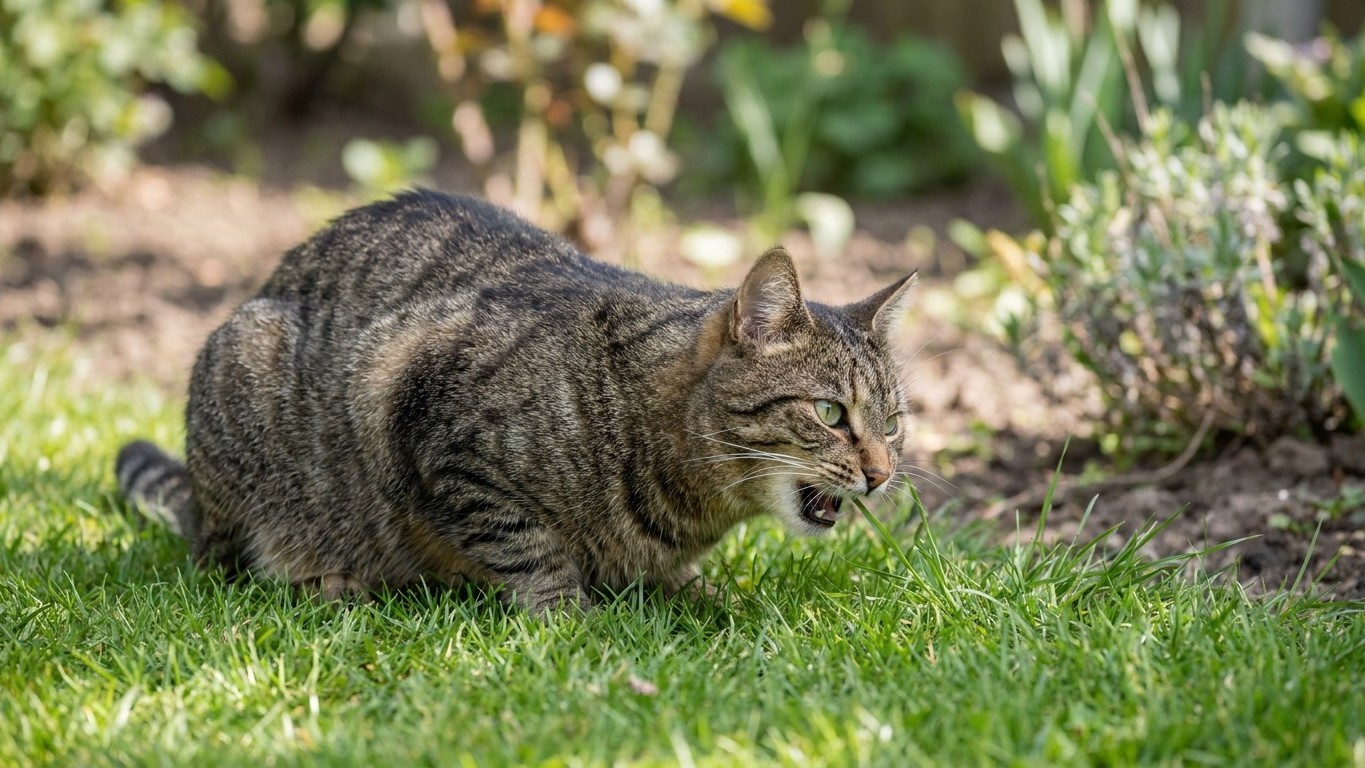
Cats eat grass. Almost all of them do it. A survey from the University of California Davis Veterinary School of Medicine found that 89% of cats ate grass six or more times throughout their lives, and 91% of the time, cats appear in good health before doing so. For years, most of us assumed it was harmless, a quirky little habit, a bit of self-prescribed roughage. But April, specifically, is when that casual assumption starts to wobble. The lawn wakes up, neighbours get their sprayers out, and the grass your cat is happily munching could be carrying a cocktail of things you’d rather not think about.
Key takeaways
- 89% of cats eat grass regularly, but April transforms it from harmless to hazardous
- A single lawn treatment can expose your cat to metaldehyde, roundworms, and pollen allergies
- Poisoned cats may look fine for hours or days before symptoms suddenly appear
Why cats eat grass in the first place
The behaviour is deeply instinctive, not random. Eating plants played a role in the ongoing purging of intestinal parasites in felid ancestors who were regularly exposed to these parasites. Modern domestic cats are obviously not stalking prey across the savannah, but the impulse hasn’t been switched off. When cats eat grass and then vomit afterwards, they are usually doing it on purpose, cats cannot digest large amounts of grass, so eating it may make them throw up, which helps to clear their stomach of things like fur, feathers, bones, or parasites that can irritate their digestive system.
There’s also a nutritional angle, though a modest one. Grass has some nutritional value, it’s full of fibre and contains some vitamins and minerals, including folic acid, which is a vital part of a cat’s diet. It also contains chlorophyll, which is what makes the plant green. None of that makes grass an essential part of a balanced diet, but it does explain why your cat isn’t simply being eccentric. Some cats just genuinely seem to enjoy grass and leafy greens — cats have unique personalities and tastes, and some may simply decide that grass is fun to eat. Fair enough, really.
What April actually puts on every blade
Here’s where it gets less wholesome. April is the month when gardens across the UK get their first proper treatment of the year, weed killers, lawn fertilisers, slug pellets, and growth regulators all go down within the same few weeks. Cats can become very sick from eating any grass treated with lawn fertiliser, herbicides, weed killer, pesticides, or other chemicals. The problem isn’t just your own garden, either. Your cat roams. Your neighbour’s freshly treated lawn is equally accessible, and they are unlikely to put up a sign.
Ingesting grass treated with pesticides or herbicides can lead to a range of health problems, including vomiting, diarrhoea, neurological issues, and even organ damage. Slug bait is a particular spring menace: a common pesticide is slug and snail bait made with metaldehyde, which causes tremors, seizures, and even death. There’s also a delay factor that many owners don’t realise. Sometimes, even if poisoned, an animal may appear normal for several hours or even days after the incident. You watch your cat trot back inside looking perfectly fine, and you think nothing of it.
Beyond chemicals, April grass carries biological hazards too. Cats are particularly vulnerable to accidental ingestion of pesticides due to their grooming habits, but parasites found in garden soil and on vegetation are an equal concern. Grass can be contaminated with parasites that can infect your cat. Roundworm eggs, for instance, can persist in soil for years and transfer to grass blades. Roundworm (Toxocara) is the most common internal parasite affecting cats in the UK.
Then there is the pollen question, which most cat owners don’t connect to grass-eating at all. A grass allergy in your cat can cause respiratory and skin issues if they are exposed to grass pollen, and while generally inhaled, pollen can also come into contact with your cat’s skin. A cat that’s chewing grass blades is pressing their face directly into the highest concentration of pollen on the plant. Pollen and mould spores easily enter homes through open windows, ventilation systems, and on clothing, shoes, or other pets that go outdoors, so even indoor cats are not entirely shielded once the season kicks in.
Warning signs worth taking seriously
A single episode of grass-eating followed by a quick vomit is almost never cause for panic. But there are patterns that warrant a proper vet visit, not a quick Google. While grass-eating is a very common behaviour in cats, it isn’t always normal. If your cat frequently eats and then vomits grass, it may be an indication of a gastrointestinal disease, such as inflammatory bowel disease or even parasites, talk to your vet about ruling out these conditions with faecal tests, blood tests, and even an abdominal ultrasound, especially if the behaviour is new or becoming more frequent.
The main danger that can result from cats eating grass is if a blade of grass is accidentally inhaled and becomes stuck in their nasal passage, which will likely cause your cat to sneeze excessively, if you notice this, take them to the vet so the grass can be safely removed. Signs of chemical poisoning are more urgent: warning signs of herbicide poisoning include diarrhoea, lethargy, weakness, convulsions, chemical burns on the tongue, nose, or mouth, and difficulty breathing. If you see any of those, that’s a same-day call to your vet, not a wait-and-see situation.
Lungworm also deserves a mention here, particularly for outdoor cats in the UK. Lungworm used to be considered rare, but multiple data sources now show it is established and spreading. Slugs and snails, which carry canine lungworm larvae, are active for much of the year in the UK’s mild, wet climate. A cat chewing grass in April could easily ingest slug slime along with it. Usually lungworm is not life-threatening for cats, but elderly cats and kittens are more at risk of serious illness if they get lungworm, especially if it causes a secondary infection.
The safe alternative that actually works
The simplest solution is to redirect the habit rather than suppress it. Cat grass is not a specific kind of plant, but a grass mixture grown from seeds such as wheat, barley, oats, or rye, it’s not to be confused with the grass outdoors in your lawn, which has the potential to contain toxic pesticides. Cat grass is grown indoors specifically for household pets. Pots of it are available from most pet shops and garden centres, and they are cheap to maintain. Wheatgrass, oat grass, and rye grass are considered safe options for cats.
If your cat is determined to graze outside, avoid using pesticides, herbicides, or fertilisers on your lawn, and supervise your cat when they are outdoors, discouraging them from eating grass in areas you are unsure about. After garden visits, if your pet has been on a pesticide-treated lawn, wash off their paws with a mild soap and water solution before they enter the house or groom themselves. Given how methodically cats clean themselves, that step alone could make a real difference to what they ingest.
One thing worth knowing: if your cat has never eaten grass before and has suddenly developed the behaviour, it’s a good idea to take them to the vet for a check-up, so your vet can make sure there are no underlying health problems that have caused your cat to start grazing. A sudden appetite for the lawn is sometimes the body’s way of signalling that something else is going wrong, and that’s always worth investigating properly rather than assuming it’s just a spring phase.
Sources : zytca.com | creative.science