
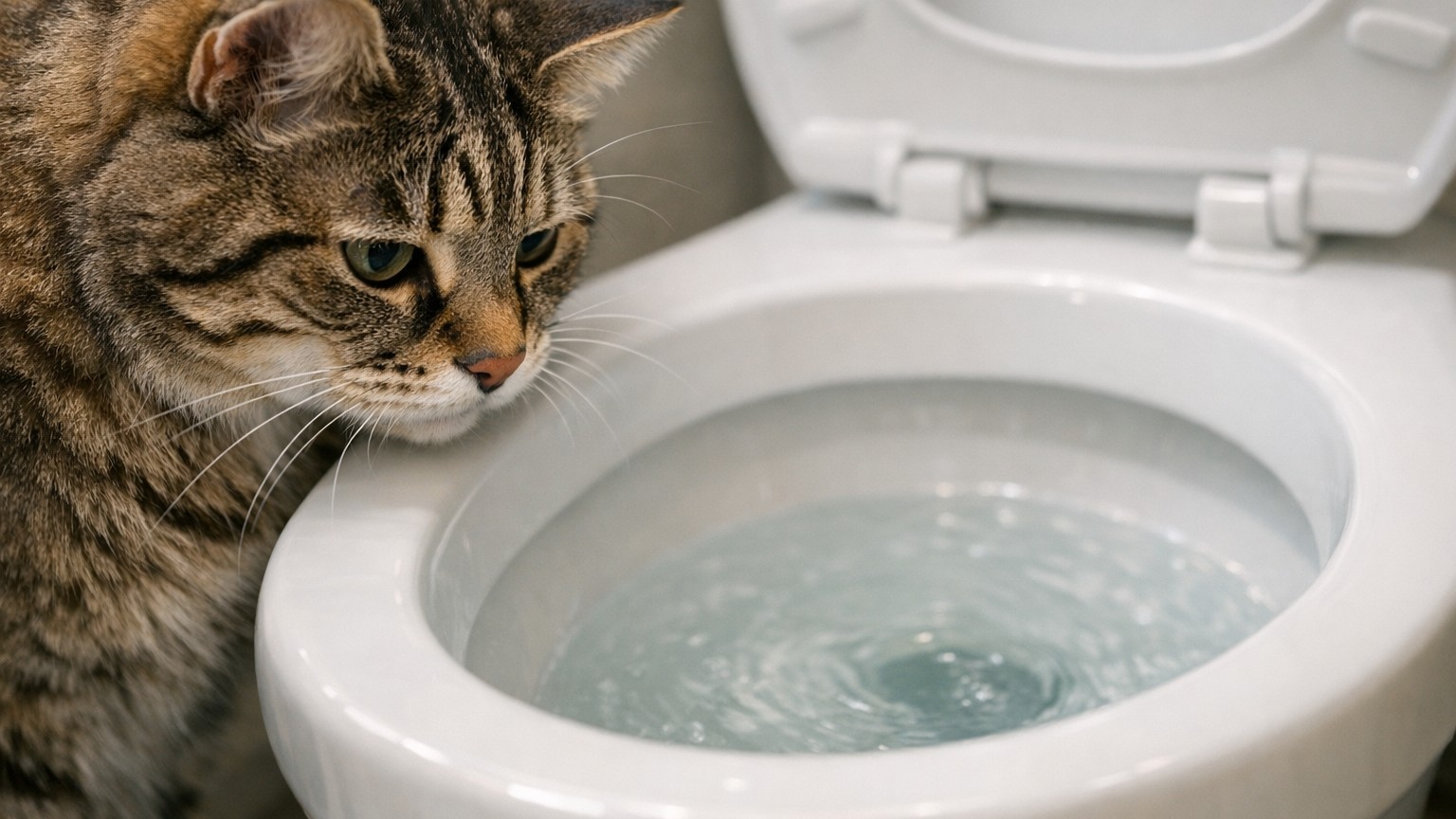
Dropping a limescale tablet into the toilet and walking away feels like routine household maintenance. No scrubbing, no fuss. But if you share your home with a cat, that open toilet lid is effectively an invitation to a chemical hazard, one that can cause serious burns to your pet’s mouth, tongue, and throat before you even realise what’s happened.
Key takeaways
- Limescale tablets contain hydrochloric or sulfamic acid—the same corrosive chemicals requiring protective gear for humans
- Alkaline agents in these products don’t cause immediate pain, meaning cats can suffer prolonged exposure and hidden internal burns
- Symptoms may take up to 12 hours to appear, making prevention the only reliable protection
What’s actually in those tablets?
Dedicated limescale removers are often based on citric, hydrochloric, or sulfamic acid, formulated to cut through mineral deposits quickly. These are proper acids, not a mild cleaning spray. Hydrochloric acid, for instance, is a strong acid that reacts rapidly with limescale; it is commonly used in heavy-duty descalers for toilets and heavily scaled surfaces. It is very corrosive and dangerous if not handled properly, and must be used in well-ventilated areas with protective gear including gloves and goggles. The same label warnings that apply to you apply, in far more serious terms, to a cat weighing four kilograms who is quietly lapping from the bowl.
Products that pose the biggest corrosive or caustic danger threat include lime-removal products and concentrated toilet cleaners. The distinction matters here. Acids damage tissue immediately and are generally painful on contact, which helps to limit exposure, but alkaline agents also damage tissue immediately and are not painful on contact, potentially resulting in prolonged exposure and deeper, more extensive burns. Some limescale tablets combine both acidic and alkaline compounds, meaning the damage mechanism can vary depending on the exact formulation. Either way, the outcome for soft tissue in a cat’s mouth is the same: burns.
Why cats drink from the toilet in the first place
Cats are drawn to toilet water for reasons that are deeply wired into their instincts. In the wild, cats are drawn to moving water sources like streams, which are less likely to harbour bacteria, and the toilet may mimic this instinctual preference. For some, the cooler temperature of the toilet water compared to the water in their bowl makes it more appealing; water that has been sitting in a regular bowl for hours may not seem as fresh. If your cat’s bowl is plastic, that may be part of the problem — plastic bowls can taint the water, which is why cats often prefer metal, glass, or ceramic surfaces, hence the appeal of a porcelain toilet.
There’s also a placement issue that many owners overlook. The position of your cat’s water bowl plays a role in their decision to seek alternatives: if the bowl is located near their food or litter box, they may avoid it due to the association with waste, as cats prefer their water source to be separate from their food and litter areas. So the toilet, in a quiet bathroom, genuinely is a more appealing option from your cat’s perspective. That’s not mischief, it’s biology.
The real damage: what happens when a cat drinks treated water
If your pet manages to ingest the tablet directly, the results can be much more serious, many of these products can cause burns in the mouth and the throat. The most common issue is chemical burns to the mouth, tongue, and sometimes the oesophagus; symptoms to watch for include drooling, pawing at the mouth, vomiting, and loss of appetite. These signs can appear almost instantly, or they can take several hours to manifest, which is what makes this particular danger so insidious.
Alkaline agents are especially concerning because they are not painful on contact, potentially resulting in prolonged exposure; burns from alkaline agents may take up to 12 hours to become apparent, and burns to the oesophagus are more common with alkaline agents and may occur with or without significant mouth burns. In practical terms, this means your cat might appear completely fine after drinking from the toilet, only to develop serious internal damage hours later. Although cats are less likely to drink large amounts compared to dogs, even a few licks of contaminated water can cause serious health issues.
Common household cleaners including toilet bowl cleaners can be toxic to cats; symptoms can include stomach upset, chemical burns, respiratory signs, and even organ damage, depending on the product. The worst-case scenario, repeated by vets, is a cat that has been quietly drinking from a chemically treated bowl for weeks or months, the cumulative exposure to low-level acid irritation causing progressive, silent damage to soft tissue long before the owner suspects anything is wrong.
If you suspect your cat has drunk from a treated toilet, do not induce vomiting. Vomiting should never be induced because of the risk of causing additional corrosive damage to the gastrointestinal tract; likewise, the stomach should not be flushed because of the risk of tearing the weakened oesophagus or stomach. For recent mouth exposures, water or milk should be given immediately to dilute the corrosive agent, and then you call your vet straight away. Always consult a vet if you have any concern about exposure; do not wait to see if symptoms develop.
What to do instead
The single most effective intervention costs nothing. The best and most effective way to prevent your pet from drinking harmful water from the toilet is to consistently keep the toilet lid down. That’s it. Not sometimes. Every time, for every flush. If you have guests who might forget, keep the bathroom door closed while your cat has access to the rest of the house.
Addressing why your cat seeks out the toilet in the first place is equally worth the effort. Ensure your pet always has access to fresh, clean water, and consider using a pet water fountain for a cat who prefers running water. Keep your cat’s water bowl clean by washing it every day and filling it to the brim with fresh water, cleaning it twice a day would be even better. A ceramic or stainless steel bowl, placed well away from the food bowl and litter tray, will be considerably more appealing to a fastidious cat than a grimy plastic bowl sitting next to their dinner.
On the cleaning side, citric acid is the active ingredient in lemons and limes and gives excellent results when descaling a toilet; it can be used as an alternative to commercial limescale remover tablets or blocks. Citric acid is considered non-toxic, eco-friendly, and safe to use on a variety of surfaces, a meaningful advantage over products based on hydrochloric acid, particularly for households with cats. Whatever product you use, applying it, closing the lid, and flushing thoroughly before your cat has any opportunity to investigate is non-negotiable.
One detail that often surprises people: cats’ small size, their lack of ability to metabolise certain substances, and their tendency to hide symptoms when ill make poisoning less obvious compared to dogs, which can also delay treatment. A cat in pain often simply withdraws. The drooling and pawing that signal distress can be missed entirely if you’re not watching closely. Cats are, in a sense, designed to hide how badly they’re hurting, which places the responsibility firmly on us to prevent the exposure in the first place.
Sources : gumtree.com | pethealthnetwork.com