
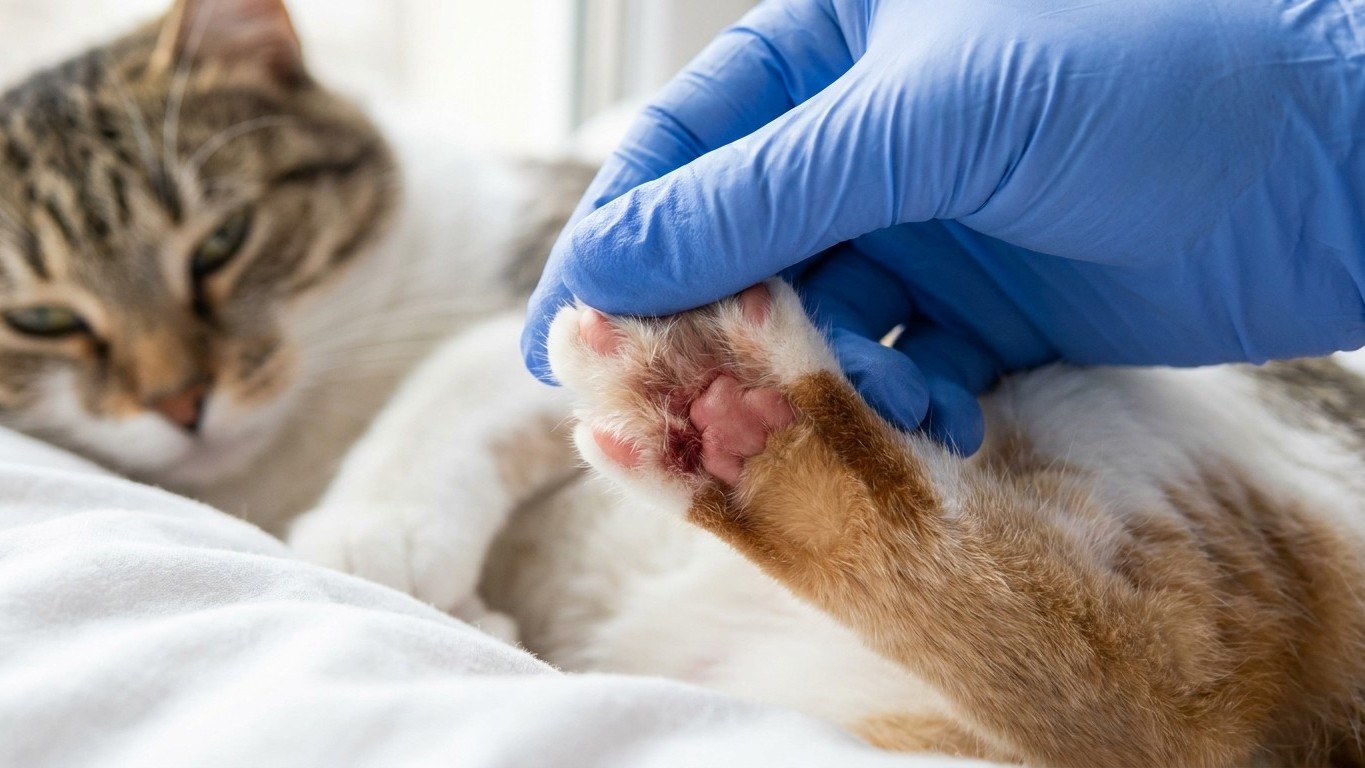
What looked like a simple sprain turned out to be a barbed grass seed working its way steadily towards the bone, and the vet later admitted another few days of delay could have meant losing part of the paw. This scenario plays out in veterinary clinics across Britain every summer, and most owners have no idea their cat is even at risk until the limping starts.
Key takeaways
- A grass seed lodged between paw pads can migrate deeper into the body within hours, invisible beneath fur and swelling
- Vets warn that waiting even a few days can lead to infections, abscesses, and in extreme cases, seeds traveling to organs like the liver or lungs
- Home removal is risky—sedation and proper surgical extraction are essential, yet prevention through coat checks and trimming takes just minutes
Why a blade of grass can be more dangerous than it looks
Grass seeds are the sharp bristles at the end of long grasses, shaped a bit like arrows or fishing hooks, with pointy tips at one end and barbed “ears” at the other. That barbed design is brilliant for the plant’s survival, since it means the seed hitches a ride on any passing fur and gets carried far from the parent grass. The trouble is that once one of these hitchhikers lodges against skin, it behaves exactly as it’s built to: once stuck in the fur, grass seeds will only move deeper, working their way into narrow spaces like the ear canals, between the toes or even under eyelids. There’s no reverse gear on a barb. It’s a one-way ticket inward.
Cats aren’t as commonly affected as dogs, largely because they’re fussier about where they walk, but any cat who spends time hunting or prowling through overgrown meadows, allotments or unmown verges is fair game. Usually present during the late spring and early summer months, grass seeds are easily dislodged from long grass to attach themselves to your cat’s coat as they brush past. The paws are a particular hotspot because close contact with the ground makes it an easy space to enter and hard to escape. Between the toes, a seed can bury itself within hours and vanish from sight almost immediately, hidden by fur and swelling.
The paw pad injury nobody spots in time
What starts as a barely noticeable limp can escalate fast. Vets often see swellings in the skin between toes or pads, likely to be red and inflamed with a small hole, or sinus, in the middle oozing reddish fluid. That tiny weeping hole is the entry tunnel the seed carved on its way in, and it’s frequently the only visible clue that something foreign is under there. Owners often mistake the whole picture for a simple cut, a bee sting, or a knock, especially since grass seeds wedged into the pads of a cat’s paw lead to swelling, redness and pain, with the pet limping, licking their paws a lot, or avoiding walks.
The real danger isn’t the initial puncture, it’s what happens if the seed isn’t found quickly. As well as causing irritation, grass seeds carry bacteria with them wherever they travel to, leading to infections and abscesses wherever they go. Left alone, that infection doesn’t stay put. The trapped seed becomes a foreign body causing ongoing or recurrent irritation, inflammation, swelling and infections and, in the worst cases, recurrent lameness, abscesses, fevers or sepsis. I’ve read case reports that genuinely made my jaw drop: veterinary journals have documented grass awns migrating from a cat’s paw or lungs all the way to the liver, the bladder and even the space around the spine, causing abscesses in places nowhere near the original entry point. One recent case saw a 6-year-old cat presented with a month-long cough and weight loss caused by an inhaled grass awn lodged in the lung, which later required a second surgery after the seed migrated through the diaphragm into the liver. These are rare, extreme examples, but they show exactly why a seemingly minor paw injury deserves quick attention rather than a wait-and-see approach.
What the vet actually does, and why home removal is risky
If you spot a seed still sitting loose on the coat, plucking it off with tweezers is fine and sensible. The moment it’s embedded, though, the advice from every vet I’ve spoken to and every practice guide I’ve read is consistent: don’t dig. If it’s lodged in the skin, ear, or eye, don’t try to dig it out yourself as this can cause injury or push it further in. A seed that’s already travelling under the skin needs proper tools to find, not a determined owner with kitchen tweezers.
At the clinic, treatment usually starts with locating the thing, which is harder than it sounds given how small and radiolucent these seeds are. Depending on the location, your cat will usually have sedation and pain relief to stay relaxed and Comfortable, or a full general anaesthetic so they sleep through the whole procedure. For a paw, that typically means a small surgical procedure to open up the swelling to find and remove the seed, sometimes preceded by a poultice on the paw for 24 hours to help “draw” the swelling, which reduces fluid and makes the seed easier to find. Afterwards, most cats go home with anti-inflammatory medication to reduce swelling or antibiotics to treat an infection. It’s not glamorous, but it works, and cats generally bounce back within a couple of weeks provided the whole seed has been removed. That last part matters: if any fragment is left behind, the wound can keep discharging and refuse to heal, sometimes for months, which is exactly the frustrating pattern vets sometimes see in chronic non-healing paw wounds.
Cutting the odds this summer
You can’t wrap a cat in cotton wool, nor should you try, but a few habits genuinely reduce the risk. Check your cat’s coat thoroughly whenever they return home after spending time outside, and if they have a longer coat, trim any feathery hairs around their ears, eyes, and paws to stop grass seeds attaching. During the driest weeks of summer, when seed heads are shattering and scattering everywhere, it’s worth being extra vigilant, since keeping your cat indoors when local long grasses have dried out and are scattering seeds avoids the worst of the exposure altogether.
Here’s a fact that surprises most owners: symptoms don’t always appear straight away. Some grass seed injuries flare up within hours, but others simmer quietly under the skin for weeks before the swelling becomes obvious, which is exactly why a “minor” limp that lingers for more than a day or two deserves a proper look from a vet rather than a shrug and a hope it sorts itself out.
Sources : jardenvets.co.uk | justanswer.co.uk