
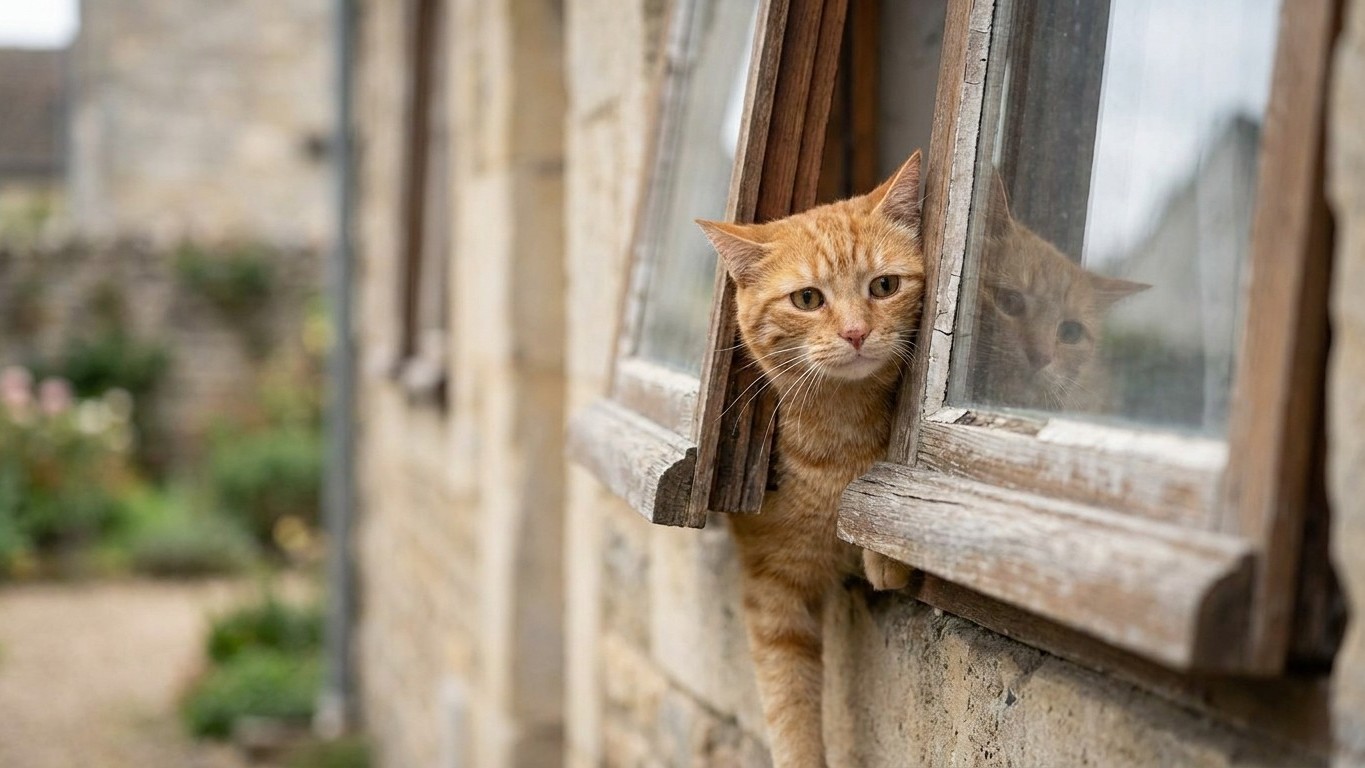
Vets across Europe now have a name for it: Kippfenster syndrome, or tilt window trauma. It sounds almost bureaucratic for something so brutal, but the mechanism is closer to a crush injury than a simple scrape. Window entrapment in cats can lead to reduced blood flow to the spinal cord, muscles and nerves, resulting in ischaemic neuromyelomyopathy, and the severity and duration of entrapment greatly influence clinical and neurological outcomes, as well as prognosis. Translation: the longer that cat hangs there wriggling, thinking it’s “just stuck”, the more likely it is to end up with permanent nerve damage, kidney failure, or worse. This isn’t a minor mishap you can shrug off until you’ve finished your cup of tea.
Key takeaways
- Tilted windows create a wedge trap that cats physically cannot escape from—their shoulders fit through but they can’t reverse out
- A freed cat may look fine but is suffering crush-injury damage inside; paralysis, organ failure, and death can follow hours or days later
- The first 60 seconds of rescue technique matters more than speed—and the vet visit after is non-negotiable, even if your cat ‘seems okay’
Why a tilted window becomes a trap, not a breeze
Tilt and turn windows, the kind that pivot open at the top to let in air while staying “child-safe”, have quietly become one of the most under-recognised hazards in British homes. This style of window, which tilts inward from the top, creates a narrow gap that seems harmless but can be a deadly trap for cats, and when a cat attempts to squeeze through this opening, they can become wedged in the narrow space, unable to move forward or backward. The gap narrows like a wedge, so a cat that gets its shoulders through often can’t reverse out, and can’t push forward either.
A proper veterinary study helps put numbers behind the scale of this. Window entrapment presents a notable risk of injury and even death for cats living in areas where bottom-hung windows are common, particularly in the Germanic countries, such as Germany, Switzerland and Austria. Researchers reviewing cases from Swiss and German veterinary clinics between 2005 and 2022 found the trauma occurs when cats become accidentally trapped, often around the thoracolumbar area, leading to varying degrees of organic hypoperfusion that can affect various structures, including the spinal cord, muscles, nerves and kidneys, depending on the severity of the trauma. The comparison the same paper draws is genuinely eye-opening: in human medicine, a condition frequently observed during catastrophic events such as earthquakes is termed ‘crush injury/syndrome’, occurring when a limb or other body part is trapped under heavy objects, causing continuous pressure so intense that it surpasses capillary perfusion pressure, preventing blood flow and leading to tissue ischaemia. A cat wedged in a window sash is, physiologically, suffering something disturbingly similar to what a trapped earthquake survivor endures. That’s not a comparison I make lightly, but it explains why “he’ll be fine once I get him out” is such a dangerous assumption.
The signs that scream emergency, even if the cat looks calm
Here’s the cruel twist: a cat freed from a tilt window can look almost normal in the first few minutes. Underneath, the damage is already ticking. The animals are usually in shock and in severe pain, with pale mucous membranes, an elevated heart rate, and a lowered body temperature. Because blood supply to the back half of the body has been squeezed off, the consequences of reduced blood flow are primarily paralysis of the hind limbs, which feel cold due to the interrupted blood supply, and the cats react slowly or not at all to touch. Owners often describe touching a paw and getting nothing back, no flinch, no pull away, which is genuinely chilling to witness.
Cats are notorious for masking pain, a survival trait inherited from wild ancestors who couldn’t afford to look vulnerable. That instinct works against them here. Immediate veterinary care is crucial even if injuries aren’t immediately apparent, because cats are masters at hiding pain and distress, and internal injuries may not become obvious for hours or even days after an accident. A wobble in the back legs a day later, sudden reluctance to jump, a hunched posture, these can all be delayed fallout from a trapping that seemed to end fine at the time.
What to actually do in the first sixty seconds
Speed matters, but so does technique. Yanking a panicking cat free can add fractures to the list of injuries. With one hand you reach under the cat’s chest, with the other you reach under the belly, and in the next step, you carefully lift the cat. Some vets recommend widening the gap slightly first rather than pulling against it: if a cat is wedged in a tilt window, you may need to adjust the window position slightly to create more space, but do this gradually to avoid causing additional trauma. Expect scratching. A frightened, hurting cat doesn’t know you’re the rescue party, so if your cat is stuck in a tilted window, they might scratch you out of panic, so keep a thick pair of gloves and jacket handy to protect yourself.
Once free, the cat needs a vet, not a wait-and-see approach. An X-ray examination should always be performed on cats that have been trapped in a tilting window to identify or rule out any internal injuries or broken bones, and the cat’s state of shock must be treated, involving infusions and medication to stabilise the circulation and maintain kidney function. That kidney mention isn’t incidental. When crushed muscle tissue releases its contents back into circulation once the pressure lifts, the kidneys can take the hit days later, which is exactly why a cat that “seemed absolutely fine” on the car journey home can deteriorate that evening.
Making the window safe rather than just watching it
Prevention here is refreshingly cheap compared to an emergency vet bill. Specialist grilles clip onto the tilted frame and let air through while closing the gap entirely, and even a stopgap like a rolled towel wedged into the vee-shaped opening buys some protection when you can’t fit a proper guard immediately. Seasonal timing matters too: the study found that statistically June, July and August are the most dangerous months, unsurprisingly the exact months British households fling every window open. The single most effective habit, according to vets who deal with the aftermath, remains disarmingly simple: do not leave your cats alone when windows are tilted or open without appropriate safeguard. Close it fully when you leave the room, or fit the guard permanently. Your cat’s curiosity isn’t going anywhere, so the window has to be the thing that changes.
Sources : pmc.ncbi.nlm.nih.gov | tractive.com