
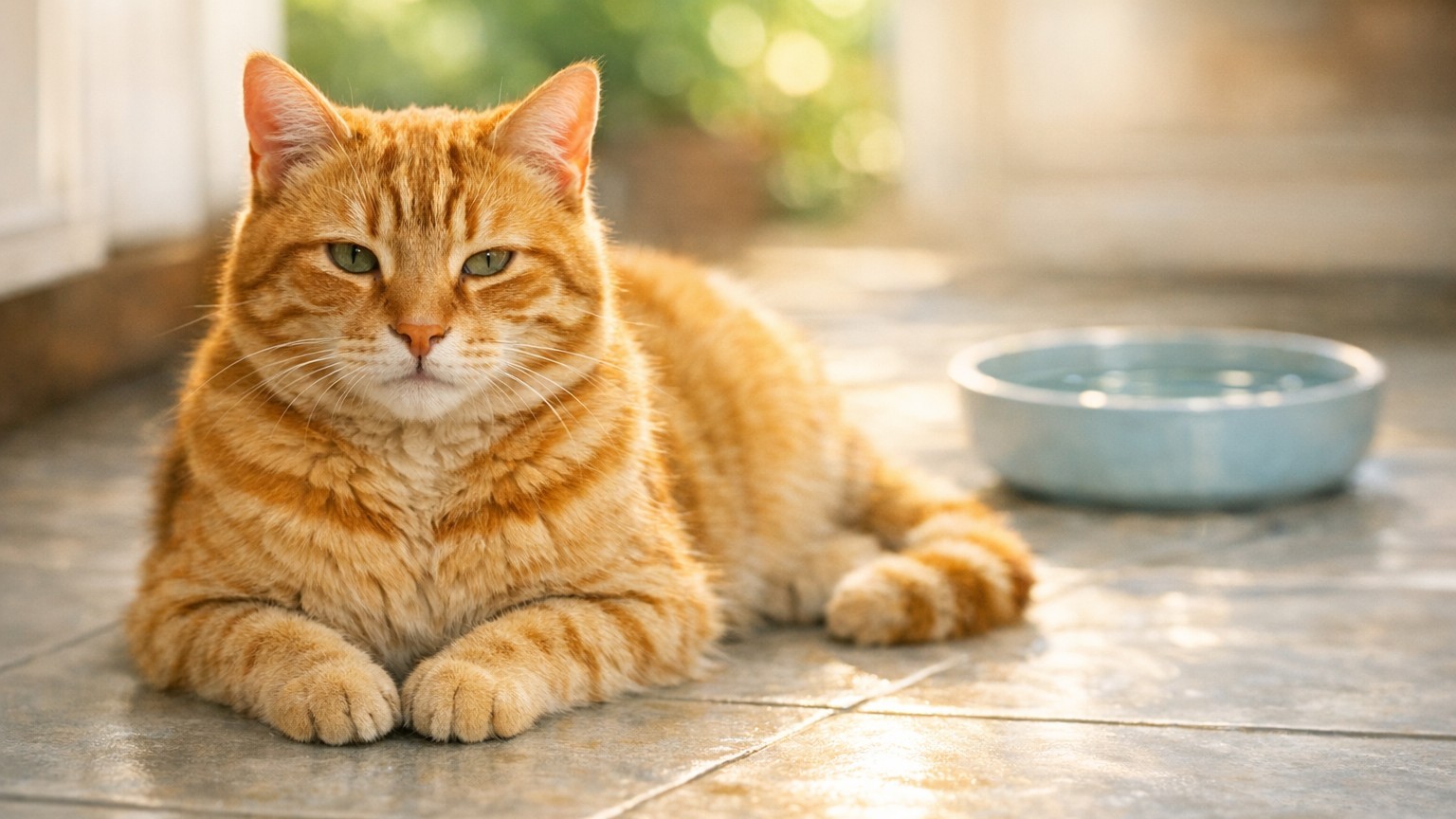
Every summer, for years, a well-meaning cat owner draped a damp cloth over her cat’s back in the heat. She thought she was helping. She was, in a small way. But the vet’s reaction when she mentioned it, a slow intake of breath, a careful pause, made her realise she’d been doing something subtly wrong in a very specific way, and possibly right in another. The truth about cooling cats down is more nuanced than most of us ever think to ask about.
Key takeaways
- A vet’s reaction to a simple cooling habit revealed it might be doing more harm than good
- The difference between effective cooling and dangerous heat trapping comes down to one physics principle
- One abnormal cat behavior signals an emergency so serious that minutes matter
How cats actually manage heat
Cats have a very limited ability to sweat, so instead, they control their temperature by licking themselves and seeking shade on warm days. You may notice your cat grooming themselves more in summer, the evaporating saliva causes a cooling effect, similar to the way human sweat keeps us cool. Cats also sweat through their paw pads to regulate body temperature, so you might occasionally see evidence of that if your cat leaves behind damp footprints.
This matters because it explains exactly why the wet cloth trick is both partially right and partially wrong. The logic behind it, using evaporation to draw heat away from the body, is sound. It’s the same principle cats use when they groom. The problem comes entirely down to how you apply it. A damp cloth stroked gently across the fur, then left to dry in open air? That works. Covering a cat in damp towels or cloths, however, will only trap heat and prevent the cooling effects of evaporation. Pets doused with water should not be wrapped up with a wet towel. The purpose of wetting them is for heat to evaporate off. If they are wrapped, this limits evaporation and can actually increase their body temperature.
That’s the distinction. Wiping a cat down, then letting the moisture sit and evaporate naturally with airflow, fine, and genuinely helpful on a hot day. Laying a wet cloth on top of them, covering their coat, trapping warmth against the skin? You’ve essentially made a humid little oven.
What heatstroke actually looks like in a cat
If a cat’s body temperature goes above 40°C, they are at risk of heatstroke, which can cause severe dehydration, seizures, blood clotting problems, organ damage, coma and death. That’s not a slow deterioration, either. Heatstroke is more dangerous the longer their body temperature stays high, so the quicker they are cooled down and treated by a vet, the better their chance of a full recovery.
Symptoms of heatstroke can include agitation, stretching out and breathing rapidly, extreme distress, skin hot to the touch, glazed eyes, vomiting and drooling. One symptom worth knowing above all others: in cats, any open-mouth breathing or panting is abnormal. Dogs pant constantly, it’s their main cooling mechanism. Cats almost never do it unless something is wrong. If your cat is panting, that’s not them being dramatic. That’s an emergency signal.
Obese, long-haired, old, young, and brachycephalic or flat-faced cats such as Persians are most at risk of developing heatstroke because they find it harder to cool down. Most cases of heatstroke develop after being accidentally shut in a hot place such as a shed, greenhouse, conservatory, garage, or car. A cat trapped in a conservatory with no ventilation and no water can be in serious trouble within a couple of hours. The RSPCA notes that temperatures inside cars and conservatories can reach 47°C, which can be fatal.
What to actually do, and what to avoid
If you genuinely suspect heatstroke, this is not a “wait and see” situation. Remove your cat from the hot environment immediately. You can use a cloth to wet their coat with lukewarm water and put them somewhere cool and safe before contacting your vet as soon as possible. Cooling your cat down needs to be gradual to avoid shock and not cause your cat stress, as stress can increase their body temperature further.
The temperature of the water matters more than most people realise. Using cool or tepid water, thoroughly and continuously wet your cat’s fur. Do not use ice or cold water, since this can make the situation worse. Icy water causes the surface blood vessels to constrict sharply, which actually slows the release of heat from the body’s core, the precise opposite of what you want. Place a fan to gently blow over their body to help aid in cooling, because moving air is what turns dampness into active evaporation.
For routine hot days, not emergencies, dampening a small towel with cool water and dabbing it over your cat’s fur can bring some relief from the hot weather. The key word there is dabbing, not draping. The warmest parts of a cat’s body are their tummies, the pads of their paws, their armpits, under their chin and on the outside of their ears, so those are the areas to target for maximum effect with minimum fuss.
Smarter ways to keep your cat cool all summer
As well as cooling down their paws, which is where cats absorb and lose heat, ice cubes provide enrichment on days when it’s best to keep your cat indoors, out of the heat. A frozen water bottle wrapped in a pillowcase in their favourite spot is a cheap and effective option. Cats need to drink plenty of water during warm weather to prevent dehydration. Providing lots of fresh, clean water is essential, whether at home or in the garden.
Matted hair traps heat, so give your cat a daily groom if possible. This is especially important for long-haired cats. Grooming removes loose undercoat that acts like insulation, the kind of insulation that’s completely useless in a heatwave. If your cat usually spends a lot of time outdoors, consider keeping them inside during the hottest part of the day if possible. Pavements, asphalt and artificial grass can also become incredibly hot between 12pm and 2pm, causing burns and sores to your cat’s delicate footpads.
Don’t forget that cats are susceptible to sunburn, particularly those with white ears and noses. This can lead to painful blistering and sores, and long-term exposure can lead to skin cancers. There is pet-safe sun cream available for the tips of ears and noses, your vet can advise on which formulas are safe, since some human products contain ingredients that are toxic to cats.
The wet cloth habit isn’t quite the mistake it might first appear to be, provided you understand the physics behind it. A gentle wipe-down with cool (not cold) water, followed by exposure to moving air, genuinely mimics the way a cat’s own body tries to stay cool. The error, and it’s an easy one to make, is leaving the cloth in place and thinking the dampness alone will do the work. It won’t. Evaporation needs airflow, and a cat needs to not be wrapped in anything wet. Get those two things right, and you’re actually working with your cat’s biology rather than against it.
Sources : dailypaws.com | rvc.ac.uk