
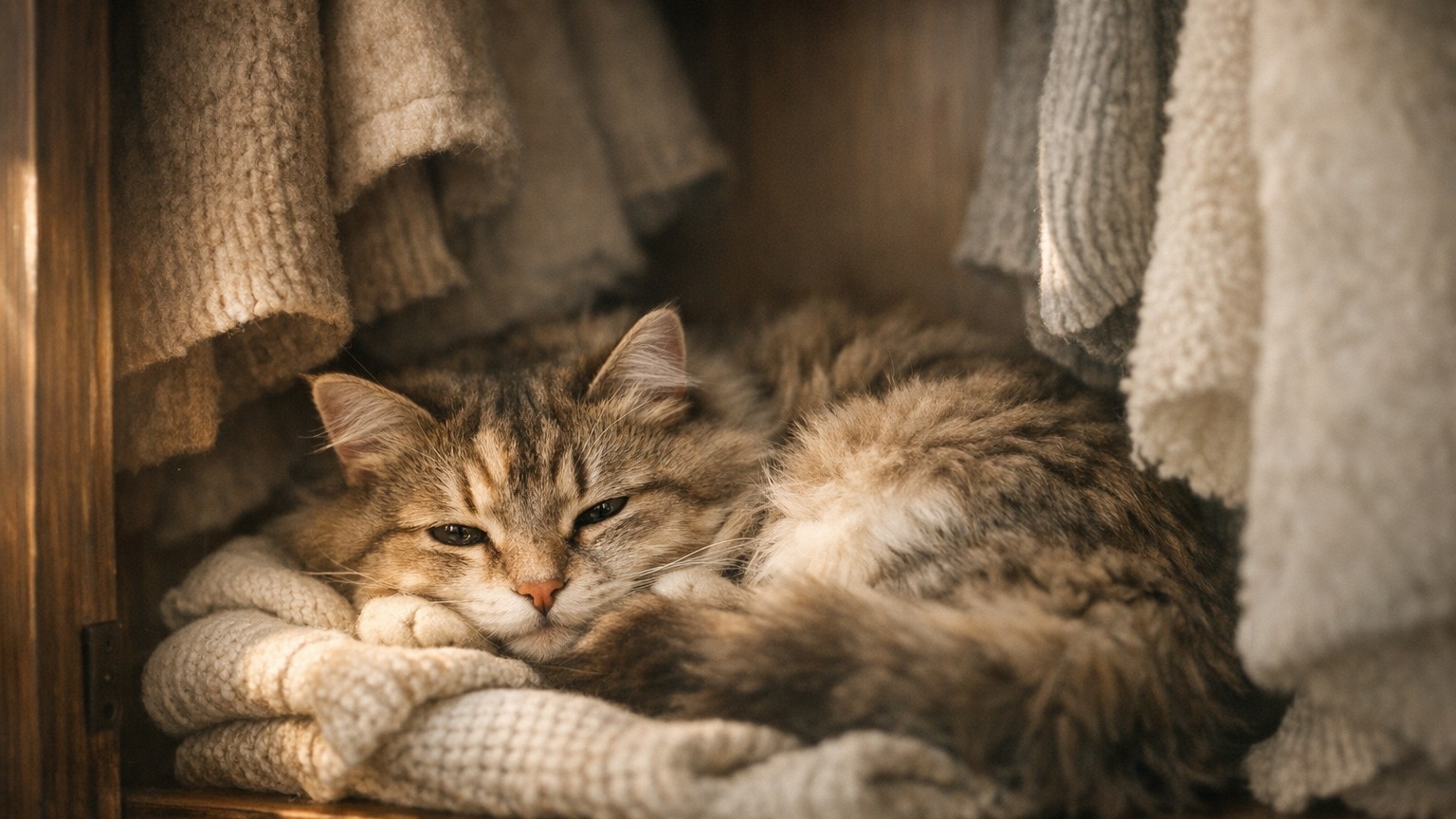
She was always there. The moment you opened the wardrobe to reach for a coat, there she’d be, curled in a tight circle among the wool and cashmere, utterly unbothered by your presence. It seemed sweet. Endearing. The classic cat-does-bizarre-thing story. But a wardrobe isn’t a radiator, and when the vet ran a routine blood test, the results told a very different story about why she’d been choosing that particular hiding spot.
Key takeaways
- A cat’s obsessive search for warmth in wardrobes and radiators isn’t quirky—it’s a physiological cry for help from failing kidneys
- Traditional blood tests miss kidney disease until 75% of function is already lost; newer SDMA testing catches it when only 40% is gone
- Chronic kidney disease affects up to 80% of cats over 15, yet early detection can add months or years of quality life
The warm-seeking behaviour that isn’t just quirky
Cats have always loved a warm spot, their ancestors were desert animals, and that preference for heat is genuinely hardwired. Their origin as desert animals has led them to appreciate warmth, and a normal body temperature for cats sits between 38 and 39 degrees Celsius. A cat sleeping in a sun-warmed patch of carpet is just being a cat. But a cat who begins obsessively seeking heat, burrowing into wardrobes, pressing against radiators, refusing to leave a warm corner — may be doing something quite different: compensating for a body that is losing its ability to stay warm on its own.
Cats with certain conditions such as arthritis or kidney disease may find warmth particularly soothing. This isn’t comfort-seeking in the abstract. There is a genuine physiological reason behind it. Metabolism in the kidneys is highly aerobic, meaning these organs contribute over 10% of total body heat. When kidney function deteriorates, a cat’s capacity to generate internal warmth drops with it. Cats with advanced chronic renal failure can have difficulty keeping their body temperature up to normal, which is why providing them with soft bedding in a warm, sunny location is part of their care. Your cat wasn’t being eccentric. She was self-medicating with wool coats.
Other early signs, ones that might easily get missed, include gradual weight loss especially along the spine, decreased appetite, occasional vomiting, decreased grooming, and seeking warm places more often. The problem is that none of these on their own screams “kidney disease”. They all look like ageing. They all look like a cat “just getting older”. Because cats are masters at hiding illness, many owners don’t notice changes until the disease is moderately advanced.
What the blood test was actually measuring
Blood tests can determine the concentration of three important waste products normally filtered by the kidneys: blood urea nitrogen (BUN), creatinine, and symmetric dimethyl arginine (SDMA). The results of these markers, read together, tell vets whether the kidneys are still doing their job. The trouble with the older tests, BUN and creatinine, is that they are distressingly late to the party.
Creatinine concentrations in the blood do not generally rise until a cat has lost almost 75% of their renal function, while SDMA elevations are detectable when about 40% of kidney function is lost, potentially allowing CKD to be diagnosed sooner. Read that again. Three quarters gone before the traditional test raises a flag. That’s not a diagnostic tool; that’s a near-obituary. SDMA detects kidney problems when only 25–40% of function is lost, up to two years before creatinine rises. This is why any vet running a blood panel on a cat over seven years old should ideally be including SDMA as standard. A blood test measuring blood urea nitrogen and creatinine will indicate abnormal kidney filtering if levels are high, and elevated phosphorus is also a telling marker as it accumulates in the blood.
There is one more piece of this puzzle that explains the wardrobe behaviour in biological terms. The kidneys produce a hormone called erythropoietin, which stimulates the development of red blood cells by the bone marrow. With significant kidney disease, the kidneys do not produce enough erythropoietin, decreasing red blood cell production and leading to anemia. Cats with CKD produce less of this hormone, and the resulting lack of red blood cells causes them to feel very lethargic, lose appetite, and develop pale or white gums. Fewer red blood cells means less oxygen delivered to tissues, which means less body heat. The cat isn’t just chilly; she is physiologically cold from the inside out.
How common is this, and who is most at risk
Chronic kidney disease is one of the most common conditions in ageing cats, affecting approximately 30–40% of cats over age 10 and up to 80% of cats over 15. That’s not a rare condition, that’s a near-certainty for any cat who lives long enough. CKD can be seen in cats of any age, but is most commonly seen in middle-aged to older cats, and becomes increasingly common with age.
The cruelty of chronic kidney disease is in its silence. In the early stages, cats may show no symptoms at all. The earliest signs often include increased thirst and urination, but this may be overlooked in cats that drink secretly or share a water dish. A multi-cat household, or a cat who drinks from a dripping tap, can disguise this symptom for months. Meanwhile, larger clumps in the litter box when clumping litter is used, flooding the litter box, is an important clue to illness and warrants a check-up. Most owners would barely notice. It takes a certain kind of attentiveness, or a sharp vet at a routine check, to catch it.
What happens after the diagnosis
While CKD cannot be reversed, early detection and proper management can significantly slow progression and add months to years of quality life. That’s not nothing. In fact, for many cats diagnosed at Stage 2, that can mean years of comfortable life with adjustments that are genuinely manageable.
The first conversation your vet will have is about diet. A specialised diet that is low in phosphorus and protein can help reduce the workload on the kidneys and manage symptoms. Alongside that, encouraging your cat to drink more can be done by using water fountains, dripping taps, and having numerous water sources available. Subcutaneous fluid therapy can also help maintain hydration and support kidney function, something many owners learn to administer at home, and which is far less intimidating than it sounds. High blood pressure is common in cats with kidney disease; it often has no symptoms in the early stages but can cause damage throughout the body, including the brain, heart, eyes, and kidneys, so blood pressure monitoring becomes part of the routine too.
Always consult your vet if you notice any of the signs described here, no article replaces a proper clinical examination and bloodwork. But if your cat has started colonising the airing cupboard, pressing herself against the boiler, or spending unusual time burrowed in textiles that hold warmth, do mention it at your next appointment. Blood work, especially the SDMA test, can detect kidney function loss months or even years before traditional tests — and getting there early is the only advantage you have over a disease that prefers to operate in the dark.
One last thing worth knowing: because CKD is a common disease for older cats and can progress quietly for years before overt clinical signs appear, annual screening of healthy cats should ideally begin around five to six years of age. Not when you notice something wrong. Before.
Sources : pethealthnetwork.com | uvhvets.com