
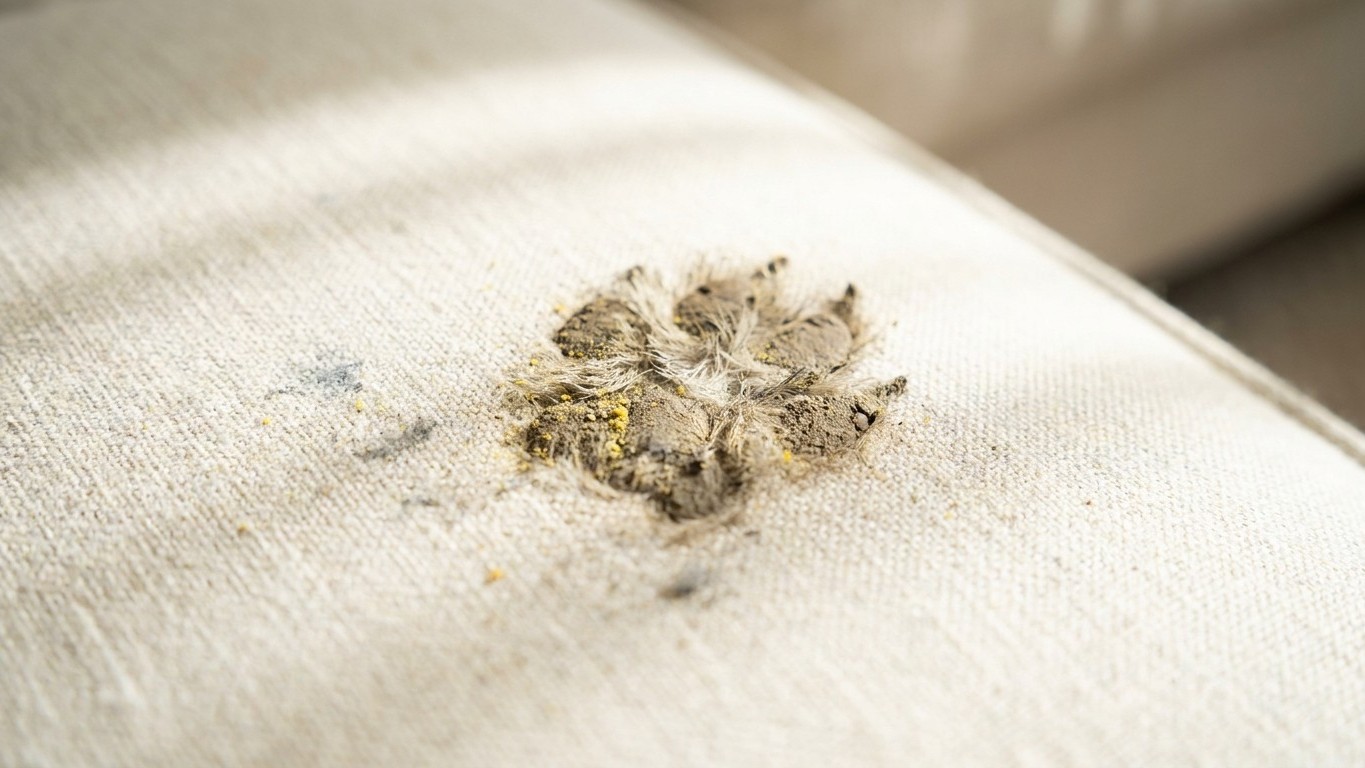
Your cat strolls in from the garden, pads across the sofa, and settles next to you for a treat. Sweet. But those four small paws have just done something your hoover can’t easily undo: they’ve deposited a fresh coat of spring pollen directly onto your upholstery, your lap, and the air you’re about to breathe. If your asthma reliably worsens every April, there’s a good chance your cat, not just the trees outside, is partly to blame.
Key takeaways
- Cats act as mobile allergen carriers, transporting spring pollen directly onto your furniture and into the air you breathe
- Your cat is producing her own potent allergen (Fel d 1) while simultaneously delivering outdoor pollen—a one-two punch your immune system can’t ignore
- Hand-feeding your cat and allowing unrestricted sofa access during peak pollen season could be pushing you over your allergic threshold
April is the worst month, and your cat knows every blade of grass
In April, pine pollen appears while ash, birch, oak, and plane all peak. For asthma sufferers, this timing couldn’t be worse. More than three million people in the UK with lung conditions such as asthma or COPD could struggle to breathe due to soaring pollen levels, and more than half of people living with asthma find hay fever triggers their condition. The reflex is to blame the open window. But the window stays shut, you work from home, and you’re still wheezing. Consider the cat flap.
Pets naturally move between indoor and outdoor environments, making them one of the most active carriers of allergens. Pollen, grass particles, and dust collect on fur and paws. Once pets return indoors, these particles are spread across floors, couches, and bedding as they move around. A cat that spends even thirty minutes in the garden at 10am, when pollen counts are climbing, then jumps straight onto the sofa brings an invisible cargo with her. Pollen levels typically increase in the morning and reach their peak at midday or early afternoon, so it’s best to keep your cat indoors during these times. Most of us don’t.
Two allergen problems in one fluffy package
Here’s where it gets genuinely complicated. Your cat isn’t just carrying pollen in. She’s also producing her own allergens, entirely separately from anything floating in from outside. The major allergen causing cat allergy is called Fel d 1, a sticky protein that with grooming gets on a cat’s fur and with shedding gets dispersed into the environment. Cat dander has multiple allergens, but Fel d 1 is one of the key allergens that produces an allergic response, triggering more than 60% of IgE antibodies involved in an allergic reaction to cat dander.
So your couch is receiving a double hit: pollen tracked in on paws, and Fel d 1 shed continuously from the coat. Cat hair can act as a carrier of other airborne allergens including pollen, house dust mite, and mould. Some people have multiple allergies, and it is not uncommon for someone to be allergic to other animals, house dust mites, pollens, and so on. This can make the immune system work very hard and may push someone above a threshold of reactivity. That threshold matters. You might tolerate Fel d 1 alone. You might tolerate spring pollen alone. Together, in April, on a sofa, at feeding time, you tip over the edge.
Pet allergens may cling to walls, fabric furniture, and clothing. They can stick to carpets, pillows, and other surfaces, and may remain at high levels for several months. Pet allergens can cause symptoms up to six months after the animal is gone, especially cat allergens. That last fact is startling. The sofa your cat hasn’t sat on since March is still actively allergenic in September.
What’s actually hiding between those toes
Cat hay fever symptoms often manifest as itching and skin irritation. Itchy cats tend to overgroom themselves and scratch a lot. This can make their skin sore. Commonly affected areas include the ears, bottom, paws, and belly. Your cat is reacting to the same pollen she’s bringing indoors, she just shows it through her skin rather than sneezing. If you’ve noticed your cat licking her paws obsessively after coming inside in spring, she’s not just cleaning herself: she’s responding to the very allergens she’s depositing on your cushions.
Since pollen is microscopic and travels in the air and on your clothes, indoor cats can also suffer from pollen allergies. Even a cat that rarely goes outside can accumulate pollen, brought in by you, through windows, or through ventilation systems. Even strictly indoor cats are exposed to these changes. Pollen and mould spores easily enter homes through open windows, ventilation systems, and on clothing, shoes, or other pets that go outdoors.
One underappreciated detail: seasonal allergies are also called “atopic dermatitis” or “atopy” in cats, and are often a result of a genetic defect in the skin barrier system, which allows more allergens to penetrate and cause effects such as itching and scratching, along with secondary skin and ear infections. This means some cats are structurally more porous to allergens than others. The more they absorb through their skin, the more they carry on it.
What you can actually do about it, for both of you
The single most effective habit costs nothing and takes thirty seconds. A quick wipe-down with a damp cloth or pet-safe wipes prevents allergens from being tracked throughout the house. Special attention should be given to the paws, belly, and face. Do this every time your cat comes in from outside, not just when you remember. Unscented wipes are best, adding a fragrance to the equation just introduces another potential irritant into an already-irritated airway.
Regular vacuuming with HEPA filters, washing pet bedding weekly, and using air purifiers can reduce indoor allergen accumulation. Windows should be kept closed during high pollen days to prevent outdoor allergens from entering the home. If your cat has a favourite sleeping spot on the sofa, consider a washable throw over it, something you can put in a hot wash weekly. If you notice your asthma symptoms are worse at certain times of the year, it could be that you’re allergic to pollen or mould spores. Your cat or dog can bring in pollen and mould spores on their fur, and pets with fur and feathers can also carry dust mites.
Hand-feeding your cat on the sofa, as cosy as it is, places you in direct contact with Fel d 1 from the saliva and paws, at close proximity to your face, during the season when Your Immune System is already on high alert from tree pollen. A small change in routine, like feeding from a bowl on the floor and washing your hands afterwards, can meaningfully reduce your allergen load. In people with multiple allergies, reducing the total “allergen load”, the number of allergens to which the person with allergy is exposed — is the best approach to relieving symptoms.
If your cat’s paw-licking is persistent, her skin is red, or she seems uncomfortable after outdoor sessions, always speak to your vet. Allergen-specific immunotherapy, commonly referred to as “allergy shots,” is the most effective long-term therapy for seasonal allergies in cats. Though time-consuming and sometimes costly, these shots decrease the immune system’s response to the allergen over time and can dramatically improve your cat’s quality of life. Your own GP or allergy specialist deserves the same call, particularly if your April flares are worsening year on year, environmental allergies are often distinguished by their progressive worsening over time. The pollen isn’t going anywhere. But the amount of it reaching your airways, carried in on four small paws, is something you can start managing today.
Sources : asthmaandlung.org.uk | pubmed.ncbi.nlm.nih.gov