
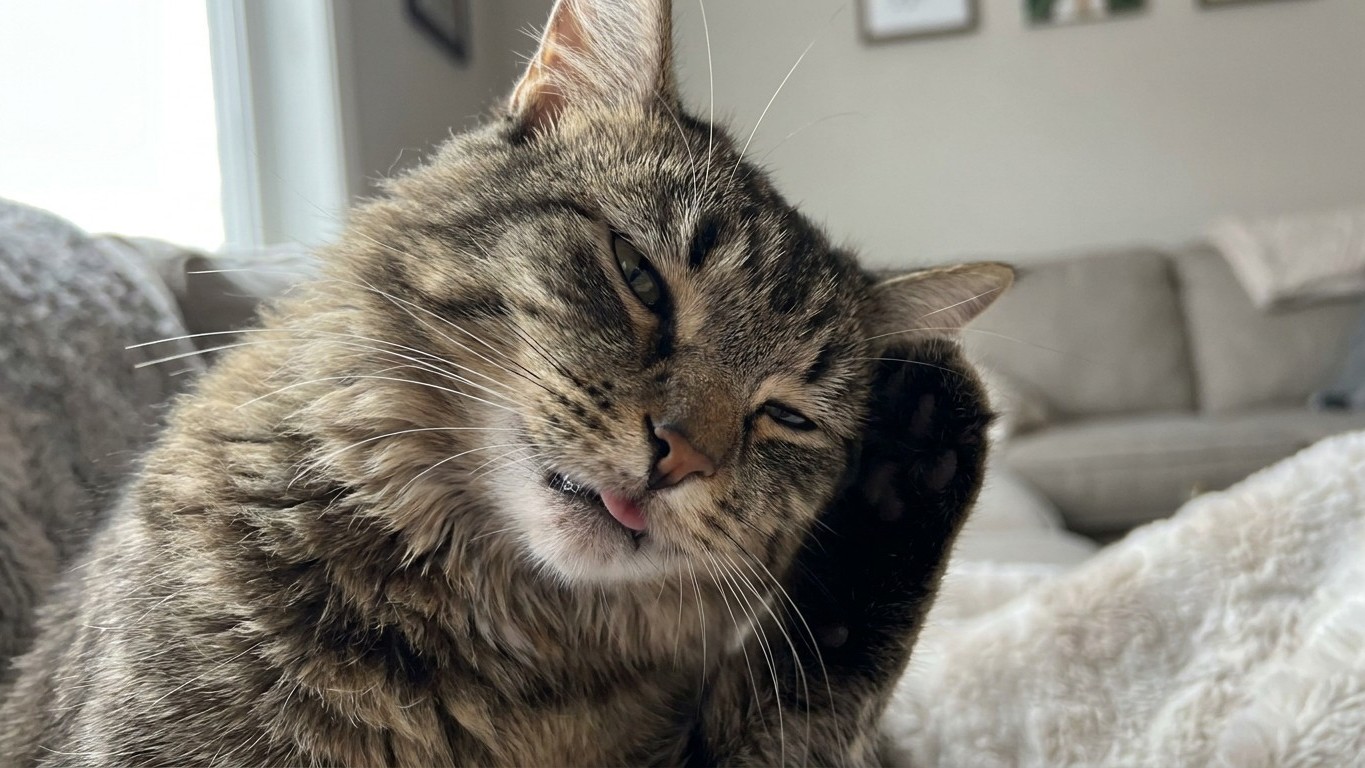
May is peak season for fleas and ticks in the UK, and the timing is no coincidence. As temperatures creep above the threshold these parasites need to thrive, populations can swell astonishingly fast, and your cat, whether an outdoor explorer or a strictly indoor companion, is far more exposed than most owners realise. Fleas are most active during the warmer months, commonly from spring through to early autumn, and during this peak season adult fleas are more prevalent and reproduce rapidly. The problem is, most people are waiting for the wrong sign.
Key takeaways
- Why a single flea bite can cause disproportionate damage to your cat’s skin and fur
- The overlooked behavior change that signals a flea problem before you see any insects
- A one-minute test using a damp paper towel that reveals hidden flea infestations
Why May Is the Danger Month
Ticks are common in woodland and grassland, and although active throughout the year, you’ll most likely see them between spring and autumn. For fleas, the window is similarly broad but the spring surge is particularly sharp. They are abundant and widespread, spreading fast particularly in warm and humid conditions, and are hardy little insects, the maximum recorded life of a flea is 160 days. That resilience means a single mild British winter is rarely enough to reset the clock.
What genuinely surprises most cat owners is how easily parasites make it indoors without any help from their pet. Fleas are expert hitchhikers and can easily be carried into the home on humans, animals such as other pets including dogs and outdoor cats, or rodents, clothing and bags. Even a second-floor flat with no garden access is not off the menu. Fleas and ticks can be carried into the house on your shoes, socks, pants, or other items. The idea that indoor cats are safe is one of the most persistent myths in cat ownership.
Female fleas can lay 40 to 50 eggs a day, which can lead to an infestation in days. This reproductive pace is why May matters so much, a small population arriving in spring can become a full household crisis by June if nothing is done.
The Sign You’re Almost Certainly Missing
Most owners know to look for a scratching cat. The sign they miss is far subtler, and far more common. Fleas are a bit harder to detect because cats are really good groomers. If they find a bug crawling on them, they will eat it immediately, so in many cases you won’t see any fleas on your cat. A fastidious cat actually removes much of the evidence before you ever get a chance to see it.
The real clue lies in a behaviour change. The most common sign is just a really itchy cat, one who’s over-grooming, has hair loss near the tail and on the belly, and seems extremely uncomfortable, constantly grooming. For the most part, you really won’t find a flea on a cat. That persistent licking around the base of the tail, the inner thighs, or the belly is not a quirk or boredom. If irritation occurs at the tail’s base, it could be a flea infestation.
Fleas are particularly prevalent in the UK and can trigger intense itching, leading cats to over-groom, scratch, and develop scabs, most commonly along the back, neck, and base of the tail. Even a single flea bite can provoke a significant reaction in cats with flea allergy dermatitis. That last point is worth sitting with. A single bite. Not an infestation. One flea. A cat with flea allergy dermatitis can react so strongly to flea saliva that the hair loss and skin damage looks completely disproportionate to what you’d expect. Flea allergy dermatitis is one of the most frequent conditions linked to a lapse in flea protection; it causes severe itching, discomfort, hair loss, and skin infections.
The Flea Dirt Test: Do This Tonight
If you’re unsure whether your cat has fleas, skip the hunt for live insects and go straight to checking for flea dirt. Flea dirt looks like tiny black or dark brown specks, similar to ground black pepper. It’s commonly found on dogs, cats, and other warm-blooded animals. If you notice flea dirt on your pet, it means fleas have already fed and been present long enough to digest a blood meal.
The test itself takes less than a minute. Gently comb your cat’s fur with a fine-toothed comb, especially around the neck and base of the tail where fleas love to hang out. Place any black specks you find on a damp paper towel. If the specks turn a reddish-brown colour, they’re likely flea dirt, digested blood that fleas leave behind in their droppings. Regular household dirt will simply stay grey or dissolve neutrally. Regular dirt stays dark, grey, or muddy when wet, while flea dirt turns reddish-brown because it contains dried blood.
For ticks, the check is more physical. Ticks, when in the skin, look like a reddish-brown, grey or black bump, the size will depend on how full of blood the tick is. The surrounding area may be swollen and/or red. Ticks most often attach near the head, neck, ears, or paws. On cats, they’re usually found around the ears and eyes. Running your fingers slowly over your cat’s skin, particularly after they’ve been in a garden, can pick up a tick before it has had time to transmit anything.
What to Do If You Find Evidence
Finding flea dirt or a tick should trigger a call to your vet, not a trip to the pet shop for whichever product is on the shelf. Products designed for dogs can be harmful or even fatal to cats due to different sensitivities and dosages. Your cat’s liver is not capable of processing permethrin, which causes it to build up, leading to toxicity, and if symptoms are not treated, this toxicity may lead to seizures and death within a few hours. This is not a trivial risk; permethrin-based spot-ons for dogs are among the most common causes of cat poisoning seen by UK vets, particularly in spring when everyone is reaching for the flea treatments.
If you do find fleas, remember that treating your cat is only part of the job. For every flea you see on your pet, vets estimate there are 100 more in your house. Adult fleas spend most of their lives on the animal, laying eggs in the fur, these eggs drop out onto rugs, upholstery, bedding and furniture, where new adult fleas will in turn find their living host. Washing bedding at 60°C and vacuuming frequently, including pet bedding regularly and hoovering frequently, helps prevent flea eggs from developing in the home. Dispose of the vacuum bag outside immediately — flea larvae are hardy enough to survive inside the machine and re-infest if the bag is left indoors.
For tick removal, skip gasoline, nail polish, petroleum jelly, alcohol, or a hot match, these methods can force infected fluids back into the bite. Use fine-tipped tweezers or a tick removal tool, grasping as close to the skin as possible, and pull steadily without twisting. Then contact your vet, especially if your cat develops any lethargy, reduced appetite, or swollen joints in the days following. Stiff and swollen joints, lethargy, diminished appetite, and fever can, in the warmer months, indicate that a cat has been bitten by a tick and is in the throes of a serious illness calling for prompt veterinary treatment.
One detail that catches many owners off guard: fleas are known to carry immature tapeworm parasites that can infect your cat if they accidentally ingest one of these parasites, such as through grooming themselves. So if you’re treating for fleas this May, it’s worth asking your vet whether a simultaneous worming treatment is appropriate, because a cat grooming away fleas may unknowingly be doing something else entirely.
Sources : dialavet.com | commahome.com