
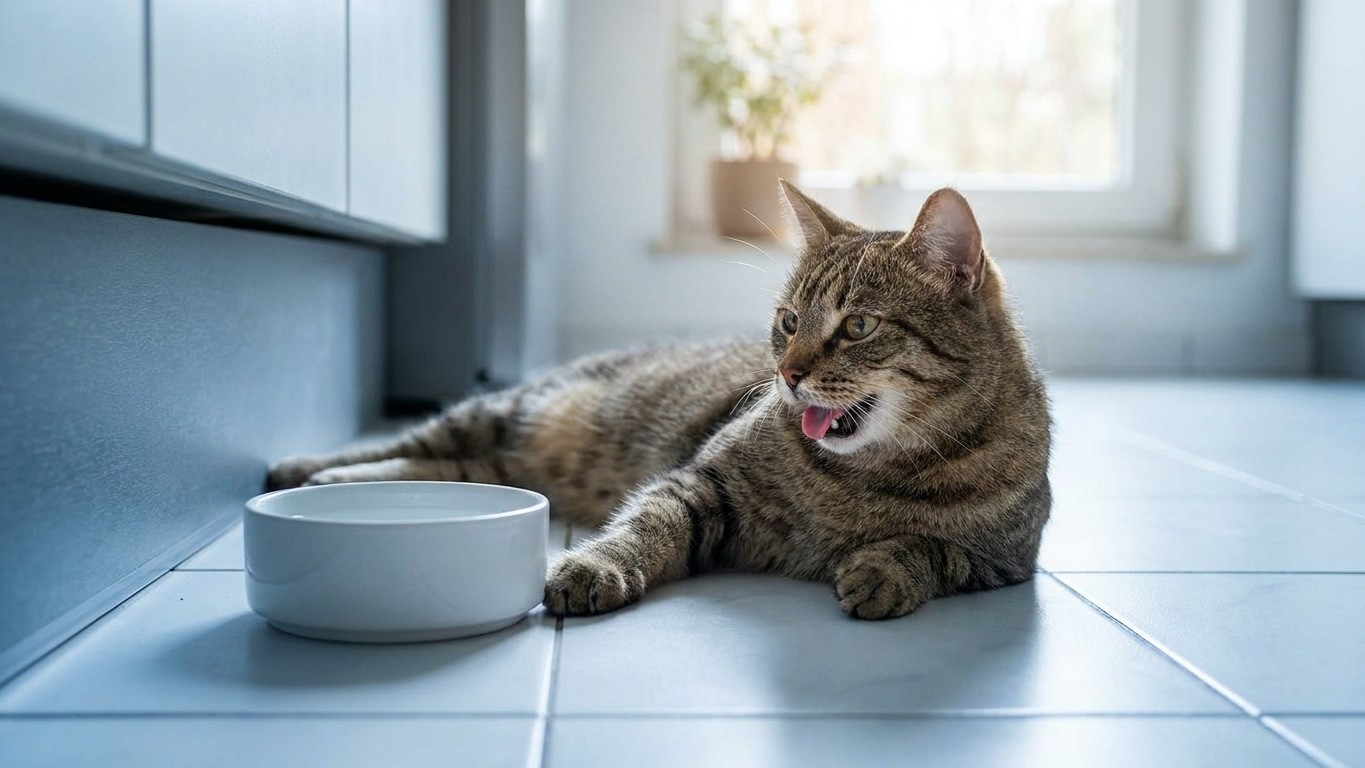
Every summer, many cat owners watch their pet stretch out on the kitchen tiles, groom themselves relentlessly, or drape across a cool windowsill and think nothing of it. Perfectly normal summer cat behaviour, right? The trouble is, some of these very habits, the ones we file away under “just being a cat”, are actually the body’s first distress signals when things are getting dangerously warm. The one that vets most consistently flag? Panting. Open-mouthed, tongue-out breathing that owners brush off as a quirk of summer, but which is, in cats, a physiological alarm bell.
Key takeaways
- That quirky summer panting? Vets say it’s actually a physiological alarm bell most owners completely miss
- Organ damage in cats begins at just 104°F—a dangerously narrow window that catches owners off guard
- The grooming, the tile-seeking, the restlessness—these quiet signals precede the emergency, but nobody notices
Why Panting Is Never “Just a Cat Thing”
Unlike dogs, cats don’t normally pant to cool down, so this behaviour should always raise concern. Dogs have evolved panting as their primary cooling mechanism; cats simply haven’t. Cats primarily rely on grooming and limited sweat glands on their paw pads to dissipate heat. Panting, when it happens, is a sign the body has already exhausted its usual options.
Panting is another cooling strategy, but if your cat is panting, they are already in distress. Panting is one of the early signs of heat exhaustion. The fact that so many owners see it each summer and register it as unremarkable is precisely why vets find it concerning. Every summer, emergency vets see preventable cases of cat heatstroke that could have been avoided with early recognition and quick action.
Heatstroke can progress from mild discomfort to a dangerous emergency within 20-30 minutes. A cat’s normal body temperature is around 100–102.5°F, and organ damage begins when their temperature exceeds 104°F. That is an extraordinarily narrow window, and it explains why dismissing early signs as normal seasonal behaviour is so risky.
The Signs That Come Before the Panting
Panting is the one that gets attention, but the body starts sending quieter messages long before a cat opens its mouth to breathe. Early signs include seeking cool surfaces like tile floors or sinks and increased grooming. Your cat might show mild low energy, slightly faster breathing, and warm ears. These are the signals Most Owners Miss entirely, chalking them up to the cat being “a bit sleepy” on a warm day.
Signs of heat exhaustion in cats include restless behaviour as they search for a cool spot or area, panting, drooling, sweaty paws or excessive grooming, which are all an effort to cool themselves down. That excessive summer grooming many owners find endearing? The cat is frantically trying to cool itself through saliva evaporation, the feline equivalent of sweating. Cats suffering from heatstroke may become restless and agitated. They may pace, meow excessively, or seem unable to find a comfortable spot. This behaviour is a sign that they are experiencing discomfort due to the heat.
There’s also a simple gum check that can tell you a great deal in seconds. Dark red or very pale gums are common heatstroke indicators. One way to check if your cat is experiencing heatstroke is to place your finger on their gums and apply a small amount of pressure. If it takes more than a couple of seconds for the area to turn pink again, then your cat may be struggling with heat distress. Healthy gums refill almost instantly. It’s a quick, practical test worth knowing.
When It Escalates: Recognising a Real Emergency
If the early signs go unaddressed, the picture changes fast. If your cat is panting with bright red gums, vomiting, or confusion, this signals dangerous heatstroke progression. At this stage, you’re no longer dealing with heat exhaustion, you’re in emergency territory. Your cat may seem confused, walk unsteadily, or collapse. Seizures can happen in advanced cases as the brain overheats. Any of these symptoms require emergency veterinary care to prevent permanent organ damage or death.
Prolonged high body temperature can damage a cat’s kidneys, liver, heart, and brain. Kidney problems are common after heatstroke and may not show symptoms until days later. This delayed presentation catches owners off guard, a cat that seems to have recovered may still be suffering internal damage that only becomes apparent 48 hours later. Even if your cat seems to bounce back, hidden damage to organs can occur without noticeable symptoms.
Kittens, senior cats, and flat-faced breeds like Persians heat up faster due to their smaller size or breathing limitations. Brachycephalic cats : Persians, Exotic Shorthairs, British Shorthairs with flatter faces — are at a structural disadvantage: their airways are shorter, giving hot inhaled air less distance to cool before it reaches the lungs. Obese cats, senior cats, and brachycephalic breeds are more susceptible. If your cat falls into any of these categories, the threshold for concern should be lower, and monitoring on warm days should be more active.
What to Do, and What Not to Do
Act fast, but act carefully. The instinct to grab a bag of ice or blast a cold shower is understandable, but wrong. Never use cold water or ice on overheated cats, as it can cause shock and trap heat inside their body. Instead, apply room temperature water to paw pads and belly, use damp towels, and provide gradual cooling. The goal is to bring the temperature down steadily, not shock the system into a different kind of crisis.
It’s important to start brief cooling at home (such as applying cool damp towels and water to the ears and paws), but head directly to a veterinarian for emergency care. The home steps buy time, they are not a substitute for professional treatment. IV fluids help treat dehydration, support circulation, and prevent organ failure, and that is something only a vet can provide. Always call your vet or an emergency animal clinic the moment you suspect your cat is in heat distress.
For prevention day-to-day, the approach is straightforward. Keep fresh water available throughout the day. Limit outdoor time and always provide shady spots. Some cats prefer running water, so a pet water fountain can encourage them to drink more frequently. Indoors, use blinds to block direct afternoon sunlight, and keep at least one cool room accessible, ideally with stone or tile flooring, since cats will naturally seek it out when they need to self-regulate.
One thing that surprises many owners: while outdoor cats are especially vulnerable, indoor cats can also overheat, especially during heatwaves or power outages. A south-facing flat on a 30°C July afternoon, with the windows shut and no airflow, can become a genuine health risk for an indoor cat. And once a cat has experienced heatstroke, the situation becomes more precarious still: organ damage, neurological issues, and increased sensitivity to heat are all potential complications. Cats that have suffered heatstroke once may be more susceptible to it happening again. That first episode isn’t just a scary day, it changes the cat’s relationship with heat for the rest of its life.
Sources : rvc.ac.uk | spahvet.com