
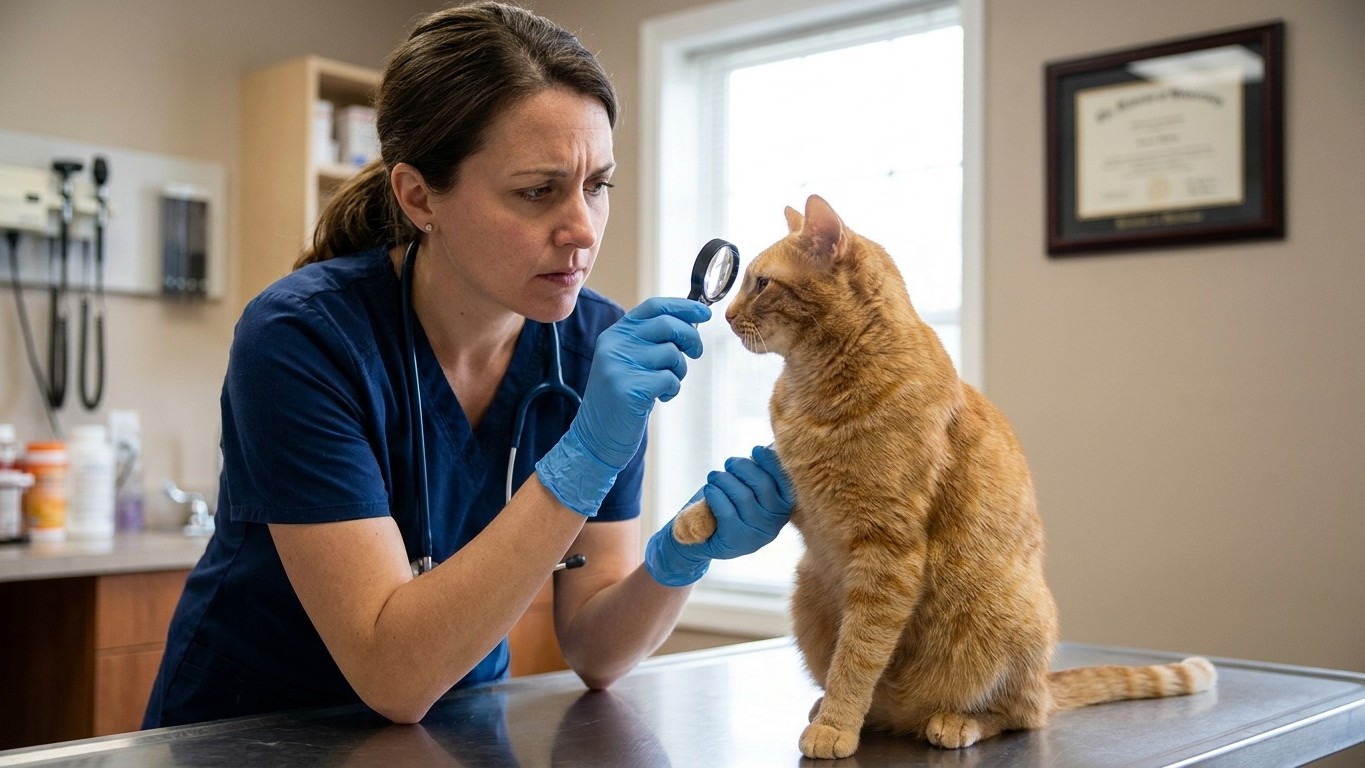
One swipe of a paw, a brief flick of the tail, and your cat trots back into the kitchen as if nothing happened. A wasp got swatted. End of story. Except that a vet examining the same cat twenty minutes later might be looking at a potential life-threatening emergency, and the clock is already ticking. Wasp and bee stings in cats are one of those situations where the gap between “totally fine” and “call the vet right now” can close with alarming speed.
Key takeaways
- Severe allergic reactions to wasp and bee stings can develop within 20 minutes—but your cat might look perfectly fine the whole time
- Swelling around the face, neck, or throat is particularly dangerous and can obstruct airways without warning
- Most cat owners don’t know which camp their pet falls into—allergic or not—until it’s too late
Why cats get stung in the first place
Cats are naturally curious creatures, and their hunting instincts often put them at risk for bee and wasp stings. A wasp drifting across a sunny windowsill is, to a cat, an irresistible moving target. Most stings happen on the face, especially near the nose, or paws, since cats are curious and quick to swat at buzzing intruders. Even indoor cats aren’t immune, an adventurous insect can sneak inside and cause trouble.
There’s also a key biological difference between the two insects worth knowing. Bees have barbed stingers that detach from their bodies and become embedded in the skin. Wasps, on the other hand, keep their stingers intact, which makes it possible for them to sting multiple times, potentially increasing the danger to your pet. So if your cat corners a wasp rather than a bee, the threat of repeated venom delivery is very real.
The 20-minute window you need to know about
Allergic reactions usually occur within 20 minutes of the bite but may be delayed for hours, so close monitoring is critical. Severe reactions, known as anaphylaxis, can be fatal, and quick action is vital. This is the number that should be seared into every cat owner’s memory. Your cat might look completely unbothered straight after a sting, and then deteriorate rapidly.
Signs of severe allergic reactions include hives throughout the body, difficulty breathing or rapid breathing, disorientation, vomiting, diarrhoea, pale or blue gums, low body temperature, abnormal heart rate, excessive drooling, collapse, and seizures. That’s a long and serious list. Swelling around the face, neck, or throat is particularly dangerous as it can obstruct your cat’s airway. Any breathing difficulties or facial swelling should be treated as a veterinary emergency, regardless of how minor the initial sting may have seemed.
Anaphylactic reactions usually happen within 30–60 minutes but can also occur hours after the sting. That extended window is why simply watching your cat for five minutes and concluding “she seems fine” isn’t enough. Signs of a severe or allergic reaction can still appear up to 24 hours after a sting, keep an eye on your cat, and if you notice these signs, call your vet immediately.
What to do in the first few minutes
Stay calm. A panicked owner makes a stressed cat, and stress can accelerate a developing reaction. The first thing to do is safely move your cat away from the insect in question to avoid repeated stings, but be careful not to get yourself stung in the process.
If you can identify that it was a bee (rather than a wasp), check for a stinger. Abandoned stingers continue to pump venom into the bite area, so removing them reduces the amount of toxin injected. Remove the stinger by scraping a credit card over your cat’s coat and flick it off, do not use tweezers, as squeezing may force more venom out of the stinger sac. Wasps don’t leave a stinger behind, so that particular step doesn’t apply.
Once the stinger (if present) is dealt with, apply a cold compress by holding a cold pack or cloth-wrapped ice on the sting site for 10–15 minutes. Never give your cat any human allergy medications before seeking advice from your vet, as not all of these are pet-friendly. This includes antihistamines, some over-the-counter formulations contain additional ingredients, such as decongestants or pain relievers, that are toxic to cats. Always phone your vet first.
If your cat needs emergency treatment, cats showing severe symptoms may need hospitalisation, treatments could include intravenous fluids, corticosteroids, epinephrine injections, oxygen support, and close monitoring. Cats with allergies, multiple stings, or stings to the mouth or throat will need urgent care — but they can recover well if they receive treatment quickly.
The cats most at risk
The majority of cats aren’t hypersensitive to the venom found in bee or wasp stings, but if your cat falls into the minority that are allergic, getting stung could make her seriously ill or send her into anaphylactic shock. The brutal truth is that you often can’t know which camp your cat is in until it happens. Because it’s impossible to know for certain whether your cat might experience an extreme reaction, as soon as you’re aware of a sting it’s best to call a veterinarian.
Cats with known allergies may have a heightened response to bee stings, increasing the risk of a serious reaction. Young kittens and cats with multiple stings are at higher risk for severe reactions and may require hospitalisation for observation and supportive care. Cats with previous allergic reactions should be watched even more closely if stung again.
Cats are good at hiding signs of illness, some may not show any obvious symptoms after a sting, which is exactly what makes these incidents so deceptive. A cat that appears to be calmly grooming itself could be masking the early stages of a systemic reaction. Even if your cat didn’t have a severe allergic reaction, let your vet know they were stung. If you know what type of insect caused the sting, include that information too — that way, it goes into their medical record for the future.
One detail that surprises many owners: for bee stings, applying baking soda mixed with water to the affected area can help neutralise the venom; for wasp stings, vinegar is the recommended home remedy, because bee venom is acidic and wasp venom is alkaline. It’s a small but genuinely useful distinction, and one more reason to try to identify which insect was involved.
Sources : hillspet.com | petscare.com