
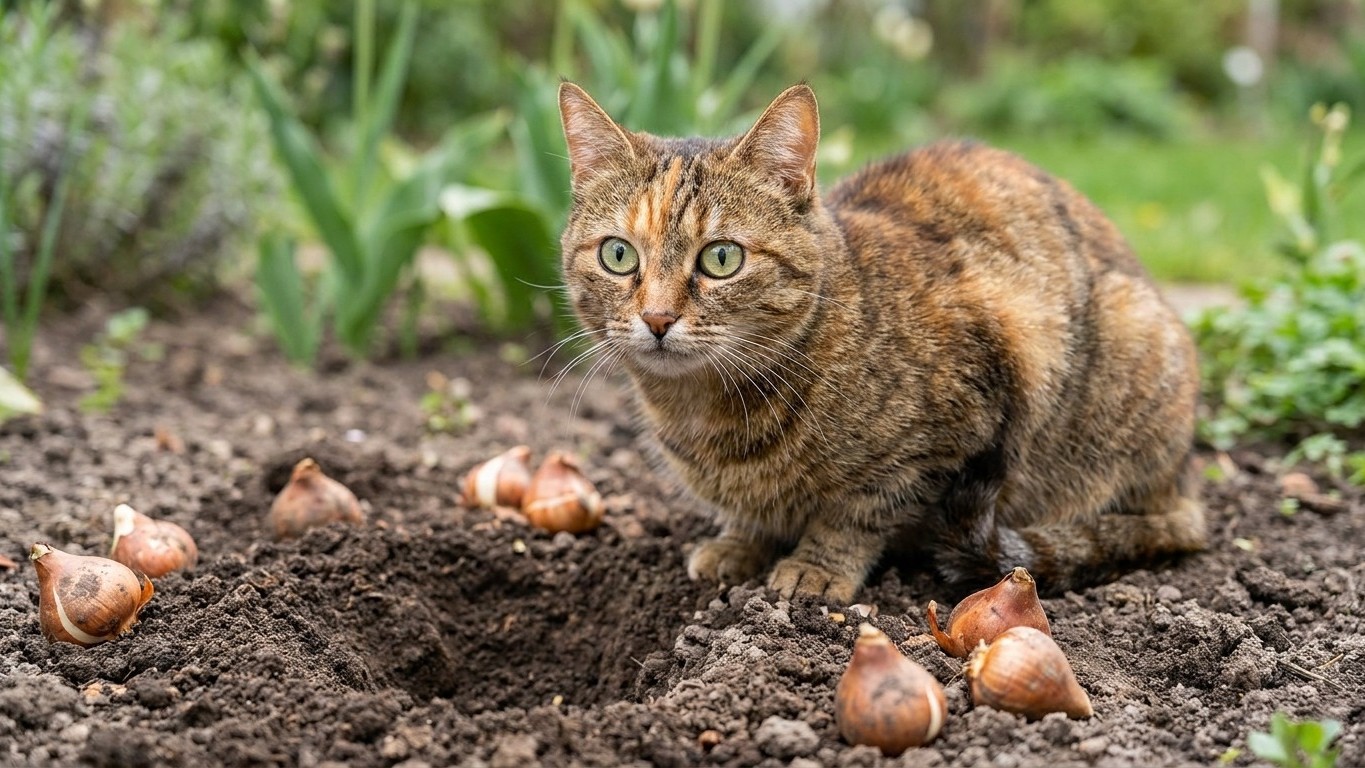
Tulips in the borders, daffodil bulbs cheerfully planted each autumn, a pot of Hydrangeas on the patio, for millions of UK cat owners, these are the backbone of a summer garden. They’re also a roster of plants that vets see causing poisoning cases with troubling regularity. The painful truth is that many of the most popular flowers in British gardens are toxic to cats, and a shocking number of owners have no idea until their cat starts vomiting, or something worse happens.
Key takeaways
- A toxicology report reveals that beloved summer flowers are silently poisoning cats across the UK
- Cats lack a crucial liver enzyme that makes them uniquely vulnerable to plants harmless to other pets
- Even grooming pollen off their fur can trigger fatal reactions—but there’s a path to a safer garden
Why cats are so much more vulnerable than we realise
There’s a biological reason your cat reacts so badly to plants that might only give a dog an upset stomach. Unlike dogs or humans, cats lack the liver enzyme glucuronyl transferase in sufficient quantities to safely metabolise many plant compounds. This metabolic gap means substances that cause only mild stomach upset in a dog, oxalic acid, saponins, insoluble calcium oxalates, can cause severe, systemic reactions in cats. In short, their metabolism is uniquely sensitive, and they lack certain liver enzymes that help process toxins, which is one reason why substances that are relatively harmless to other species can be dangerous or even deadly for cats. Add to that their meticulous grooming habits, and you have a perfect storm.
The grooming angle is the one that catches most owners off guard. Although you might find that your cat is disinterested in eating plants, there is always a risk that they may come into contact with the flower’s pollen by rubbing up against it and absent-mindedly licking their fur. A cat doesn’t need to take a single bite of a lily to end up in veterinary emergency care. Toxic pollen can settle on a cat’s fur. Even if they don’t chew the plant, they could ingest poison while grooming. Many plants also release toxins into water, a cat that ignores a toxic plant could still be poisoned just by drinking from its pot tray or vase.
There’s also an unfortunate quirk in feline biology. Cats can’t taste bitterness the same way humans do. Some plants that taste unpleasant to us won’t discourage a curious cat from nibbling on them at all.
The summer favourites that pose the greatest risk
Many common plants and flowers found in UK homes and gardens are toxic to cats, including lilies, daffodils, tulips, and crocuses. Some, such as lilies and autumn crocus, can be fatal even in small amounts. Let’s be specific about what that means in practice.
Lilies are the single most dangerous plant a cat owner can grow. Lilies are the most common plant toxicity in cats. Deaths have been reported after ingestion of only one or two pieces of the plant. This highly toxic plant causes serious kidney disease and death. The kidney damage is rapid and catastrophic. The toxicity of lilies affects a cat’s kidneys, causing a harmful reaction. Within minutes of ingesting any part of the plant, they might become lethargic or begin to vomit. As the substance begins to affect their body, these signs worsen. This includes Asiatic, Tiger, Easter, and Day lilies, varieties that are sold by the million in UK garden centres every spring.
Tulips are the country’s second most popular cut flower, and they cause problems that are equally easy to miss. Behind the rose, the tulip is the country’s most popular cut flower, but unfortunately, tulips are considered dangerous plants for cats. The bulbs are the most toxic part, but any part of the plant can harm your cat. They contain allergenic lactones which, if swallowed, can lead to vomiting, diarrhoea and depression. If you’re replanting tulip bulbs each autumn, your cat may be digging around or nosing in freshly turned soil that contains the most concentrated dose of toxins.
Daffodils, the most British of all spring flowers, are no safer. Daffodils contain a poisonous substance called lycorine which can cause stomach upset, vomiting or wider serious illness in cats. The heads, leaves and bulbs of the plant are all toxic. And the autumn crocus, that elegant late-season bloom so beloved in cottage garden borders, carries a genuinely sinister risk: Autumn crocus contains colchicine, which damages cells throughout the body. Symptoms may take 24 to 72 hours to appear. By the time a cat shows kidney and liver failure, the damage is often irreversible.
Two other plants that routinely catch UK owners by surprise: Hydrangeas contain cyanogenic glycosides, which can cause vomiting, depression, and confusion in cats, and chrysanthemums contain pyrethrins, which are used in dog flea and tick medications and are particularly poisonous to cats. That last fact is one many people simply don’t know, the same compound used to treat fleas on dogs is present in those bright autumnal mums planted faithfully every year across countless UK front gardens.
There’s also one risk that comes in through the front door rather than the garden. The most common poisoning scenario is a gift bouquet brought in by someone who did not know. Well-meaning visitors with a bunch of lilies, or a florist arrangement including tulips and hyacinths, can turn a celebratory moment into a veterinary emergency before anyone has noticed the cat has been near the vase.
What to watch for and what to do immediately
Sadly, toxic exposure isn’t always obvious. Some plants cause immediate symptoms, while others take days to do serious damage. The symptoms of poisoning vary depending on the plant, but vomiting, lethargy, drooling, loss of appetite, and changes in thirst are all warning signs that demand urgent attention. If you think your cat has been poisoned, contact your vet immediately. Don’t wait for signs of illness to develop.
If you can identify the plant, or even take a photograph of it, bring that information to your vet. Treatment may include induced vomiting, intravenous fluids, and activated charcoal for gastrointestinal decontamination. Speed genuinely matters. If you suspect lilies have poisoned your cat, speak to your vet immediately. Emergency care increases the likelihood of your pet making a full recovery. For urgent out-of-hours advice, you can also contact the Animal PoisonLine, run by the Veterinary Poisons Information Service, on 01202 509000.
Replanting the garden with your cat in mind
The good news is that a beautiful, colourful summer garden and a safe environment for cats are not mutually exclusive. A bit of planning is all it takes. There are lots of beautiful, pet-friendly petals you can use, including freesias, roses and snapdragons. Gerbera daisies, sunflowers, marigolds, and African violets are all safe and genuinely gorgeous. Swap orchids instead of lilies, Christmas cactus instead of amaryllis, and snapdragons instead of tulips.
For the borders, all rose varieties are non-toxic to cats and provide delightful fragrances. Snapdragons bring a nostalgic charm with two-toned flowers resembling bunnies or dragons opening mouths, and they offer very similar tall, cottage-garden structure to the far more dangerous foxglove. Dried foxglove, yew clippings, and lily debris remain toxic in compost. Use a lidded compost bin and keep it in an area cats cannot reach. Even the garden waste pile needs a rethink.
One last thing worth knowing: although cats like to eat grass, most are very wary of eating anything unusual, which means plant poisoning cases taken to the vets are rare. When a cat does become unwell, it is usually because something has brushed on their fur or paws, which they have then ingested while grooming. There is greater risk within the home as it is a confined area, and a bored or curious cat might investigate an indoor plant or a cut flower display by playing and nibbling. The garden itself may actually be safer than the kitchen windowsill, which is why checking every single plant inside the house, not just in the borders, matters just as much. Always consult your vet if you have any concerns about your cat’s health or potential exposure to a toxic plant.
Sources : yourhomestyle.uk | bloomingexpert.com