
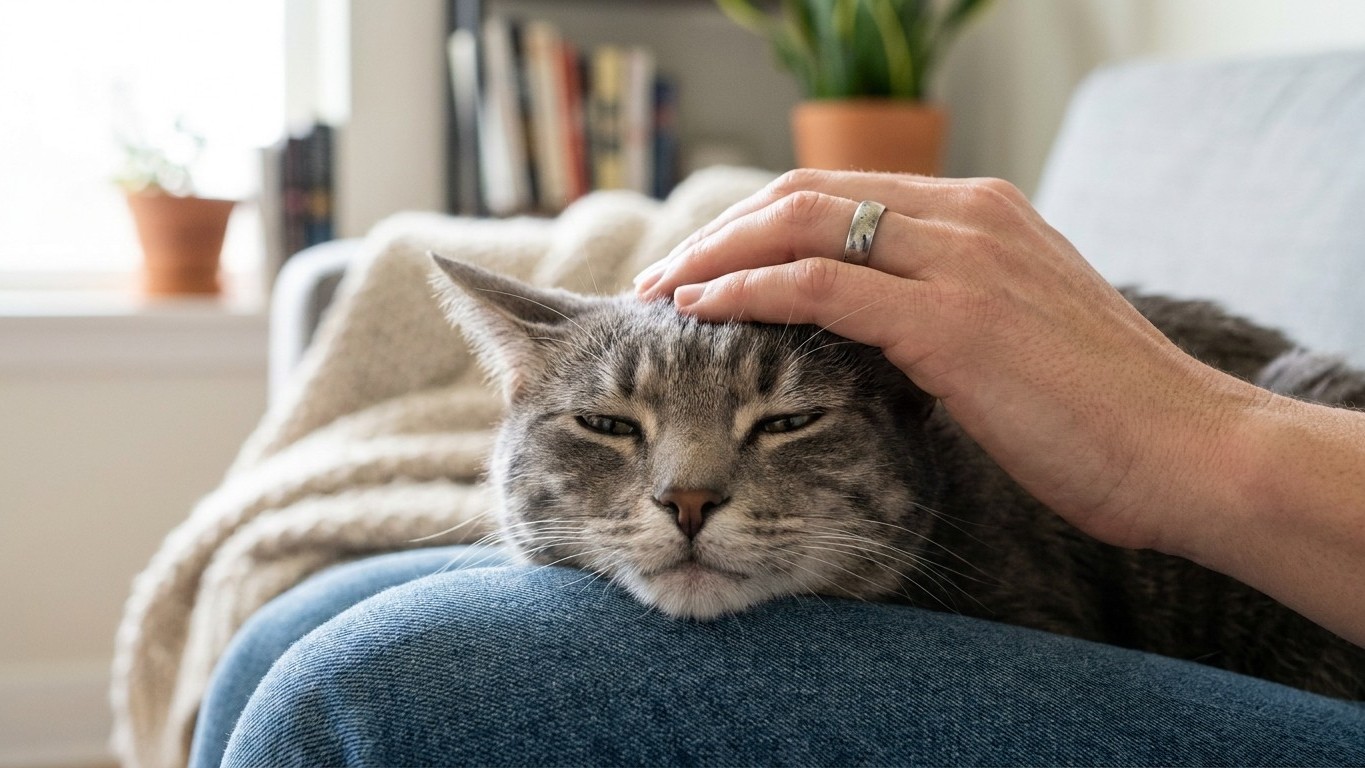
Your cat settles on your lap, closes its eyes, and begins to purr. You stroke it, feeling quietly smug about the whole arrangement. The problem is, that purr might not be what you think it is. Purring, one of the most universally recognised signs of feline contentment, is also something cats do when they are in pain. And most owners have absolutely no idea.
Key takeaways
- A cat’s purr serves multiple purposes beyond contentment—including managing pain through therapeutic vibrations
- Cats are master manipulators of their own suffering, hiding discomfort as an ancient survival instinct
- The real signs of pain hide in whisker position, eye squinting, and subtle behavior changes most owners dismiss as aging
The purr that isn’t what it seems
Most of us know that a hissing or growling cat is an unhappy cat, but purring is usually thought of as a sign of contentment, yet some cats purr when they are frightened or hurting. This isn’t a rare glitch in the system. Yes, cats in pain will still purr. Even though cats also purr when they’re content, purring can be a sign that a cat has severe pain.
The reason behind it is genuinely extraordinary. Research suggests that the frequency of a cat’s purring, typically between 25 and 150 hertz, could have therapeutic effects on the body and mind. Researchers found that this frequency range covers the same frequencies that are therapeutic for bone growth and fracture healing, pain relief, swelling reduction, wound healing, muscle growth and repair, tendon repair, and mobility of joints, supporting the theory that purring is not just self-soothing for cats, but is actually a form of self-healing. The cat, is essentially running its own internal physiotherapy session. Experts don’t know exactly why cats in pain purr, but it could be a cat trying to relieve their own pain.
Although purring typically indicates happiness, cats also purr to communicate when they are stressed, anxious, or trying to express other needs, including pain or discomfort. So if your cat’s purring increases while showing other signs, the purring may be pain-related. Context, not just the sound itself, is what counts.
Why cats are so hard to read
Cats are renowned for their ability to mask pain and discomfort. They do this so well that they could be in excruciating pain Without You Knowing it, even if you’re the person closest to them. This isn’t stubbornness or feline inscrutability for its own sake. It is a survival instinct that prevents them from seeming vulnerable and becoming prey in the wild. Even if your cat never steps a paw outdoors, they have an innate drive to conceal discomfort.
Unlike dogs, who might whimper or limp noticeably, cats tend to rely on quiet behavioural changes to communicate their discomfort. A cat that has stopped jumping onto its favourite windowsill, or seems less interested in play, might not be getting lazy with age. While pet owners may observe changes in their cat’s behaviour that are indicative of pain, many believe these changes to be part of the ageing process, a misconception that may keep owners from mentioning their observations during routine preventative care visits.
There is also the question of joint disease, which is far more common than most owners realise. A common under-recognised cause of pain in cats is degenerative joint disease. Radiographic studies have found evidence of it in 61–92% of cats, with incidence increasing with age, and approximately 40% of cats with radiographic signs of the condition do exhibit clinical signs of pain. That is a staggering proportion of cats quietly dealing with chronic discomfort while their owners assume all is well.
What to actually look for
So if a purring cat can’t be trusted as a reliable “all is well” signal, what can you look for? Vets have developed a tool specifically for this. The Feline Grimace Scale is a validated tool for acute pain assessment in cats based on changes in facial expressions. It assesses five features: the position of the cat’s ears, head, and whiskers, whether its eyes are open or closed (orbital tightening), and muzzle tension. A cat in pain tends to flatten and rotate its ears outward, squint or tightly close its eyes, and hold its head lower than usual, none of which scream “I’m suffering” to the untrained eye.
Beyond the face, body language and behaviour tell their own story. If your cat purrs while showing other signs of distress, hiding, limping, or skipping meals, it may be trying to manage discomfort. Repeatedly getting up and lying down (which may indicate that the cat can’t find a Comfortable position), less energy for previously enjoyable activities such as chasing toys, trembling rear legs when standing still, and reluctance to jump onto furniture or windowsills are all worth noting. A change in grooming habits is another red flag. Some cats will overgroom a specific area, licking or chewing excessively due to pain, while others may neglect grooming altogether, leading to a dull or unkempt coat.
Pain can also affect a cat’s emotional state. Chronic discomfort may lead to increased irritability, aggression, or anxiety. A once-sociable cat might begin hiding more often, signalling it feels vulnerable or stressed. A sudden bite from a normally gentle cat when you touch a particular area is rarely bad temper, it is often a protective reflex around something that hurts.
What to do if something feels off
The most important thing any cat owner can do is know their animal’s normal. In order to accurately notice changes in your pet’s behaviour and physical appearance, you must first be able to describe their “normal”, keeping mental or written track of their sleep patterns, energy level, food and water intake, bathroom habits, playfulness, and overall attitude. Any deviation from that baseline deserves attention, not dismissal.
Taking pictures or videos of any cat behaviour that seems strange is genuinely useful, because many cats hide their symptoms at the vet’s office due to stress. Footage from home can give a vet far more to work with than a perfectly composed cat on an examination table. Veterinary evaluation is essential, as human pain medications are toxic to cats and proper diagnosis leads to safe, effective treatment. Never be tempted to reach into the medicine cabinet. What helps you with a headache can kill a cat.
One final thing worth knowing: cats purr when being affectionate, but they also purr when giving birth to kittens and mending from physical trauma. Broken feline bones take significantly less time to heal than broken dog bones, and low-frequency vibrations in the range of cat purrs are used to heal complex fractures in humans. The purr, then, is not just one thing. It is a multi-purpose biological tool, comfort, communication, and medicine all at once. The trick is learning to tell which one you’re hearing.
Sources : pmc.ncbi.nlm.nih.gov | justcatsclinic.com