
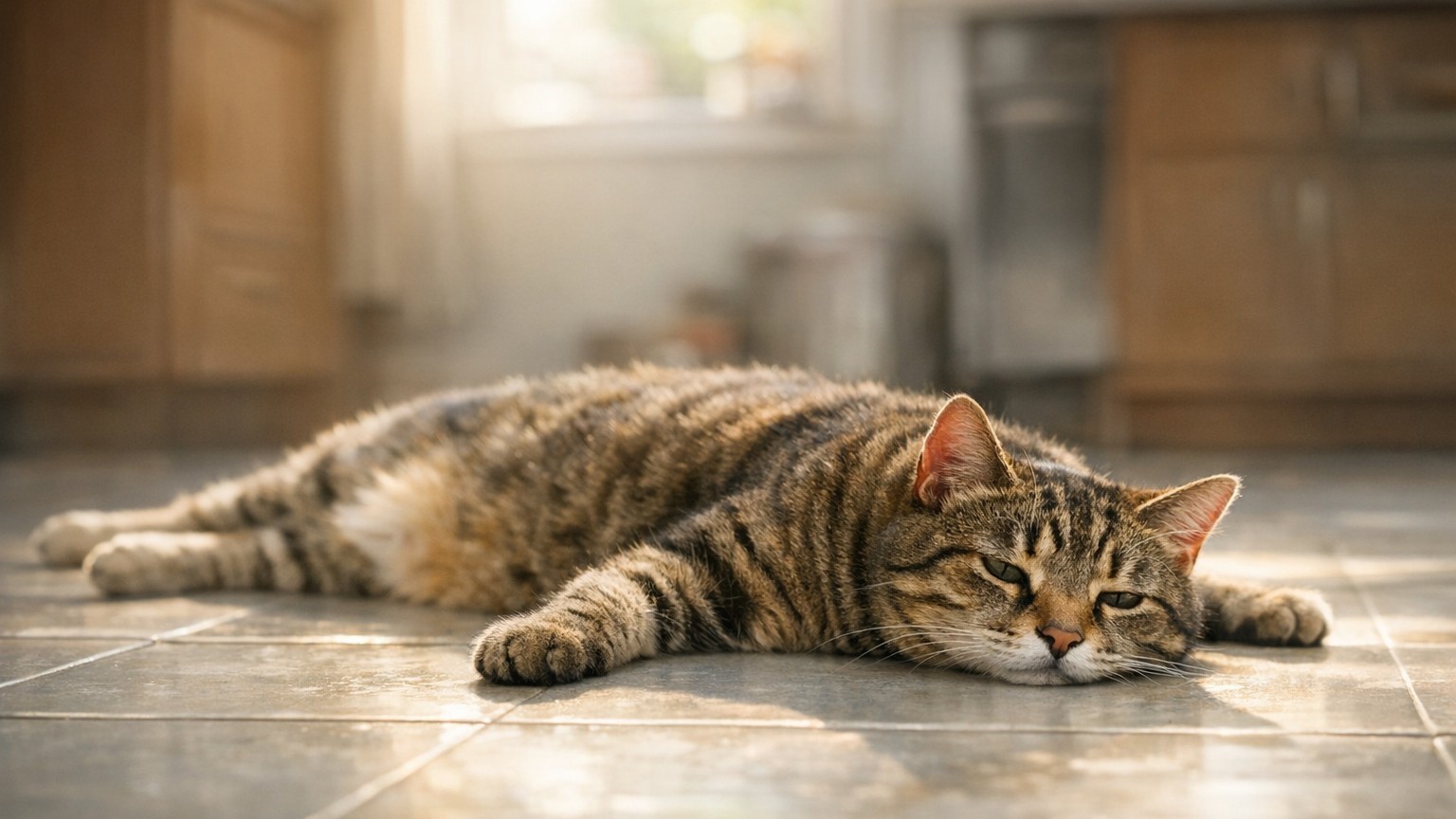
She was sprawled out on the kitchen tiles, barely moving. It was a warm afternoon, the windows were open, and I assumed she was just doing what cats do on hot days, conserving energy. She wasn’t panting dramatically. She wasn’t crying out. She was simply… flat. By the time the vet had run blood work, the results told a completely different story. Her kidneys were under siege, and the heat was the weapon.
Heatstroke in cats is one of the most dangerously easy emergencies to miss. While it’s less common in cats than in dogs, it’s just as dangerous, and often more difficult to detect. The very qualities that make cats so self-contained — their stoicism, their ability to hide discomfort, their talent for finding quiet corners, work against them when temperatures climb. A dog will pant loudly and pace about. A cat will simply go still, and owners, reasonably, assume she’s just having a lazy afternoon.
Key takeaways
- Your cat’s subtle heat symptoms could mask a dangerous emergency unfolding invisibly inside her body
- A cat’s body temperature can spiral into organ failure in just 20-30 minutes, and the damage may not show up until days later
- One episode of heatstroke permanently changes how vulnerable your cat becomes to heat in every summer that follows
The body under heat attack
Heatstroke in cats occurs when their body temperature rises above 40°C (104°F) and they are unable to cool themselves effectively. A cat’s normal body temperature ranges between 38.1°C and 39.2°C, and anything beyond this range can quickly become dangerous. That’s a remarkably narrow margin. Heatstroke can progress from mild discomfort to a dangerous emergency within 20 to 30 minutes.
Part of the problem is the cat’s physiology itself. Unlike humans, cats only sweat through their paw pads. They also pant to expel heat through the mucous membranes in their mouth. Licking their fur helps to cool them down by allowing saliva to evaporate, simulating the cooling effect of sweat. On a really hot, humid afternoon, these mechanisms are simply overwhelmed, and the body starts turning against itself.
Inflammation caused by heatstroke sets off several reactions that affect every major system of the body, causing the breakdown of essential proteins and enzymes. This puts the cat at risk of organ failure and potentially death. What the vet showed me on those blood results wasn’t just “a bit dehydrated.” When the body overheats, it starts affecting vital organs such as the brain, liver, kidneys, and heart. The damage is systemic and, crucially, it unfolds at a cellular level that no owner can see from across the kitchen.
The specific injuries are worth understanding. Excessive dehydration and heat injury can damage the bone marrow where blood cells are made, leading to shock from poor blood volume, thick sludgy blood, and disorders with blood clotting. Thermal injury can also directly damage the gastrointestinal tract, contributing to vomiting and diarrhoea, and can increase the risk of bacteria normally living in the intestines migrating to other parts of the body, causing serious infection. Meanwhile, brain swelling can cause seizures and lasting neurological issues. This isn’t a cat “feeling peaky.” This is multiple organ systems failing in sequence.
The warning signs that are easy to dismiss
Early signs include seeking cool surfaces like tile floors or sinks and increased grooming. A cat might show mild low energy, slightly faster breathing, and warm ears. Sound familiar? Almost every cat owner has seen this on a warm day and thought nothing of it. The difficulty is that these early signs are indistinguishable from normal warm-weather behaviour, and they can escalate fast.
The red flags that demand immediate action are clearer. If your cat is panting with bright red gums, vomiting, or showing confusion, this signals dangerous heatstroke progression. Unlike dogs, cats don’t normally pant to cool down, so this behaviour should always raise concern. Severe heatstroke shows as heavy panting, drooling, bright red or purple gums, and vomiting. Your cat may seem confused, walk unsteadily, or collapse.
Obese, long-haired, old, young and brachycephalic or flat-faced cats such as Persians are most at risk of developing heatstroke because they find it harder to cool down. But no cat is entirely safe. Cat heatstroke can even happen during cooler weather, as some cats seek warmth from places such as greenhouses, conservatories and sheds. If your cat gets trapped in these, they can be at risk of heatstroke. Checking those spaces before locking up at night isn’t fussiness, it’s basic welfare.
What the vet actually does
At the clinic, things move quickly. The vet will focus on reducing your cat’s temperature as quickly as possible, using water, fans, and, if necessary, a fluid drip. Intravenous fluids are the most important thing to start with heatstroke, as this helps correct dehydration, replenish lost electrolytes, cool the body internally, and helps provide better blood flow to internal organs. There is no pill for heatstroke, it’s a race against the body’s own destructive cascade, and fluids are the frontline.
Blood work and urinalysis help evaluate organ function and detect complications like kidney damage, electrolyte imbalance, or metabolic acidosis. In critical cases, X-rays or ultrasounds may also be used to rule out internal injury or assess lung health. Severe heatstroke can cause kidney damage and blood clotting problems, so depending on how poorly your cat is, they may also need blood and urine tests. If the tests show signs of a problem, it’s likely that your cat will need to stay in the veterinary hospital for a few days for intensive treatment and further tests.
One thing that surprised me: the vet explained that even once a cat appears stable, the danger isn’t necessarily over. Prolonged high body temperature can damage a cat’s kidneys, liver, heart, and brain. Kidney problems are common after heatstroke and may not show symptoms until days later. Because some health effects of heatstroke can be delayed, it’s important to provide your vet with any relevant history for at least the previous three to five days. That detail alone reframes the whole situation, you cannot simply cool a cat down, breathe a sigh of relief, and assume she’s fine.
What to do before you reach the vet
Speed matters enormously. The quicker your cat is cooled down, the better their chance of recovery. Move her immediately to the coolest room in the house. Never use ice-cold water or ice baths to cool a cat with heatstroke. Cooling too quickly can cause shock and worsen the situation. Instead, dampen a towel with cool (not cold) water and gently apply it to your cat’s belly, paws, and neck, but avoid covering their entire body, as this can trap heat. Call your vet on the way; they can prepare for your arrival and give specific guidance en route.
Once she’s home and recovering, the monitoring continues. Watch closely and let your vet know straight away if your cat deteriorates or develops symptoms such as vomiting, diarrhoea, confusion, increased thirst, or reduced appetite. Your cat may need to return to the vet for follow-up blood work in three days to verify if there are any lingering kidney or liver effects.
There’s one final fact that changes how you think about all of this. Cats that have experienced heatstroke may be more susceptible to it in the future. Heatstroke can cause lasting damage to vital organs, including the brain, heart, and kidneys. A single episode isn’t just a scare, it can permanently lower your cat’s tolerance to heat, meaning vigilance in every subsequent summer becomes non-negotiable. The tiles she loved to lie on? Now I check the temperature of the room first.