
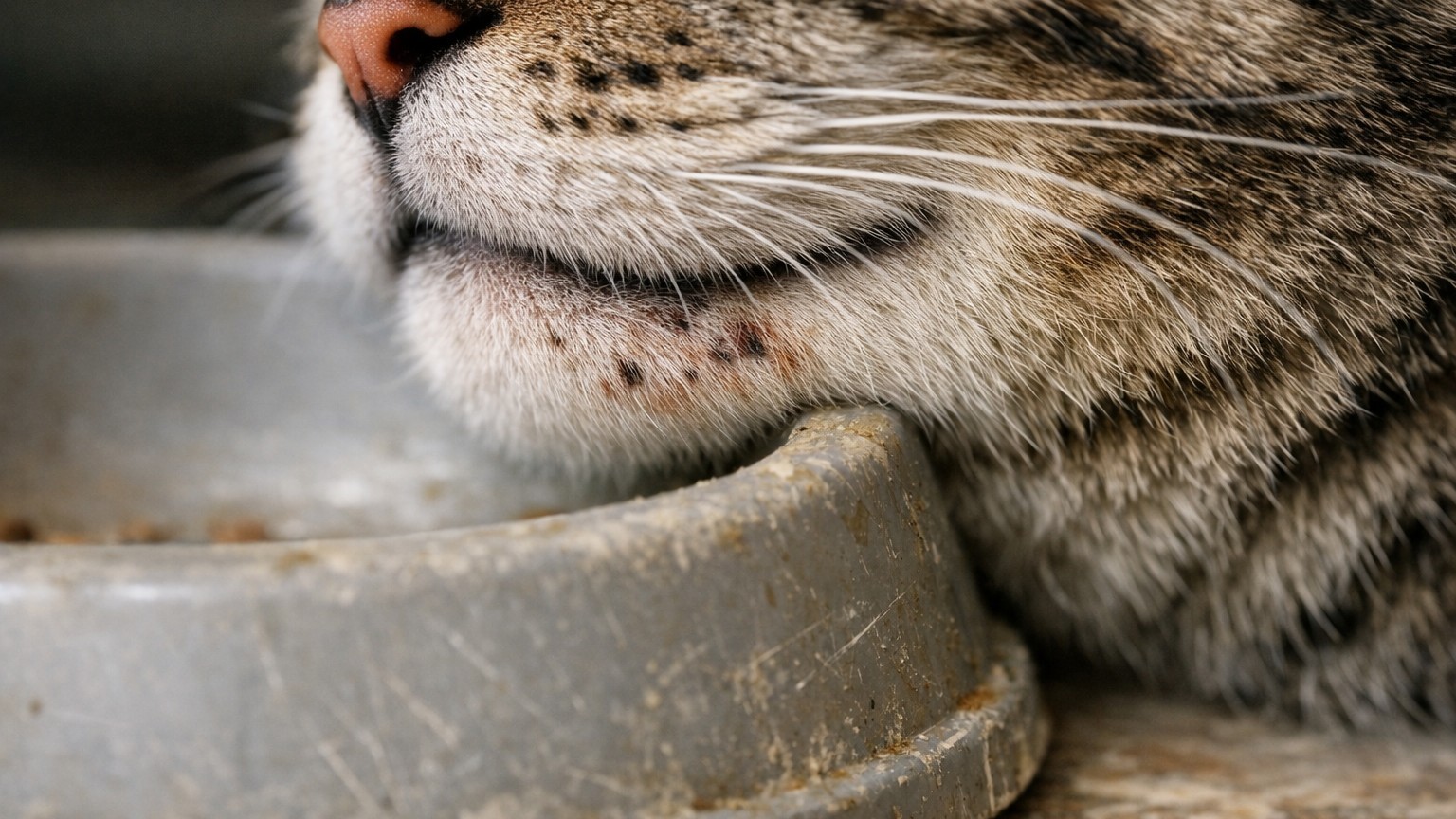
Those tiny black specks under your cat’s chin that you’ve been assuming are remnants of last night’s supper? They may well be something else entirely. Feline chin acne is a genuine, clinically recognised skin condition, and for a surprisingly large number of cats, the humble plastic food bowl sitting on the kitchen floor is a key part of the problem. Years can pass before an owner, or even a vet glancing at a routine check-up, connects the dots.
Key takeaways
- Tiny black spots on your cat’s chin might be hiding something more serious than you think
- The everyday plastic bowl in your kitchen could be the unexpected culprit behind skin damage
- Left untreated, this common condition can escalate into painful infections that require veterinary intervention
What is actually happening under those black spots
Feline acne, officially known as follicular keratinisation, forms when the hair follicles are blocked due to an excessive production of keratin, a protein found in the skin. The chin is the almost exclusive site because the sebaceous glands there are particularly active. The hair follicles, typically the ones on a cat’s chin, produce too much keratin and become plugged up, resulting in red bumps, blackheads, and infected pimple-like lesions.
Here is where it gets easy to miss: acne manifests as small bumps accompanied by blackheads or whiteheads, similar to humans, but on a cat’s skin it can often take an appearance that looks more like dirt than pimples, which is why many owners don’t even notice the condition. You wipe it away at bathtime, it returns a few days later, and you assume your cat is just an enthusiastic eater. Meanwhile, the follicles are working themselves into an increasingly irritated state.
Left unchecked, things escalate. Cat acne is characterised by the development of folliculitis, which is inflammation and infection of the hair follicles, and furunculosis, which is rupture of hair follicles and leakage of keratin into surrounding tissues, leading to larger sores like boils. Chronically affected cats may have so many plugged follicles that they fuse together and form swollen, painful crusts. That is a long way from a few black dots, and a compelling reason to act early.
The plastic bowl problem: why material actually matters
Plastic is a porous material. Over time, even with good scrubbing, plastic bowls develop microscopic scratches and crevices. These tiny scratches become hiding spots for bacteria and oils from food. When your cat eats or drinks, their porous chin skin rubs against these bacteria-harbouring edges. That contact happens multiple times every single day, for every meal, for years. The cumulative effect on sensitive follicle-rich skin is not trivial.
There are actually two distinct mechanisms at play. Cats can become irritated by plastic food and water bowls, this irritation can be due to a contact allergy to the plastic itself, but it can also be caused by bacteria hiding in the small scratches that develop in these materials. So even a scrupulously washed plastic bowl is not necessarily a safe bowl, because the surface degrades with use regardless of how diligently you clean it. Plastic bowls are porous and scratch easily, and are more likely than other types of materials to develop cracks and crevices that hold unhealthy bacteria.
One detail worth knowing: felines of all ages can develop acne, since it’s not believed to be related to sex hormones, and cat acne affects males and females of all breeds, as well as both neutered and unneutered cats. This is not a young-cat problem or a pedigree-cat problem. Any cat eating from a degraded plastic bowl, day after day, is potentially at risk. Cats with deep chin folds or flat faces, such as brachycephalic breeds, may trap moisture and bacteria more easily, leading to recurring flare-ups, but no cat has a completely resistant chin.
What the vet will do, and what you should never do at home
Vets diagnose cat acne based on physical exam findings, the cat’s medical history, and the elimination of other possible skin conditions. A skin scraping and looking at a small sample of skin under the microscope may be needed to help rule out other causes, such as mange, various skin tumours, and a condition called eosinophilic granuloma complex. In some cases, dental X-rays may be taken, as an infected tooth root can cause swelling, mimicking the clinical appearance of chin acne. That last point surprises most people, a sore tooth can look almost identical to a skin breakout from the outside.
Treatment depends entirely on severity. Cat acne treatment begins with removing plastic food or water bowls and changing them immediately for stainless steel. This, along with supportive care, may be all that is needed. Treatment may also involve oral or injectable antibiotics and topical shampoo or wipes. For genuinely severe cases involving deep infection, comedones or pustules may require lancing to drain the fluid inside them, and in cases where infection has occurred, antibiotics, antifungals, or steroids may be required.
The one thing you absolutely must not do is squeeze or pick at the blackheads yourself. Never try to squeeze or pop the blackheads, this is painful for your cat and can drive the infection deeper, potentially causing a much worse problem (furunculosis). Human instinct, entirely understandable, entirely counterproductive. Avoid products containing salicylic acid, which is in most over-the-counter human acne pads, as salicylic acid can be toxic to cats, and their chin is an area they often lick. The same caution applies to benzoyl peroxide: always consult your vet before applying anything topical to your cat’s skin.
Switching bowls and keeping things clean
The good news is that for many cats, the fix is genuinely straightforward. Replacing plastic food and water dishes with non-porous, smooth-surface dishes like glass or stainless may help to resolve chin acne in some cats, as well as daily washing of these dishes. Daily washing matters, bacteria can colonise any bowl given time, regardless of what it is made from. Wash food and water bowls with hot, soapy water every day, or run them through the dishwasher, rather than just topping them off.
Bowl shape is worth considering too. Shallow bowls may be more beneficial than deeper bowls as they minimise skin contact with the bowl surface as well as the food fed. Raising the bowls slightly so that the fur on your cat’s chin doesn’t come into contact with the food and water can also reduce the amount of residue that lingers on the chin between meals. For messy drinkers especially, if you use a water fountain, ensure filters are changed regularly and the pump is disassembled for cleaning, as slime build-up is a common trigger.
If mild blackheads persist after switching bowls, gentle home care can help speed things along. A warm compress held for five to ten minutes will naturally loosen the debris without forcing anything into the skin. Cat-specific antimicrobial wipes containing 2% chlorhexidine are appropriate for cleaning; avoid human acne products containing high-strength salicylic acid or benzoyl peroxide, as these can be toxic or severely irritating to felines.
One less obvious contributor to recurring outbreaks: some research indicates that cats with acne do not groom as well as normal cats. Older cats, or those with arthritis who struggle to reach their chins properly, may need a gentle assist with a soft damp cloth after meals. It is a small habit that can make a meaningful difference over months. Fatty acids like omega-3 can also help promote skin health and are usually recommended for cats prone to acne breakouts, worth discussing with your vet as a long-term supportive measure alongside the bowl swap.
Sources : ladynpet.com | orchardroadanimalhospital.com