
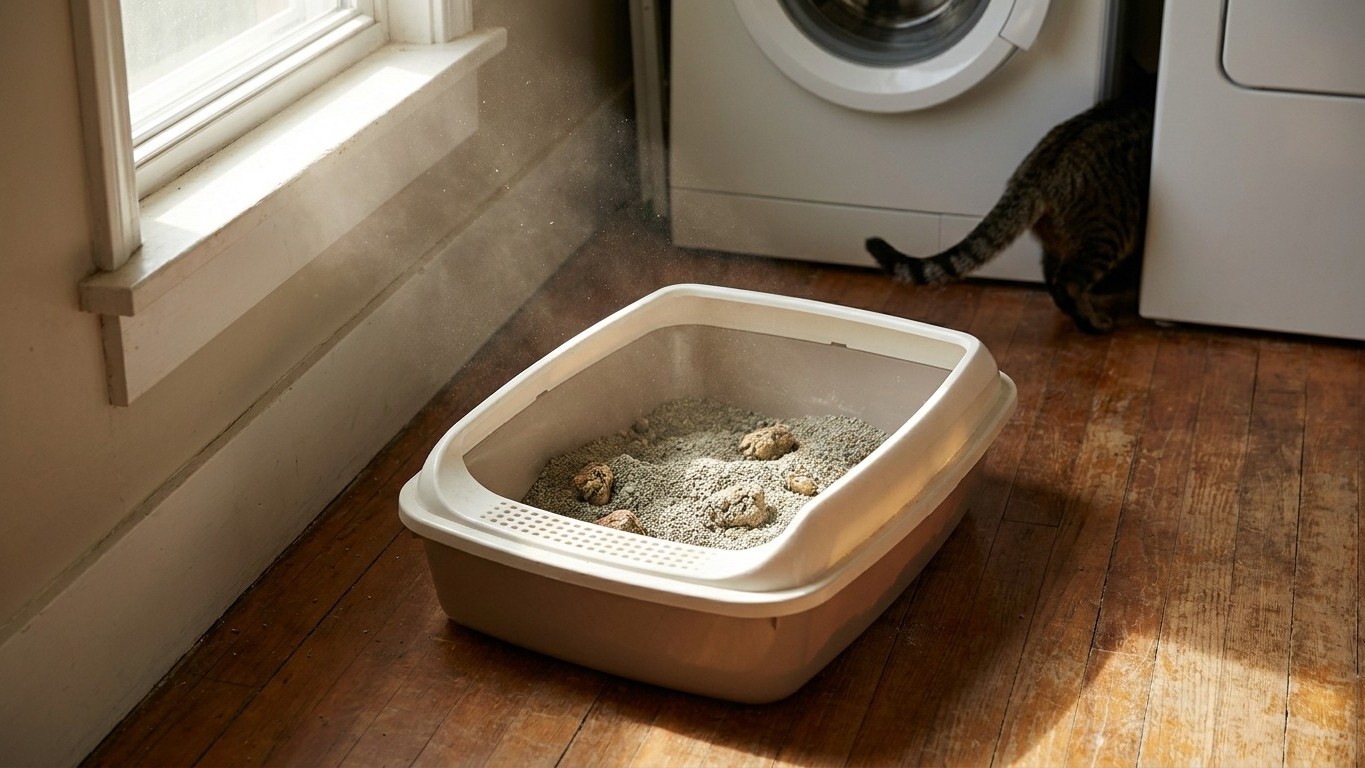
Once a day scooping is, for most of the year, a perfectly reasonable litter box routine. Between May and September, it is not. The warmer the indoor temperature, the faster cat urine transforms into something genuinely harmful to breathe, and by the time you notice the smell, the chemical process has already been running for hours. Summer doesn’t just make the litter box smell worse. It changes what is actually happening inside it.
Key takeaways
- Heat above 24°C accelerates ammonia production 3-5x faster than winter conditions
- Ammonia concentrations in unwashed boxes can approach workplace safety limits within 48 hours
- Mold growth and crystalline silica dust add a second layer of respiratory risk nobody expects
The chemistry that summer accelerates
Cat urine contains high concentrations of urea, a nitrogen-rich waste compound the kidneys excrete. Bacteria naturally present in the litter produce an enzyme called urease that immediately begins breaking urea down. This process, called urease hydrolysis, begins within 20–30 minutes of urination. The longer waste sits, the more urea converts to gas.
So far, so familiar. The summer twist is this: heat above 24°C accelerates bacterial enzyme activity by 3–5×, which is why litter boxes smell dramatically worse in warmer months. A box scooped once every 24 hours in January poses a very different air-quality situation to the same box on a hot August afternoon with the windows shut. In warm conditions above 24°C, a box left 24 hours can reach concentrations 3–5× higher than one cleaned the same day, because heat accelerates bacterial enzyme activity.
Humidity makes things considerably worse. Excess moisture creates a perfect breeding ground for urease-producing bacteria, which accelerate the breakdown of urea in cat urine into ammonia gas. High humidity also compromises the effectiveness of clumping litters. The moisture causes clumps to become soft and fragile, often breaking apart during scooping, leaving behind small, ammonia-producing particles that continue to generate odour, making it feel impossible to get the box truly clean.
What ammonia actually does to airways
Cat urine ammonia above 25 ppm irritates airways in cats, children, and adults. That threshold is closer than most people assume. OSHA’s ammonia safety standards set a permissible exposure limit of 50 ppm for continuous workplace exposure. In a small room with poor ventilation and a multi-cat litter box that hasn’t been scooped in two days, ammonia concentrations near the box can approach this range. The household context here matters enormously: most people don’t have industrial ventilation in their bathroom or utility room.
Breathing in cat urine can actually make you sick. Cat pee is full of ammonia, a toxic gas that can cause headaches, trigger asthma attacks, and even result in serious respiratory illnesses such as pneumonia. Your cat faces an even sharper exposure risk. Cats breathe closer to the litter surface and inhale ammonia far more directly during use than humans ever do. Symptoms in cats with ammonia exposure include panting, weakness, coughing, nasal discharge, drooling, vomiting, loss of appetite, and trouble breathing.
There is also a particularly insidious dynamic at play during summer. Most people underestimate their exposure because they’ve become nose-blind to the smell. You may genuinely not notice the build-up, but your respiratory system will. Chronic exposure to ammonia can lead to feline respiratory infections, chronic bronchitis, or worsen asthma in sensitive cats. Humans, especially children, seniors, and those with asthma, are at risk too.
The mould problem nobody talks about
Ammonia is the best-known hazard, but summer brings a second one that often flies under the radar entirely. Infrequent cleaning or humid conditions can cause mould to grow in litter, especially in organic or high-moisture types. Mould spores are strong allergens that may lead to respiratory issues and skin irritation in both cats and their owners.
Mould can quickly begin to grow inside and around the litter box within 24–48 hours, so cleaning up immediately after your cat uses the box is ideal. The type of litter matters here. Owners should be cautious with corn or plant-based litter in warm, humid conditions, as these types, when exposed to moisture or a damp environment, can promote the growth of aflatoxin mould. When mould develops and doesn’t just stay confined to the tray, spores can move with air currents and settle on carpets, walls, or soft furnishings. Over time, this spread increases the chances of poor indoor air quality, persistent odours, and health risks for sensitive individuals.
And then there is the dust question, which matters year-round but becomes sharper in summer when windows are both more likely to be open and more likely to be shut during peak heat. Clay litters, especially clumping varieties, often generate fine dust containing crystalline silica. When inhaled, this dust can be a respiratory irritant for both cats and humans. Cats are particularly vulnerable as their faces are close to the litter when digging and burying. Research published in 2025 at the Society of Toxicology Annual Meeting noted that normal consumer use of bentonite clay cat litter is not expected to pose significant risks for non-cancer respiratory conditions at typical exposure levels, however, this assessment may underestimate exposure in scenarios such as multi-pet households.
What summer-proofing the litter box actually looks like
The single most impactful change between May and September is scooping frequency. Once a day is the winter minimum; summer demands more. If the litter box is in a room that gets above 24°C in summer, expect odour to intensify significantly. Increase scoop frequency and refresh activated carbon odour control layers more regularly. Twice daily scooping during a heatwave is not excessive, it directly interrupts the urease hydrolysis cycle before concentrations build.
Ventilation is the second lever. Place the litter box in a well-ventilated area to help disperse odours. Avoid placing the box in small, enclosed spaces where ammonia fumes can accumulate. Covered litter boxes, however stylish, make this worse in summer: lids can trap heat and moisture, and if smell builds, removing the lid or choosing an open design helps considerably.
A deep clean matters more than most owners realise. Ammonia odour after cleaning usually means urea residue remains on the box walls. Bacteria continue breaking urea into ammonia gas even after visible waste is removed. Washing the box monthly with an enzyme cleaner, not soap, is needed to digest the urea compounds that ordinary cleaners miss. If you use organic or plant-based litter, replace it more frequently during humid spells and keep the box bone-dry after washing, moisture is what mould needs most.
For multi-cat households, the maths is unforgiving. The general rule of thumb is to have one litter box per cat, plus one extra. This helps reduce the amount of waste in each box, minimising the risk of ammonia build-up. If any member of your household has asthma, allergies, or a compromised immune system, moving litter boxes out of rooms where they spend regular time is genuinely protective, not just a comfort preference. And if your cat is coughing, sneezing persistently, or showing signs of respiratory distress, please consult your vet. Summer litter box hygiene is manageable, but respiratory symptoms in cats need professional assessment, full stop.
One more thing worth knowing: senior cats over ten years old often have reduced kidney function, producing more concentrated urine with higher urea content, meaning more ammonia per bathroom visit. If you share your home with an older cat, the summer risk compounds quietly. Their output is more chemically potent, and they are often also the most vulnerable to the consequences.
Sources : dialavet.com | toxstrategies.com