
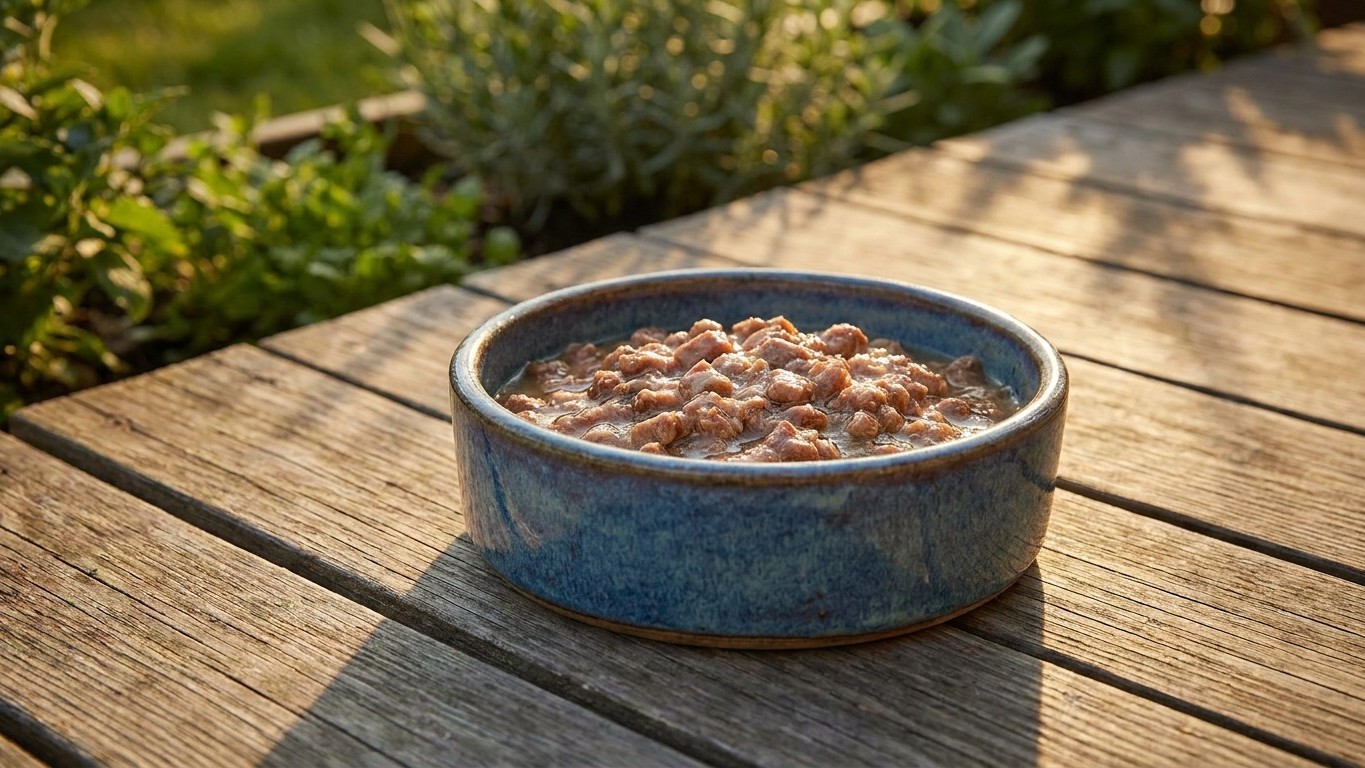
Bacteria multiply fastest between 4°C and 60°C, and wet cat or dog food sitting in a warm kitchen or garden sits right in the middle of that danger zone. At 30°C, the sort of temperature we’ve seen more often during recent UK summers, moisture-rich pet food can start breeding harmful bacteria such as Salmonella and E. coli in well under an hour. That bowl you left out “for later” isn’t a snack anymore. It’s a health hazard.
The confusion is understandable. Dry kibble can sit in a bowl for a day without much drama, because it lacks the moisture bacteria need to thrive. Wet food is a different beast entirely: it’s roughly 70-80% water, packed with proteins and fats, and left at room temperature it behaves rather like raw meat forgotten on a kitchen counter. The UK’s Food Standards Agency has long warned that perishable foods shouldn’t sit at room temperature for more than two hours, and that window shrinks dramatically once you’re above 25°C. Push past 30°C, and you’re looking at a fraction of that time before spoilage becomes a genuine risk.
Key takeaways
- Bacteria in warm, moist pet food can double their numbers every 20 minutes—your pet might not even notice the spoilage before eating it
- That grazing bowl habit that works fine in winter becomes a petri dish in summer heat—even if the food still smells fine to you
- Vets recommend removing wet food within 20-30 minutes during warm weather, but most pet owners have no idea how quickly danger develops
What’s actually happening in that bowl
Warmth speeds up everything. Bacteria that might take hours to multiply to dangerous levels at fridge temperature can double their numbers every 20 minutes in warm, humid conditions. Add a garden fly landing on the food, or a dog’s saliva mixing back into the bowl between visits, and you’ve got extra bacterial contamination on top of what’s already brewing.
The smell is often your first clue, but it’s not a reliable one. Food can turn dangerous before it smells “off” to a human nose. Cats and dogs, with their far superior sense of smell, sometimes still eat spoiled food readily, which is exactly the problem. Unlike us, they won’t necessarily turn their nose up at bacteria-laden meat, especially if it still carries the scent of something appealing underneath the spoilage.
Symptoms of food poisoning in pets tend to show up within a few hours to a couple of days, and typically include vomiting, diarrhoea (sometimes with blood), lethargy, loss of appetite, and abdominal discomfort. In more severe cases, particularly in puppies, kittens, elderly animals, or those with existing health conditions, bacterial gastroenteritis can lead to dehydration serious enough to need veterinary intervention. If your pet shows these signs after eating food that had been left out, contact your vet promptly rather than waiting to see if it passes.
Why summer changes the rules
Most pet owners have a routine that works fine for nine months of the year and quietly falls apart in a heatwave. Leaving a bowl down all day might have been harmless in a cool hallway during winter. Come a properly hot July, that same routine in a conservatory, near a window, or in a garden becomes something else entirely.
Garden and outdoor feeding stations deserve particular caution. Direct sunlight can push the surface temperature of food well above the ambient air temperature, and outdoor settings bring extra contamination risks from insects, birds, and other wildlife. A bowl of wet food left in a sunny spot for a cat that “grazes” throughout the day isn’t a convenience during a heatwave. It’s closer to leaving raw chicken out on the patio.
Multi-cat households often develop the “leave it down and let them graze” habit because it suits cats who prefer small, frequent meals. That instinct is fine in principle, but it needs adapting when temperatures climb. The food itself doesn’t know it’s supposed to wait patiently for your cat to wander back.
What vets actually recommend
The advice from veterinary and food safety bodies is consistent: wet food should be offered in portions your pet will finish in one sitting, and any leftovers should be removed within 20-30 minutes during warm weather, refrigerated promptly if you’re saving them, and never left out longer than an hour once temperatures climb above 25-30°C. This isn’t overcautious fussing. It reflects the same food safety principles that apply to human food left out at a summer barbecue.
A few practical habits make this manageable without turning mealtimes into a military operation. Split larger tins into smaller portions before serving, so you’re not tempted to leave a big helping down “just in case.” Keep opened tins covered and refrigerated between meals, ideally used within 24 to 48 hours as most manufacturers advise on the label. If your cat or dog tends to eat in stages rather than all at once, consider serving smaller, more frequent portions during hot weather rather than one large bowl left to fend for itself against the heat.
For households that free-feed, a shift to scheduled mealtimes during summer isn’t a punishment, it’s a simple adjustment that protects a pet’s gut health without much extra effort. Some owners find that swapping to smaller “starter” portions and topping up more often works better than the all-day buffet approach once the mercury rises.
The bowl matters too
Beyond the food itself, hygiene around the bowl compounds the risk. Bacteria don’t just live in leftover food; they colonise the bowl’s surface, particularly in scratches on plastic bowls, which are notoriously harder to clean thoroughly than ceramic or stainless steel. A bowl that’s simply topped up rather than washed between servings becomes its own bacterial reservoir, regardless of how careful you are about timing.
Washing food bowls daily with hot, soapy water, and giving them a proper scrub rather than a quick rinse, cuts down on residual bacteria that survive even after old food is removed. It’s a small habit, but one that pairs naturally with being stricter about how long food sits out in the first place.
None of this means panicking over every missed pickup time. An hour’s grace on a mild spring day is a different matter to an hour under direct sun in a heatwave. The safest approach is simply to treat wet pet food the way you’d treat any perishable food meant for a family member: serve it, let them enjoy it, then clear it away before the heat does anything with it that you’d rather it didn’t.