
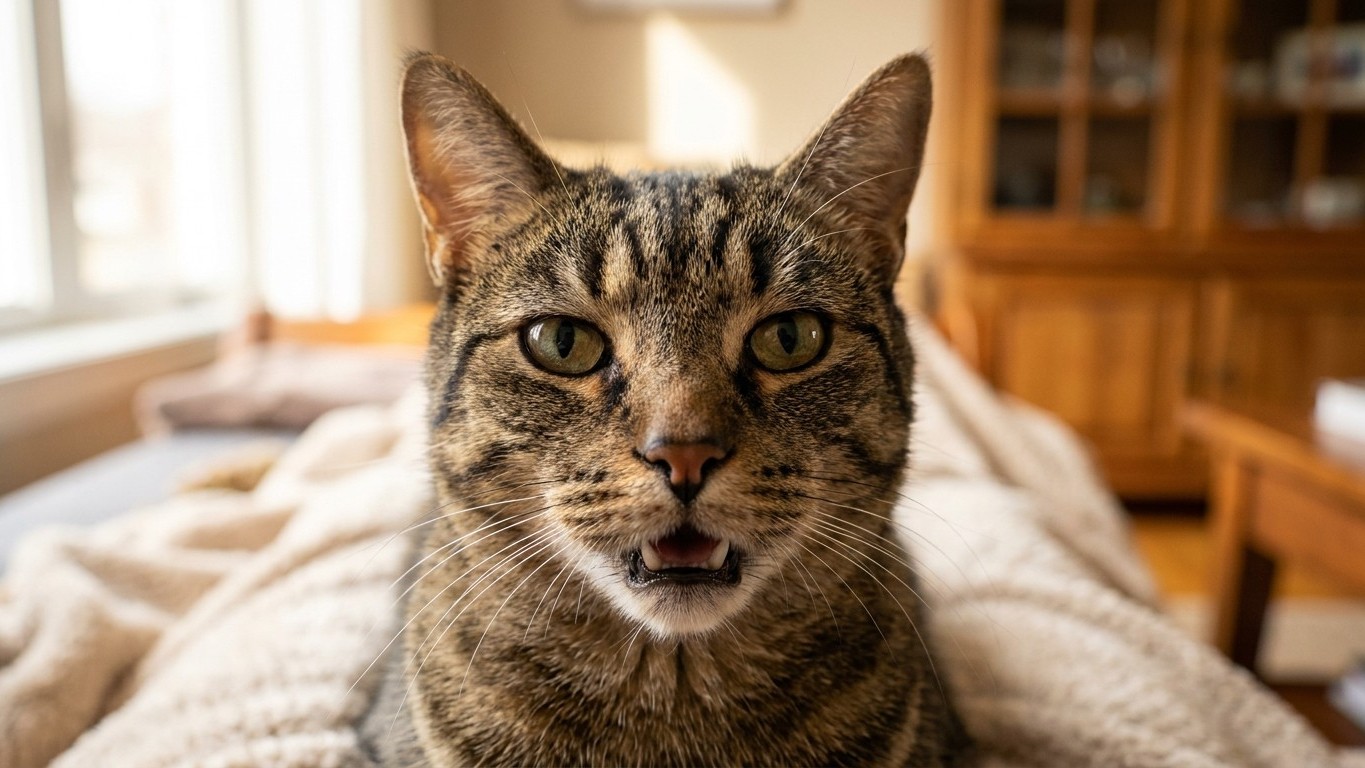
Dogs pant. Cats don’t, not normally, and if yours has started breathing through an open mouth, that’s your cue to act, not to shrug it off as harmless dog-like behaviour. Feline open-mouth breathing is one of the clearest signs of respiratory or cardiac distress in veterinary medicine, and it needs same-day attention from a vet, not a “let’s wait and see” approach.
Cats are obligate nasal breathers. Their entire respiratory system is built around breathing through the nose, with the mouth reserved for eating, drinking, grooming and the occasional yowl. A healthy cat, even after sprinting around the house at 3am or being chased by next door’s dog, will recover its breath through its nostrils within a couple of minutes. If a cat resorts to breathing through its mouth, something has gone wrong with the normal nasal route, or the body is so starved of oxygen that it’s overriding its own instincts to get more air in by any means possible.
Key takeaways
- Cats breathing through their mouth is fundamentally different from dog panting—what looks similar masks a far more serious problem
- Heart disease can silently develop in cats for years, revealing itself suddenly through open-mouth breathing with minimal warning
- A cat’s breathing pattern holds hidden clues: watch the timing, body posture, gum color, and effort involved to distinguish emergency from false alarm
Why cats aren’t wired like dogs when it comes to breathing
Dogs pant to cool down because they don’t sweat efficiently through their skin. Evaporative cooling across the tongue and airways regulates their body temperature, and it’s completely normal after exercise or in hot weather. Cats do have some sweat glands, mainly in their paw pads, and they cope with heat through grooming (saliva evaporates and cools the skin), stretching out on cool surfaces, and general lethargy in high temperatures. Open-mouth panting as a cooling mechanism is vanishingly rare in cats and, when it does happen, it’s usually in extreme heat stress or after significant stress and anxiety, such as a terrifying car journey to the vet in a carrier.
This means the presentation looks similar on the surface, mouth open, breathing audible, sometimes with the tongue visible, but the underlying cause in a cat is far more likely to be serious. Vets and researchers commonly point to a small cluster of possible triggers: fluid building up around or within the lungs (often linked to heart disease), asthma or airway inflammation, trauma to the chest, anaemia, pain, or severe stress. Any of these can push a cat’s oxygen levels low enough that the brain forces open-mouth breathing as a last resort.
The signs that separate an emergency from a false alarm
Reading a cat’s breathing pattern takes a bit of practice, but there are tell-tale signs that distinguish genuine distress from a brief, harmless episode. Watch for laboured breathing where the belly and chest both heave with effort, a much faster resting respiratory rate (a normal cat breathes somewhere between 20 and 30 times a minute at rest), blue or pale gums, and the cat adopting an odd posture such as sitting with elbows pointed outward and neck extended, almost like it’s trying to open its airway as wide as possible. This posture, sometimes called orthopnoeic positioning, is a strong indicator that the cat is prioritising every scrap of oxygen it can get.
Cats are also notorious for hiding illness. It’s an evolutionary hangover from being both predator and prey: showing weakness in the wild makes you a target. So by the time a cat’s distress becomes obvious enough for an owner to notice open-mouth breathing, the underlying problem has often been brewing for a while. A cat found panting after being startled by a firework and back to normal within a minute is very different from one still breathing with an open mouth five or ten minutes after a stressful event, or one that’s doing it while completely at rest with no obvious trigger at all.
Heart disease is one of the biggest hidden culprits
Hypertrophic cardiomyopathy, a thickening of the heart muscle, is the most common heart condition in cats and can go undetected for years because cats compensate so well. According to the Royal Veterinary College, this condition affects a meaningful proportion of the domestic cat population and certain breeds, including Maine Coons and Ragdolls, carry known genetic mutations that increase their risk. When the heart struggles to pump efficiently, fluid can back up into or around the lungs, a condition called pulmonary oedema or pleural effusion. That fluid physically restricts how much the lungs can expand, and open-mouth breathing becomes the body’s desperate attempt to compensate.
What makes this particularly sneaky is that cats with heart disease often show no symptoms at all until they’re in crisis. There’s no persistent cough like you might expect in a dog with heart failure. The first sign a lot of owners see is exactly this: a cat suddenly breathing with its mouth open, often after minimal exertion, sometimes accompanied by a much higher heart rate or a strange, almost silent gasping quality to the breathing rather than the classic dog-like pant.
What to actually do if you see it happening
Get your cat into a carrier calmly (stress makes breathing harder, so avoid chasing or restraining aggressively) and get to a vet or emergency clinic straight away. Don’t offer food or water first, and don’t wait until morning if it happens at night, out-of-hours veterinary emergency services exist precisely for situations like this. Keep the cat in a quiet, low-stress environment on the way there; some vets recommend covering part of the carrier with a light towel to reduce visual stimulation and panic.
A vet will typically want to check oxygen levels, listen to the heart and lungs, and may recommend chest X-rays, an ultrasound scan of the heart, or blood tests depending on what they hear and see. Treatment ranges enormously depending on the cause, from oxygen therapy and diuretics for fluid around the lungs, to bronchodilators for asthma, to pain relief if trauma is suspected. The point isn’t to self-diagnose at home; it’s recognising that this specific symptom warrants a professional opinion faster than almost any other behaviour change in a cat.
One detail worth remembering: a cat’s normal panting from heat or brief exertion should resolve within two to three minutes once it’s calm and cool. Set a timer if you’re ever unsure. If the mouth is still open and the breathing still laboured past that window, you’re not looking at a dog-like quirk, you’re looking at a cat telling you, in the only way it can, that something inside isn’t working the way it should.