
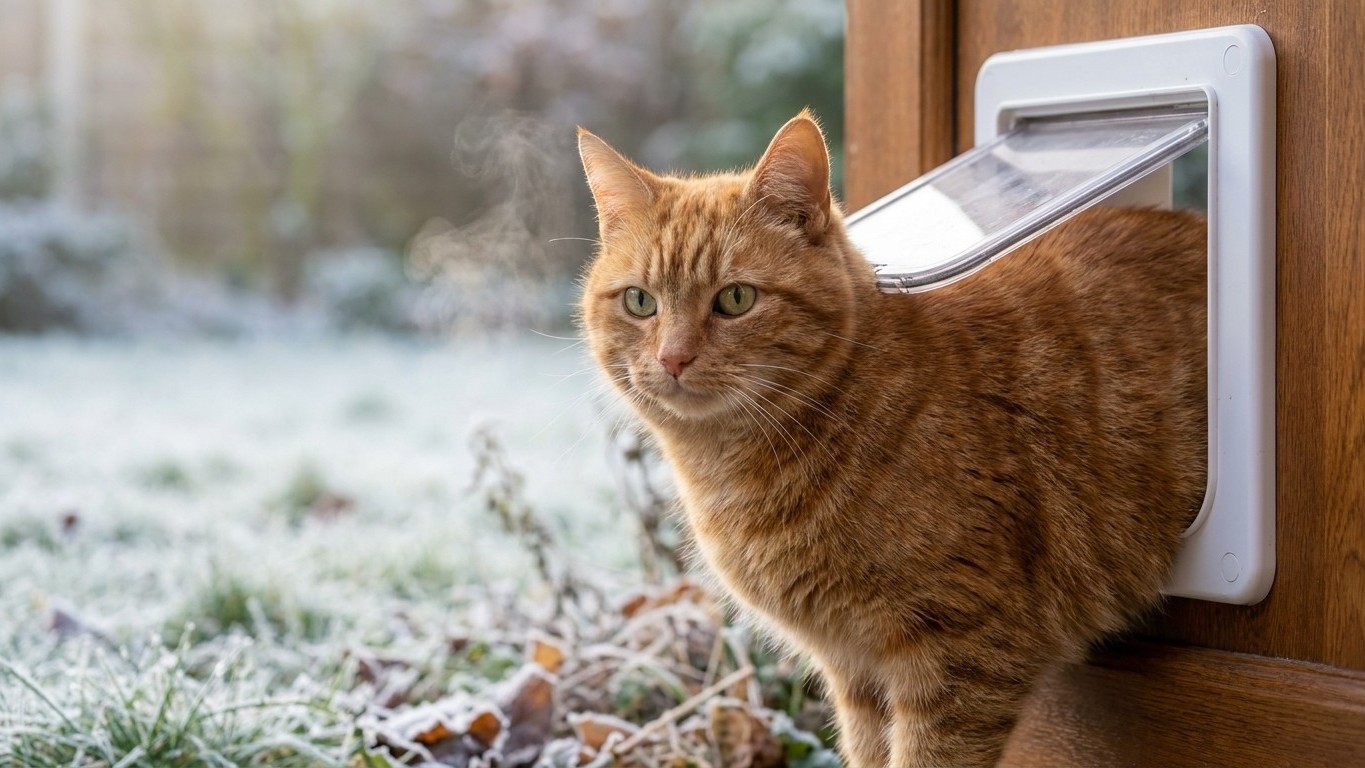
My cat, a ginger menace called Biscuit, used to go out in virtually any weather. Rain, frost, the odd hailstorm, nothing stopped him. I assumed that, as a cat, he simply knew his limits. Then a visit to the vet changed my thinking entirely. Not with a lecture, but with a handful of specific numbers that I couldn’t argue with. If you let your cat roam freely regardless of the forecast, those numbers matter for you too.
Key takeaways
- A vet revealed the exact temperature line where outdoor cats enter medical danger—and it’s lower than most owners think
- Cats mask cold discomfort brilliantly, appearing fine while their body temperature plummets toward a hypothermia emergency
- The warning signs happen fast: from subtle shivering to unresponsiveness in what feels like no time at all
The temperatures your cat’s body actually struggles with
Cats are most comfortable between roughly 15°C and 30°C (59–86°F). Below 7°C (45°F), things start to become uncomfortable, and at or below 0°C (32°F), the risks of frostbite and dangerously low body temperature become very real. That 0°C line is the one my vet circled first. Not because freezing temperatures are a surprise, but because many owners, myself included, underestimate how quickly a cat can cross from “a bit chilly” into genuine medical danger.
Temperatures between 10°C and 19°C are generally considered safe for most cats, though elderly cats or those with short coats may need extra warmth even within that range. Below that, the picture shifts. At temperatures between 0°C and 6°C, cats are at medium risk, and prolonged exposure becomes genuinely hazardous. Once the thermometer hits 0°C and below, conditions become dangerously cold, posing a high risk of both frostbite and hypothermia.
The other number that surprised me was on the hot side of the scale. Indoor temperatures consistently above 30°C are risky, and above 35°C can be an emergency without proper cooling or water. We talk endlessly about cats in cold weather, but the summer heat is just as capable of killing them. Heatstroke can progress from mild discomfort to a dangerous emergency within 20 to 30 minutes, and organ damage begins when a cat’s temperature exceeds 104°F (40°C).
Why cats are so deceptive about being cold
Cats often mask discomfort and don’t visibly shiver or vocalise until they are quite cold, unlike dogs who typically alert their humans that they’re cold much sooner. This is the biological quirk that catches owners out. Biscuit would come in from a frosty evening looking perfectly composed, and I’d assume he was fine. What I didn’t register was that he was probably seeking out every patch of warmth available outside before giving up and coming back.
As temperatures fall, cats seek out the warmest possible location and hunker down when they first feel chilly. As they get colder, they curl into a tight ball and may even cover their noses with their tails, all instinctive heat-conservation behaviours that look, frankly, adorable rather than alarming. The trouble is that cats are more likely to become hypothermic while resting, not while moving. When curled up and inactive, particularly during sleep, the body produces less heat. A cat napping under a hedge on a freezing night is in a very different situation to one actively prowling.
Cats with health conditions such as endocrine disease, heart disease, or any chronic illness are also more susceptible to cold weather’s effects. Kittens, cats advanced in age, or those who are unwell should never be kept outdoors when the temperature drops below 45°F (7°C). If your cat falls into any of those categories and you’re still opening the cat flap on frosty mornings without a second thought, this is the moment to reconsider.
Recognising the warning signs before it becomes an emergency
Mild hypothermia shows up as subtle shivering, cold ears and paws, and seeking warm places. A cat may seem less active than usual or curl up tightly to conserve body heat. These signs are easy to dismiss as tiredness or grumpiness. The escalation, though, is swift. Severe hypothermia occurs when body temperature drops below 32°C (90°F), and any cat with a temperature below 35°C (95°F) should be considered in danger. Cats showing unresponsiveness, extremely cold paws, or slow breathing need emergency care immediately.
Rapid or improper warming can cause shock or heart rhythm problems, which is why severe hypothermia should always be handled by a vet. If you find your cat in this state, wrap them in a warm (not hot) towel and get to a clinic without delay. Do not use a hot water bottle directly against the skin or blast them with a hairdryer, both can cause burns or send the body into shock.
The heat end of the scale carries its own set of red flags. Unlike dogs, cats don’t normally pant to cool down, so this behaviour should always raise concern. Severe heatstroke presents as heavy panting, drooling, bright red or purple gums, and vomiting. A cat may seem confused, walk unsteadily, or collapse. If you notice any of these signs, immediately place your cat in a cool area with a draft, gently wet their fur with cool (not very cold) water, and contact your vet immediately.
Practical steps that actually make a difference
Wet conditions, rain, sleet, snow, make cold weather far more dangerous by reducing a cat’s natural insulation. A dry winter’s day at 3°C is one thing; the same temperature with drizzle is something else entirely. The combination strips away the protective air pockets in a cat’s coat far faster than cold alone. If your cat is an outdoor explorer, a weatherproof shelter in the garden is a genuine welfare measure, not a luxury. Adding blankets or dry straw gives the animal somewhere to bed down and stay warm, but bedding should be kept clean and dry and changed out frequently.
There are hidden winter hazards that go beyond temperature. Antifreeze is toxic to cats and is often fatal if ingested. Beyond its use as an engine coolant, it can also be found in brake fluid, toilet winterisers, and heat exchangers. Antifreeze poisoning is more common in cats than in dogs, partly because cats roam freely and may enter sheds and garages where spills go unnoticed. Before getting into and starting your vehicle on a cold morning, thump the bonnet with your hand, a cat seeking warmth may have crawled up into the engine overnight.
In summer, if the outdoor temperature exceeds 29°C (85°F), it’s generally best to keep your cat indoors, especially during the hottest parts of the day between 10am and 4pm, when surfaces can become dangerously hot. Pavement, asphalt, and dark-coloured patios absorb and retain heat, and within minutes they can reach temperatures that quickly burn a cat’s sensitive paw pads. British summers are becoming increasingly warm, and this is no longer just advice for owners in southern Europe.
One thing my vet pointed out that I hadn’t considered: cat flu can also be a concern in colder weather, so ensuring your cat’s vaccinations are up to date is particularly relevant in autumn and winter. The cold doesn’t cause cat flu directly, but cold weather can weaken a cat’s immune system, making them more susceptible to illness. A well-vaccinated, healthy adult cat going out on a cool autumn afternoon is a very different proposition to an elderly or unvaccinated one facing a damp January night. Always speak to your vet if you’re unsure where your cat sits on that spectrum, they’re the only one who can give you advice tailored to your individual animal.
Sources : gsvs.org | gallant.com