
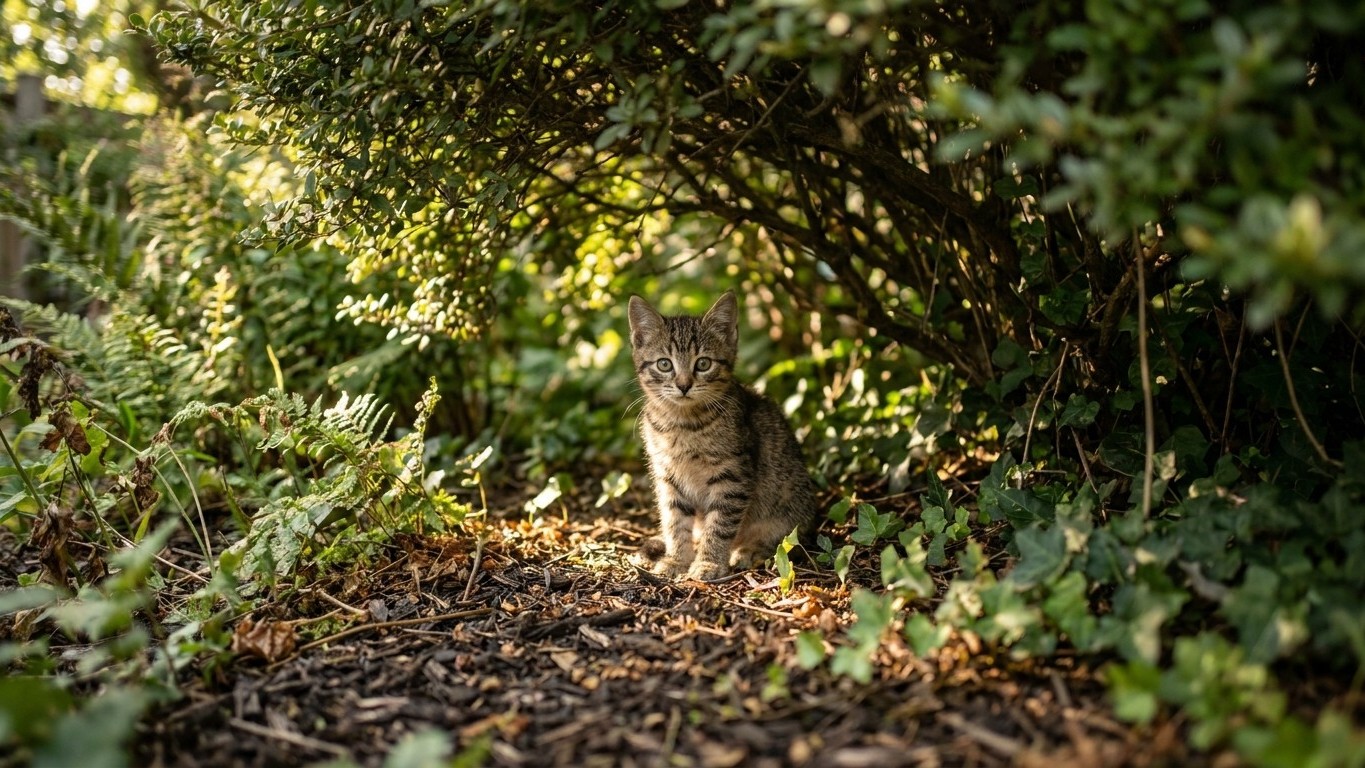
Cat rescue charities have a blunt name for this exact scenario: kitten-napping. Someone spots a tiny, solitary kitten under a hedge, assumes it has been abandoned, and lifts it into a box “to be safe”. Hours later, when they go back to check on the spot, the mother cat has already returned, found her baby gone, and moved on with the rest of her litter, sometimes for good. The kitten that was “saved” is now motherless, and far worse off than it was under that bush.
This isn’t a rare fluke. It happens every single kitten season, which in the UK runs roughly from spring through to early autumn as daylight hours lengthen and unneutered cats come into heat. Kitten season occurs during the warmer months of the year, typically peaking in spring and summer, when unsterilised cats are more likely to give birth. Streets, allotments and gardens fill with hidden litters, and well-meaning members of the public do the one thing that feels instinctively right and is often, biologically, the worst possible choice.
Key takeaways
- A ‘lone’ kitten is rarely abandoned—the mother is usually foraging nearby and will return within hours
- Removing a kitten mid-relocation can split a family the mother was actively trying to protect to safety
- The four-hour waiting window is critical: that’s when mothers are statistically most likely to return
Why a “lone” kitten usually isn’t alone at all
Mother cats are not lazy or careless. Even if you see kittens alone, it is more than likely their mother is nearby, and a mother cat is kittens’ best possible caregiver. She hasn’t vanished. She’s hunting, drinking, or simply hiding from you in the undergrowth a few metres away, waiting for the two-legged giant looming over her nest to leave.
The RSPCA is explicit about the risks of intervening too soon. If a stray cat has just had kittens, it may be best to leave them for a few days, because if anyone tries to move them, the mother may reject or even kill the kittens. That single sentence explains the tragedy behind this article’s title far better than any dramatic retelling could. A kitten removed from its nest doesn’t just lose its mother’s company; it can lose her entirely, because she may no longer recognise it, or trust the disturbed site, once it’s returned.
Timing makes this worse. Mother cats routinely leave kittens unattended for long stretches while foraging. Wait at least four hours to see if the mother cat comes back; kittens are rarely abandoned, and their mum is often just temporarily away finding food. Four hours. That’s the exact window in the scenario that opens this piece, and it’s precisely the window during which a mother cat is statistically most likely to still be planning her return.
There’s a second, sadder pattern rescuers describe: single kittens found alone are frequently not orphans at all, but babies mid-relocation. A mother cat will periodically leave her nest to search for food, and if you see young kittens without their mother, it is likely she will return; she may be in the process of moving them, which is often the case when people find small, single kittens outside. Cats do this when a nest site feels compromised, ferrying kittens one by one in her mouth to somewhere safer. Snatch that single kitten mid-move, and you’ve split a family the mother was actively trying to protect.
The genuine warning signs worth acting on
None of this means you should ignore a kitten in real trouble. Charities are equally clear that some situations demand immediate action, and hesitating for the sake of “leaving nature alone” can cost a life. Step in without delay if:
- The kitten is in a genuinely dangerous spot, such as a busy road, near open water, or exposed to extreme heat or cold
- It looks cold, limp, thin, or is crying constantly and weakly rather than sleeping quietly
- There are visible wounds, flies, or signs of illness such as discharge from the eyes or nose
- You’ve watched patiently from a distance for several hours (or overnight, if it’s safe to wait that long) and the mother genuinely hasn’t reappeared
The RSPCA’s guidance for anyone in this position mirrors what most UK rescues advise: if mum and/or the kittens seem to be sick or injured, phoning a local vet for advice is the best and quickest way to help, and it’s important that mum and kittens stay together. That last point matters as much as the first. Even when help is genuinely needed, the goal should be reuniting or rehoming mother and litter together wherever possible, not separating them permanently the moment a person feels a pang of concern.
What to actually do while you wait
Watching from a hidden position, rather than hovering nearby, gives a mother cat the confidence to come back. Her instincts tell her that a human standing guard over her kittens is a predator, not a rescuer, so retreat to a window, a car, or a spot well out of her sightline. If the weather’s rough, you can offer discreet help without touching the kittens at all: placing a shallow bowl of water nearby with minimal disturbance and keeping a good distance, and placing some shelter nearby depending on the weather, can help keep her shaded from the sun and sheltered from cold winds and rain. Keep any food and shelter positioned apart from each other, since a hungry, unsocialised mother won’t want to linger near an obvious food source that might attract rivals or predators towards her babies.
If, after a genuinely patient wait, there’s still no sign of mum and the kittens are cold or distressed, that’s the moment to call your local vet or rescue for guidance before doing anything else, rather than driving straight to a shelter with a kitten tucked in your coat. Separating unweaned kittens from a nursing mother carries risks for her too: taking kittens who are not weaned away from their mother puts kittens at greater risk of illness, and it puts the mother at risk for mastitis, a painful and life-threatening condition. A four-hour window of quiet, careful watching costs nothing. Acting on instinct alone, however kind that instinct feels, can be the difference between a reunited family and a story that ends exactly like the one in this headline.
Sources : bestfriends.org | plantcityobserver.com