
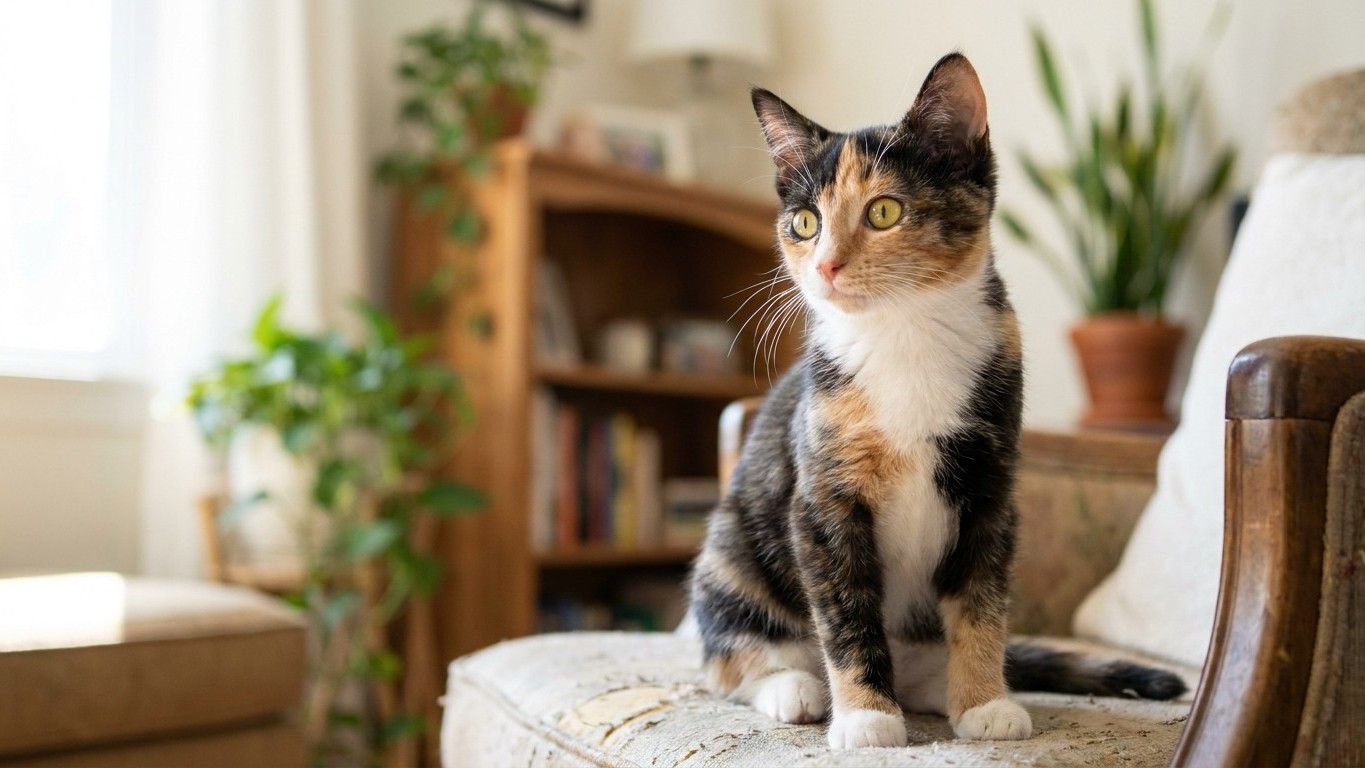
A female kitten can come into her first season at just four months old, and she can conceive during that very first cycle. That means the “one special litter” so many families plan for educational purposes often triggers a second, third, even fourth wave of pregnancies before anyone has time to find homes for the original kittens. If mum wasn’t spayed straight after weaning her babies, and those babies weren’t separated from any male littermates or the resident tom, the maths turns nasty very quickly.
Key takeaways
- Female kittens can get pregnant as early as four months old—potentially before leaving their birth home
- One unspayed cat could theoretically produce 350,000 kittens in seven years across generations
- The UK has over one million unneutered cats, creating a cascade of accidental litters that rescue workers struggle to manage
Why four months is the real danger zone
Vets repeatedly flag the same window: puberty in cats arrives far earlier than most owners expect. Female kittens reach sexual maturity and go into heat for the first time around the age of five months, but this can vary between four months and a year old. Some breeds tip into puberty even sooner. Siamese, Oriental, Bengal, and Devon Rex cats are considered early-maturing breeds, often reaching puberty around six months.
Once that first heat arrives, there’s no gentle warm-up period. Pregnancy can occur as early as the first heat. And the cycle doesn’t politely pause once she’s had kittens either. A cat can get pregnant again very quickly after giving birth, and nursing her kittens won’t prevent pregnancy, with the next heat sometimes occurring just a few weeks after her kittens are born. So if a mother cat has her “one litter” at, say, eight months old, her own daughters could easily be cycling and mating by the time they’re four months, roughly the same age they’d normally be heading off to their new homes.
This is exactly why so many vets push spaying before the first season rather than after. The best way to prevent a cat from becoming pregnant is to have her spayed before her first heat cycle, though it can be difficult to predict when that will occur, so most vets recommend the procedure at around six months of age. Some practices now go earlier still, particularly in rescue settings where accidental litters are a constant battle.
The maths behind the chaos
Cat fertility statistics sound almost fictional until you sit down and do the arithmetic. A single unneutered female cat can have as many as 18 kittens a year, and while an average litter consists of four or five kittens, some litters consist of as many as 12. Multiply that across two or three generations breeding simultaneously and you understand how one “educational” litter spirals into a small colony within a year. Catster’s population modelling puts the theoretical extreme starkly: a single female cat and the offspring she produces could, in theory, have 350,000 kittens in just 7 years. No responsible household is heading for that outcome, of course, but it illustrates why even a modest lapse in neutering discipline snowballs.
The UK’s own numbers back this up on a national scale. There has been an unprecedented increase in cat breeding recently, with over a million cats still unneutered, according to RSPCA statistics, out of around 12.5 million cats in the UK, of which on average 91% are neutered each year. That gap, roughly nine cats in every hundred, doesn’t sound catastrophic until you remember each unneutered female can theoretically produce multiple litters annually. Researchers estimate the total UK urban unowned cat population to be 247,429, a population largely sustained by exactly this kind of accidental, generational breeding rather than deliberate feral colonies springing from nowhere.
I’ll be honest: as someone who’s spent years reporting on shelter intake figures, this is the pattern that frustrates rescue workers most. Nobody sets out to create six pregnant cats living under one roof. It happens because “just the one litter” ignores how fast kittens themselves become parents, and because well-meaning owners underestimate how determined an intact tom (yours or a neighbour’s) can be at finding his way indoors.
What to do instead if you want your children to meet kittens
There’s a far kinder route to the same magical experience without the cascade of unplanned pregnancies. Most UK rescue charities, including Cats Protection and the RSPCA, run foster schemes where families can care for a pregnant queen or a litter awaiting adoption, watching the whole process unfold without the lifelong genetic and logistical consequences of breeding your own cat. Fostering delivers the wide-eyed wonder of newborn kittens minus the risk of a repeat performance from her offspring four months later.
If a litter has already arrived at home, the practical priority becomes speed. Book the mother in for spaying as soon as her vet clears her, typically once kittens are weaned at around eight weeks, and get any surviving kittens neutered before they reach seventeen or eighteen weeks rather than waiting for the traditional six-month marker. Keep an eye on:
- Any male kittens or resident toms who might mate with young females in the litter
- Signs of a returning heat in mum, such as increased vocalising, rolling, or affectionate rubbing
- Daughters showing the same behaviours from as early as twelve weeks old
None of this is about shaming families who wanted their kids to witness new life. It’s about timing the follow-up vet visit before biology gets there first. A quick call to your practice about early neutering, sometimes available from as young as eight to twelve weeks in rescue settings, will save considerably more heartache than the wait-and-see approach most of us grew up with.
One detail that surprises even seasoned cat owners: because cats don’t experience anything resembling menopause, an unspayed queen can keep cycling and conceiving well into old age, meaning the “just one litter” plan doesn’t even guarantee an endpoint at the mother’s end of the family tree, let alone her daughters’.
Sources : catster.com | scienceinsights.org