
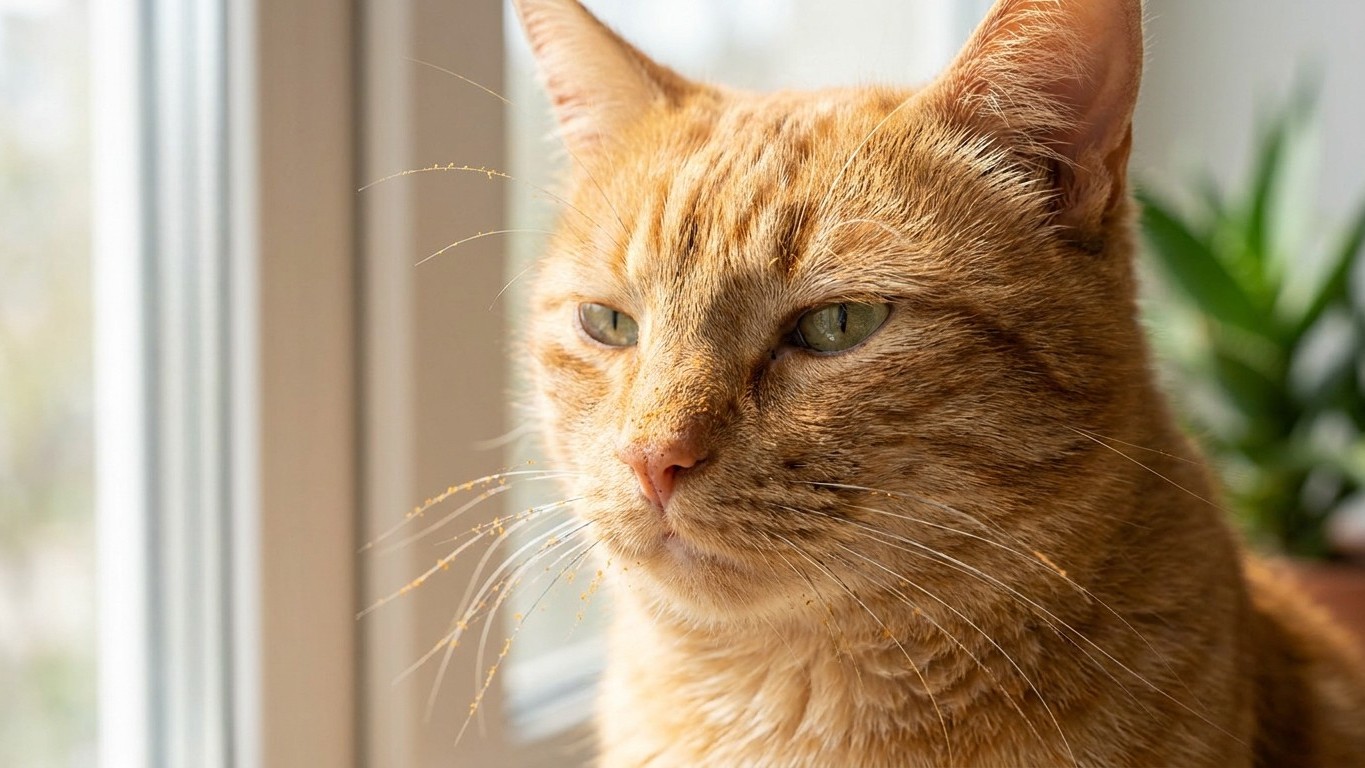
A dusting of orange-gold pollen on a cat’s fur looks harmless enough. It brushes off with a stroke of the hand, or so most owners assume, right before the cat licks its paw clean and swallows the very thing that could kill it within days. Lilies are one of the most quietly devastating houseplants a cat owner can bring home, and the danger has nothing to do with nibbling leaves. Pollen alone, transferred from whiskers to tongue during a routine grooming session, is enough to trigger acute kidney failure in a cat.
This isn’t a fringe worry dreamt up by overcautious vets. The Royal Society for the Prevention of Cruelty to Animals (RSPCA) lists true lilies and daylilies among the most toxic plants for cats, warning that every part of the plant, including the water in the vase, carries risk. Cats are uniquely vulnerable here. Dogs, humans, even rabbits can be around lilies with relatively minor consequences, but feline kidneys process the plant’s compounds in a way that causes rapid, often irreversible damage. Nobody has yet pinned down the exact toxin responsible, which makes the danger harder to communicate and easier to underestimate.
Key takeaways
- Lily pollen alone, transferred during routine grooming, is enough to cause irreversible kidney damage in cats within days
- Symptoms like vomiting and lethargy can mask rapid organ failure—but cats treated within 18 hours have significantly better survival odds
- Dried lilies and potpourri remain toxic long after flowers wilt, and even vase water poses a serious threat to curious cats
Why a Few Pollen Grains Can Do So Much Damage
The species owners need to worry about most are the ones sold in nearly every supermarket flower aisle: Easter lilies, tiger lilies, Asiatic and Oriental lilies, and daylilies (which, botanically, aren’t true lilies but are just as dangerous to cats). A cat doesn’t need to chew a petal. Grooming pollen off fur, drinking from a vase, or even just brushing past the stamens can be enough to set off a toxic reaction.
Symptoms typically creep in within a few hours and escalate over the following one to two days. Vomiting, lethargy, and loss of appetite are usually the first signs, sometimes dismissed as a cat simply being “off colour.” That’s precisely what makes lily poisoning so treacherous. By the time more obvious symptoms appear, such as increased or decreased urination, dehydration, or disorientation, the kidneys may already be sustaining serious injury. Left untreated, the outcome is frequently fatal.
There isn’t a safe threshold. Vets and welfare organisations are consistent on this point: no amount of lily exposure should be considered fine for a cat. A single leaf, a mouthful of vase water, or a light coating of pollen on fur has been enough to cause kidney failure in documented feline poisoning cases.
What Actually Happens Inside a Poisoned Cat
The kidneys are the target organ, and the damage tends to follow a fairly predictable timeline. In the first twelve hours, a cat may vomit repeatedly and become withdrawn. Over the next day or two, as toxins accumulate, the kidneys start losing their ability to filter waste from the bloodstream. This is when a cat might stop urinating altogether, a sign that’s often misread as improvement (“she’s stopped being sick and seems quieter”) when it actually signals the kidneys are shutting down.
Blood tests at this stage typically show sharply elevated kidney values, and without swift intervention, permanent kidney damage or death can follow within three to seven days of exposure. Cats that receive treatment within eighteen hours of contact have a considerably better prognosis than those treated later, which is why speed Matters More Than certainty. If there’s any chance a cat has been near lilies, that’s reason enough to call a vet immediately rather than waiting to see if symptoms develop.
What to Do If You Suspect Exposure
Treatment isn’t something to attempt at home, but knowing what a vet will likely do helps explain why urgency is non-negotiable. Emergency veterinary teams typically induce vomiting if the exposure was very recent, administer activated charcoal to bind remaining toxins in the gut, and start aggressive intravenous fluid therapy to support kidney function and flush the bloodstream. In more advanced cases, dialysis may be needed. None of this is guaranteed to work if too much time has passed, which is the blunt reality owners need to sit with.
If pollen has landed on a cat’s coat, the safest move is to gently wipe it off with a dry cloth rather than water, which can smear pollen further into the fur, and then contact a vet for advice even if the cat seems perfectly fine. The RSPCA and the ASPCA’s Animal Poison Control Center both maintain that any suspected lily contact in cats warrants professional assessment, not a wait-and-see approach.
Making a Cat-Safe Home Without Giving Up Flowers
None of this means banishing fresh flowers from a home with cats. It means being selective. Roses, sunflowers, orchids and most culinary herbs pose little to no risk and can be enjoyed without a second thought. The trouble tends to arrive in ready-made bouquets, particularly around Mother’s Day, Easter and summer weddings, when lilies are added as fillers without any warning label attached. Checking the flower composition before a bouquet enters the house, or asking a florist directly, takes seconds and removes the guesswork entirely.
For households that already have lilies in a vase, the safest option is simply removing them rather than trying to cat-proof their placement. Cats are notorious counter-surfers and shelf-climbers, and a “high enough” spot rarely stays out of reach for long. If a bouquet is a gift and can’t easily be refused, isolating it in a room the cat never accesses is a workable stopgap, though not one I’d rely on long-term with a curious or agile cat.
What surprises a lot of owners is that dried lilies and even pressed petals in potpourri retain their toxicity, so the risk doesn’t end when the flowers wilt. A vase that once held lilies should be washed thoroughly before reuse, since residue in the water has been enough to cause poisoning on its own. Keeping a mental note of exactly which flowers are lilies, given how many varieties share the name loosely, is a small habit that could genuinely spare a much-loved cat a completely avoidable trip to intensive care.