
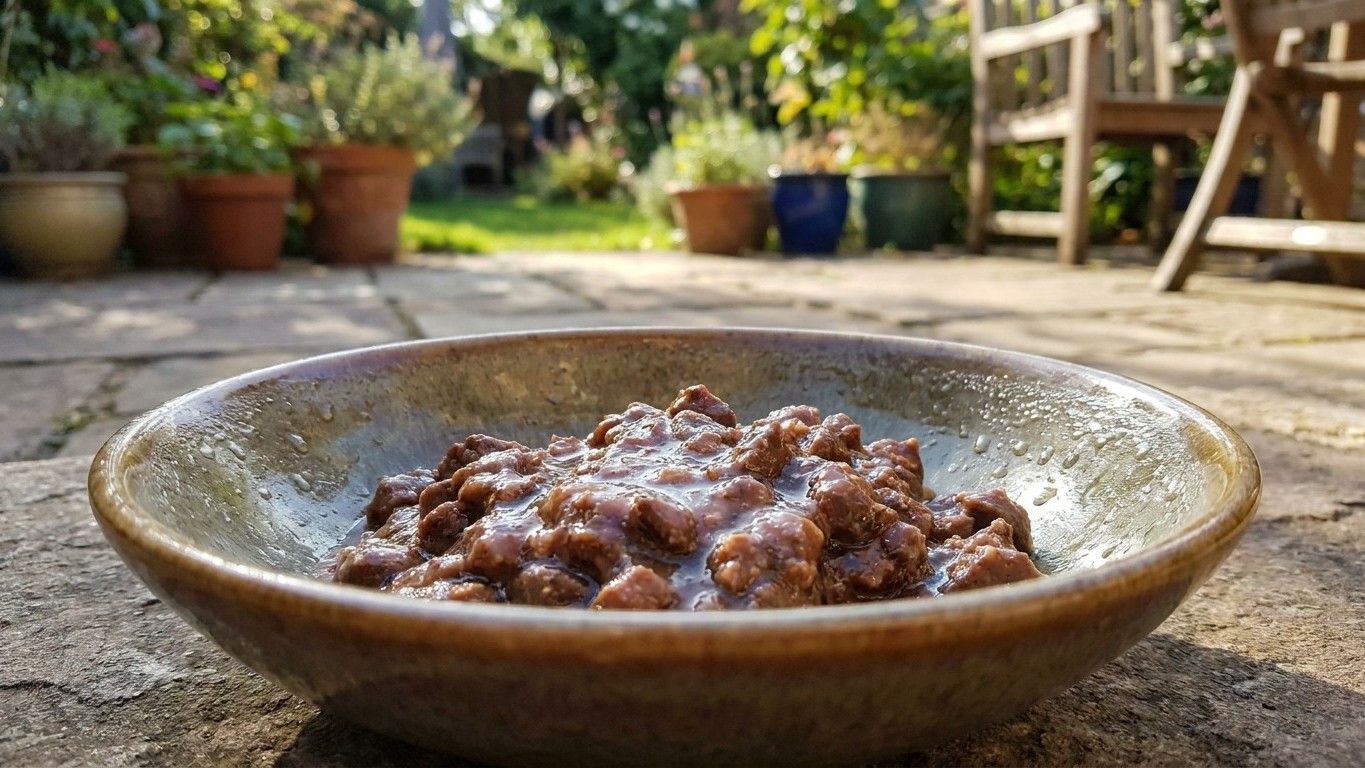
A slimy, glistening film on the surface of cat food that’s been sitting in the June sun. It looks almost harmless, a bit of moisture, perhaps a change in texture. But that sheen is bacterial biofilm, a colony of microorganisms that has already multiplied to dangerous levels. By the time you spot it, the damage is done, and your cat may have already taken a few bites.
Key takeaways
- A shiny film on wet food isn’t harmless moisture—it’s a sign of bacterial biofilm already at dangerous levels
- Summer heat can spoil wet cat food in under one hour, creating pathogens that cause serious illness or death
- The connection between that sunny bowl and your cat’s vomiting days later is easy to miss—but the damage was already done
The Science of Why Summer Heat Makes Wet Food a Ticking Clock
Wet cat food usually contains roughly 80% moisture and plenty of organic material, making it ideal for microbes to breed. That combination of protein, fat, and water is, essentially, a five-star hotel for bacteria. At room temperature, the process begins almost immediately after the tin is opened, but direct sunlight accelerates Everything beyond what most owners would expect.
Every 10°C rise in temperature roughly doubles the rate of bacterial growth. Spoilage that takes four hours at 25°C may happen in just two hours at 35°C. A bowl placed on a sunny patio in June, where surface temperatures can easily reach 40°C or more, can be rendered unsafe in under an hour. In temperatures above 27°C, wet cat food can spoil in less than an hour. The moisture combined with heat creates an ideal breeding ground for pathogens like Salmonella and Listeria, organisms that can make your cat seriously ill.
The slimy film you notice on the surface has a name: bacterial biofilm. That slime is called bacterial biofilm, and it forms when bacteria attach to surfaces and release a slimy, glue-like substance. Biofilm can be any colour, or colourless entirely. It can develop on the food itself as well as on the bowl, which is why a quick visual inspection is not always enough to confirm safety. While mould doesn’t begin growing for at least 24 hours, bacteria can double in only 20–30 minutes under optimal conditions, quickly making food unpleasant and hazardous. So by the time visible changes appear, the bacterial load is already enormous.
Salmonella and E. coli multiply rapidly between 4°C and 60°C, and room temperature sits right in the middle of this range. The June sun pushes a bowl well into the upper end of that zone. Bacteria like Salmonella, E. coli, and Campylobacter thrive as temperature, nutrition, and moisture all rise, and wet food offers the ideal environment for contamination.
What Spoiled Food Actually Does to a Cat
Cats are often portrayed as fussy eaters with an infallible nose for bad food. The reality is more complicated. Cats have a far more sensitive sense of smell than humans, so they often refuse spoiled food. But if they do eat it, vomiting is the most common response, the body’s defence mechanism. A hungry cat, particularly one that eats slowly or grazes, may consume contaminated food before you realise anything is wrong.
Food poisoning in cats is any illness caused by pathogens in their food. The most common culprits are E. coli, Listeria, and Salmonella. Symptoms are not always immediate. Depending on the pathogen, symptoms can take two to five days to appear, which means the connection to that bowl of food left in the sun can easily go unnoticed by the time your cat starts showing signs of illness.
Owners should watch for frequent vomiting of clear fluid, bile, or food material, which may begin within hours of eating bad food. Diarrhoea usually follows, and can be watery or bloody. Both cause the cat to lose fluids quickly, and dehydration sets in when fluid loss outpaces intake. Chronic exposure to low-level bacteria can lead to gastrointestinal issues, weakened immunity, or liver stress over time, even without acute symptoms. Vulnerable cats, including kittens under six months, senior cats, and those with compromised immune systems, are at higher risk.
There is also a zoonotic dimension that many owners overlook entirely. Food poisoning caused by these pathogens is considered a veterinary emergency in cats and can be fatal if left untreated. These diseases are also zoonotic, meaning you can contract them from your cat. A bowl of sun-baked food is not just a risk for your pet, it is a potential risk for the whole household.
If your cat has eaten food that has been sitting in the heat and starts showing any of these signs, contact your vet straight away. Do not administer human anti-diarrhoea medications such as Imodium. The most important things are to encourage food and water intake, and to avoid human antidiarrheal medications like loperamide (Imodium) or Pepto Bismol in cats, as these can cause adverse effects.
The Safe Window, and How to Work With It
The US Food and Drug Administration’s pet food guidance states that open wet food should be left at room temperature for no more than four hours, and any food exceeding that window should be discarded. Most veterinary organisations internationally follow the same recommendation. But that four-hour ceiling assumes a cool, controlled indoor environment. In summer, indoor temperatures can exceed 30°C, and under these conditions the safe window for wet food drops to under one hour.
Direct sunlight makes the situation considerably worse, because the bowl itself heats up and the food temperature can exceed ambient air temperature by several degrees. Gravy-based foods generally spoil quicker than pâtés, and food sitting in direct sunlight will spoil most rapidly of all. The practical upshot for UK summers: once June and July arrive and outdoor temperatures creep above 25°C, any wet food served outdoors should be removed after 30 to 45 minutes. If you are feeding an outdoor or garden cat during a warm spell, serve smaller portions more frequently rather than leaving a full bowl unattended.
Storage of leftovers matters enormously too. Once food hits room temperature, the clock starts immediately. Refrigerated leftovers stay safe for three to five days, but you should never return partially eaten food to the fridge, saliva introduces new bacteria. Transfer opened wet cat food to an airtight container before refrigerating, which helps prevent contamination and maintains freshness.
Stainless steel and ceramic bowls are far more hygienic than plastic. Plastic develops micro-scratches over time, and those scratches harbour bacterial colonies, giving the next meal a ready-made microbial head start even before the tin is opened. Wash the bowl thoroughly with hot soapy water after every single meal, not just once a day.
The Detail Most People Miss About the Bowl Itself
There is one more layer to this that rarely gets mentioned in feeding guides. The biofilm that forms on a sun-warmed bowl does not just sit on the food surface, it colonises the bowl material itself. The bacteria responsible for biofilm formation contribute to dental plaque, which leads to periodontal disease. These bacteria can also cause systemic inflammation, cardiovascular disease, urinary tract infections, and chronic kidney disease — especially in cats. A bowl that looks clean but has not been properly scrubbed is essentially pre-seeded for the next meal.
The good news is that the fix is genuinely straightforward. Serve smaller portions in hot weather, remove the bowl promptly, refrigerate any unused portions in an airtight container, and wash up after every feed. Consider feeding during cooler parts of the day, or offering refrigerated but not ice-cold food to encourage appetite without risking spoilage. Most cats prefer their food at roughly body temperature anyway, so a brief sit on the kitchen counter after coming out of the fridge, rather than a slow bake in the afternoon sun, is both safer and more likely to get a clean bowl at the end of it. One hour outdoors in June, as it turns out, is all it takes.
Sources : catlovers.alibaba.com | nmspetemergency.com