
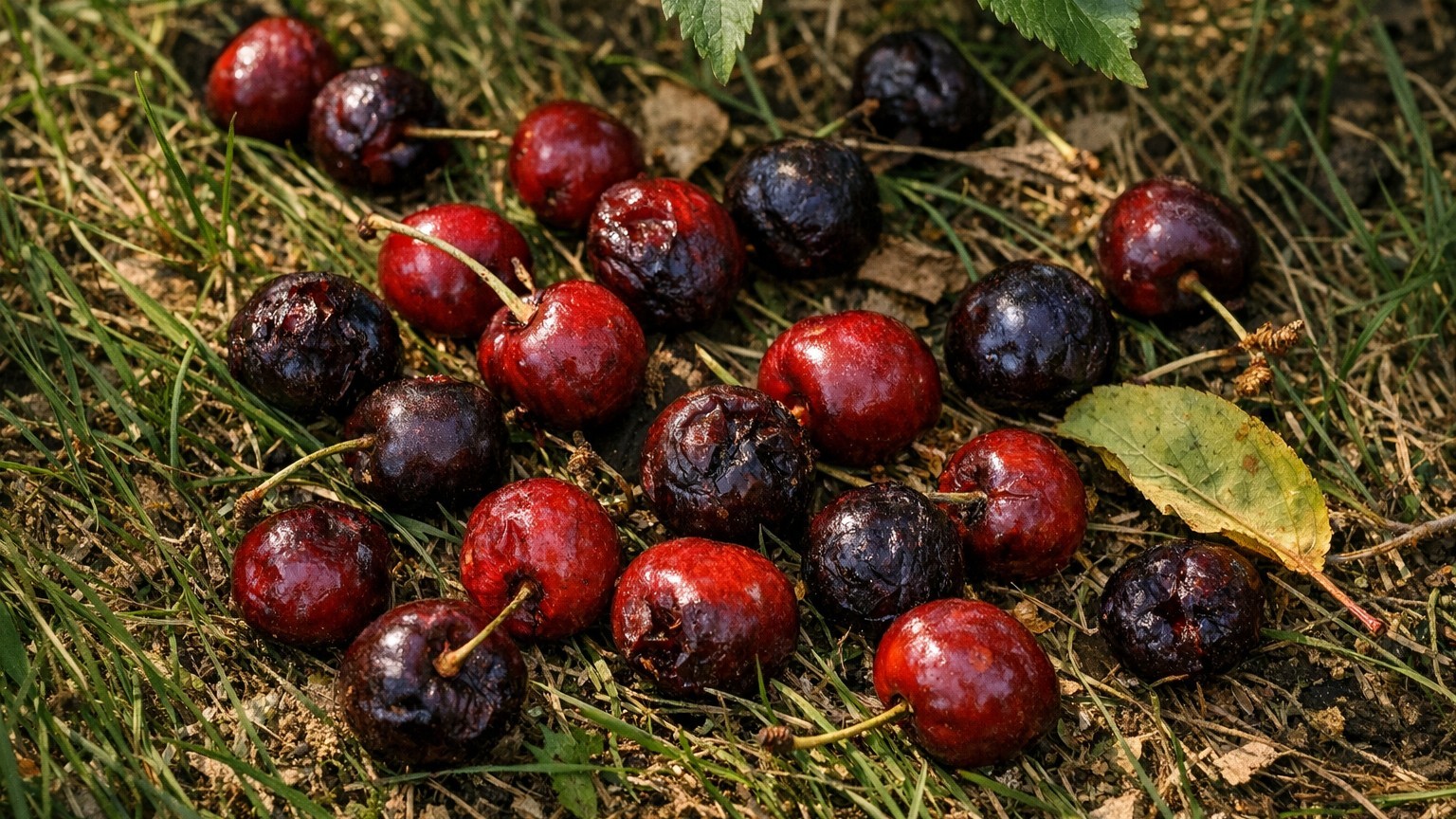
The cherries scattered beneath your garden tree in June look harmless enough, a few windfalls, probably overripe, easily ignored. But if you share your home with a cat, that carpet of red and purple fruit is something you need to take seriously, and quickly.
Key takeaways
- Cherry stems, leaves, and pits contain cyanide that converts to a deadly toxin in your cat’s digestive system
- Symptoms can appear in just 15-20 minutes, and waiting to see if your cat gets sick could be fatal
- Your cat isn’t attracted to cherries because they taste sweet—they investigate out of curiosity, making accidental poisoning more likely than you’d think
Why cherries are dangerous for cats
The stems, leaves, and pits of cherry plants all contain cyanogenic glycosides, which convert to cyanide in the digestive tract and can lead to poisoning. The ripe flesh itself is largely considered non-toxic, but here’s where garden reality diverges from textbook theory. The flesh of ripe cherries contains negligible amounts of the toxic compound, but it’s rarely consumed in isolation. A curious cat nibbling a fallen cherry from the yard is far more likely to bite into the stem or crush the pit with its teeth than to delicately consume only the pulp.
There’s another complicating factor most owners don’t know: a functional sweet-taste receptor heteromer cannot form in cats, meaning they lack the receptor necessary for detecting sweet stimuli, a molecular change that was very likely an important event in the evolution of their carnivorous behaviour. In plain terms, your cat isn’t attracted to a fallen cherry because it tastes sweet. They investigate out of instinctual curiosity or scent-driven exploration. A cat pawing at a cherry on the patio is not chasing a treat — it’s following its nose into potential trouble.
June is when this risk peaks. Cherries ripen and drop, leaves shed and wilt on the ground, and wilted leaves may have higher cyanide potential than fresh ones. Outdoor cats may bat at or nibble fallen cherries, so it is worth picking up fruit promptly during the season.
What happens inside a cat’s body
The toxic component is cyanide, which inhibits cytochrome oxidase, an enzyme needed for cellular oxygen transport. The cat’s cells therefore cannot pick up oxygen to carry throughout the body, and the various bodily organs will have deficient oxygen support. The result is a crisis that can escalate with alarming speed. Cyanide poisoning symptoms can display as soon as 15 to 20 minutes after ingestion, and include increased breathing rate, rapid heartbeat, shortness of breath, dilated pupils, bright red gums, increased saliva, vomiting, and muscle weakness.
Cherry pits also pose a risk for intestinal obstruction, especially in large quantities, which is an increase in the risk of cyanide poisoning. Also, a medical emergency that often requires emergency surgery to correct. So even in a scenario where cyanide exposure is limited, a swallowed pit can still mean a costly and frightening trip to the emergency vet.
One thing that catches owners off guard is how the blood tells the story. The easiest way for a veterinarian to rule out a nitrate poisoning versus cyanide toxicity is to take a sample of the cat’s blood and examine its colour: cyanide toxicity causes bright red blood, whereas nitrite toxicity turns it dark brown. It’s a grim distinction, but a diagnostically useful one, and it underlines why getting to a vet fast, rather than watching and waiting, is the only sensible approach.
What to do if you suspect your cat has eaten any part of a cherry plant
If you wait for symptoms to become visible before seeking treatment, it can potentially be too late. That sentence deserves to be read twice. Cyanide poisoning does not give you a comfortable window. If your cat eats any part of a cherry or cherry plant, contact your veterinarian or an emergency animal poison control hotline immediately, timeliness is critical, as cyanide poisoning can progress rapidly.
Do not attempt to induce vomiting unless specifically instructed by a veterinary professional. Make sure to provide as much information as possible, such as how many cherries were consumed and any observed symptoms, and keep the cherry pits or remains for identification if needed. If you were in the garden and came back to find half a cherry chewed on the patio, bring what’s left with you.
Because cherry poisoning prevents the uptake of oxygen to the cells, the veterinarian may begin treatment with oxygen supplementation. Fluid therapy may also begin to flush the cyanide from the body, and methylene blue may be administered intravenously. If a diagnosis is promptly made and treatment is effective, a feline has a good chance of surviving cherry poisoning. Speed, is the decisive factor.
Practical steps for your garden and home
The most effective thing you can do right now, in June, with cherries falling, is to clear fallen fruit from the ground daily. If you have a cherry tree in your garden, consider netting or fencing to restrict access, or be vigilant in cleaning up fallen fruit. Fermenting fruit can also cause stomach upset, so securing your compost bin is wise too, curious cats absolutely will investigate.
Inside the house, the risk is just as real. Store fresh cherries in closed containers or the refrigerator rather than in a bowl on the worktop. Cats can and do jump onto kitchen surfaces, and a cherry rolling onto the floor is an invitation to investigate. If you think your cat may have consumed cherries or cherry pits, stems, or leaves, it is a medical emergency, and you should contact a pet poison control hotline or a veterinarian.
It’s also worth knowing that cherries don’t stand alone in this regard. Cherry trees are not the only fruit trees containing cyanide, apple, apricot, plum, peach, and nectarine seeds and pits all contain high levels of cyanide too. If your garden has any of these trees, the same vigilance applies throughout the summer months. A cat that spends time outdoors is navigating a garden that, from a toxicology standpoint, requires a great deal more attention than most owners realise.
Sources : wagwalking.com | petco.com