
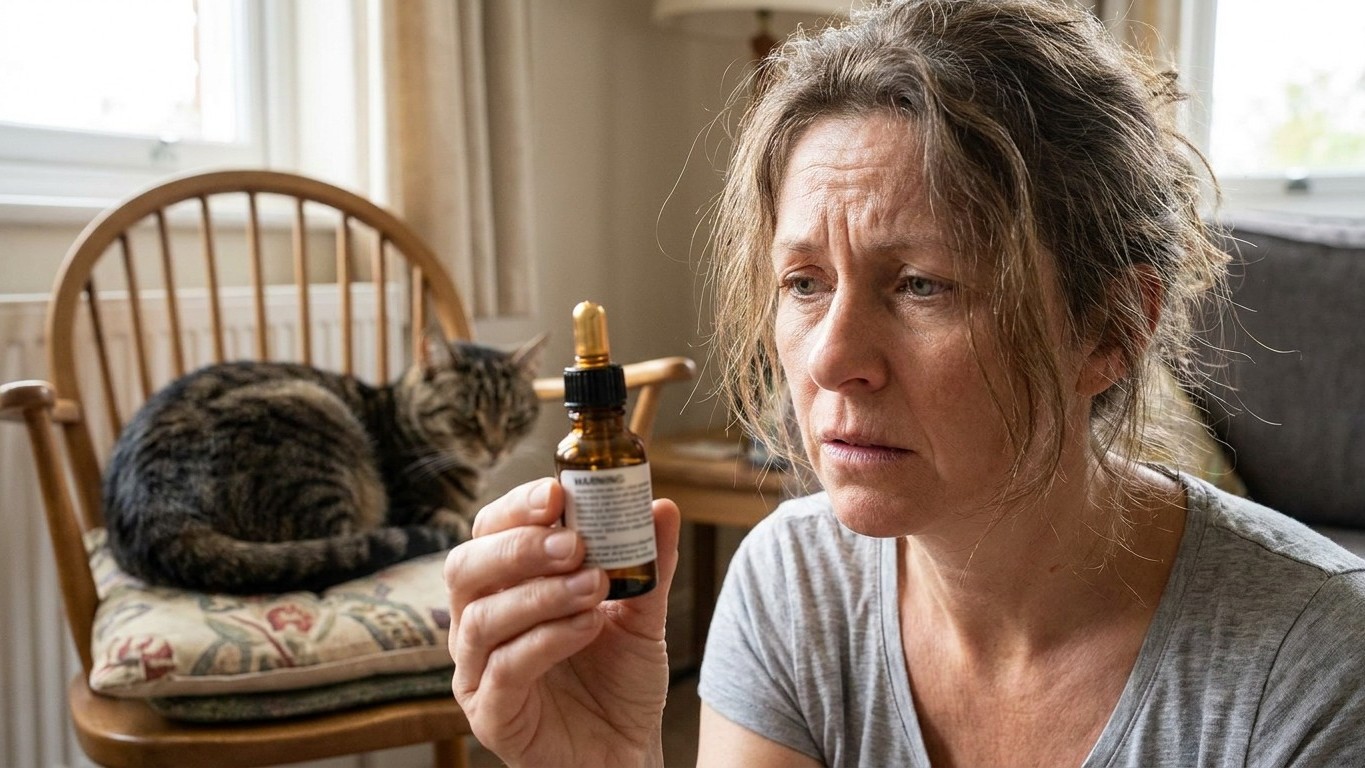
A cat owner in a pet forum once described dabbing a few drops of her dog’s spot-on flea treatment onto her cat’s neck, assuming a smaller cat simply needed less of the same product. Within hours the cat was twitching uncontrollably. That assumption, that a Dog Treatment is just a stronger version of a cat one, is the single most common reason cats end up fighting for their lives in UK veterinary practices every summer. The chemical culprit is permethrin, and the difference between dog and cat isn’t dosage. It’s biology.
Key takeaways
- A cat’s liver lacks the enzymes to break down permethrin, unlike dogs—making even small doses potentially fatal
- Permethrin poisoning is the leading toxic cause of death in cats, yet many owners think dog treatments are simply ‘stronger doses’
- Symptoms can appear within hours or up to 72 hours later—twitching, seizures, and paralysis—with no antidote available
Why a cat’s liver simply can’t cope
Permethrin is a synthetic pyrethroid insecticide found in countless dog spot-on treatments, sprays and collars. These products are typically very safe to use around many mammals, especially dogs, but cats differ greatly from dogs in their metabolism, and it is this difference that makes these products very toxic to them. The issue comes down to two chemical processes most mammals rely on to break down and flush out the toxin. There are two metabolic processes that cats are not very good at: glucuronidation and ester hydrolysis. Both of these are needed for pyrethrins to be safely eliminated by the body, which cats are unable to do.
Put another way, a dog’s liver treats permethrin like a parcel it can post straight back out. A cat’s liver has no working postal system for it at all, so the chemical simply piles up. Pyrethroids slow the opening and closing of sodium channels in nerve endings, causing hyperexcitability in cells, and cats, with their genetically inherited reduced hepatic glucuronidation, are less efficient than other mammals at metabolising the chemical, resulting in an accumulation of the active parent insecticide at the sodium channels. Even the size mismatch works against cats twice over: their high surface area to weight ratio, and the high concentration of permethrin in large dog spot-on products, means a higher dose per kilogramme and, therefore, clinical signs of neurotoxicity.
The scale of the problem in Britain
This isn’t a rare, freak accident. It’s alarmingly routine. A recent report by the UK Veterinary Poisons Information Service (VPIS) revealed that permethrin is the most common toxic cause of death in cats. A landmark VPIS review looked at 286 cases of cats accidentally exposed to permethrin spot-on products and the results make for sobering reading. 96.9% of cats were symptomatic, and increased muscular activity, evidenced by twitching, tremor, muscle fasciculations or convulsions, occurred in 87.8% of cases. The suffering, when it happens, tends to drag on: the duration of increased muscle activity was long, with convulsions lasting on average 38.9 hours and tremors 32 hours.
The fatality figures vary between studies but never fall to a comfortable level. That same VPIS review found death occurred in 10.5% of cases, while broader reporting suggests fatality rates continue to be reported between 10% and 40%. Researchers estimated the true scale is far higher than official figures suggest, with a potentially underestimated prediction of 288 cases per annum, demonstrating that feline exposures to permethrin spot-on treatments are a common and dangerous problem. Worryingly, almost two-thirds of affected cats were aged one year or less in one study, hinting that younger, curious cats may be especially vulnerable, whether through direct application or through simply grooming a recently treated housemate.
You don’t need to squeeze a pipette onto your own cat for disaster to strike, either. Permethrin poisoning is most common when a dog flea treatment is put on a cat by accident, but can also happen if a cat comes into contact with permethrin on a dog, for example when grooming or sharing a bed. A multi-cat, multi-dog household where everyone piles onto the same sofa is, frankly, a risk factor most owners never consider.
Spotting the signs and acting fast
Time is everything with permethrin. Symptoms generally appear within a relatively variable period of between 1 and 12 hours following application, though in some cases the delay can be up to 72 hours. Watch for hypersalivation, restlessness, muscle twitching around the face and ears, wobbly movement, and in severe cases full-blown seizures. Permethrin affects the nervous system, first causing it to become oversensitive with twitching and seizures, and then causing paralysis.
There’s no antidote, which makes prevention and speed of response the only real weapons. There is no known antidote for permethrin toxicity in cats, so treatment mainly consists of supportive care to treat the neurological signs and symptoms. If you catch it early, wash the area properly. Washing the cat with warm water, not hot as this can cause vasodilation and further absorption of permethrin, containing mild detergent such as washing-up liquid or hand wash is recommended, though you should avoid hypothermia as it can potentiate the effects of the toxin. Then get to a vet immediately, don’t wait to see if things settle down. Treatment typically involves anti-seizure medication, intravenous fluids and round-the-clock monitoring, sometimes for several days.
What actually keeps cats safe
The single most reliable safeguard is dead simple: never, under any circumstances, apply a dog flea product to a cat, and always check the packaging before you buy. Look specifically for permethrin among the active ingredients, since not every dog treatment contains it, but plenty of budget and supermarket brands still do. If your household has both species, consider using cat-safe products across the board, or at minimum keep pets separated until any dog treatment has fully dried, usually 24 to 48 hours.
One detail that surprises a lot of owners: some flea powders marketed for cats do contain permethrin, but at a low concentration, so they rarely appear to be a cause of toxicity. The danger isn’t the molecule itself in isolation, it’s the concentrated canine dose meeting a liver that was never built to process it. Read every label, every single time, even on products you’ve bought a dozen times before. Formulations change, and so, sometimes tragically, does the cat sniffing the bottle out of curiosity long before you’ve had the chance to apply anything at all.
Sources : pubmed.ncbi.nlm.nih.gov | journals.sagepub.com