
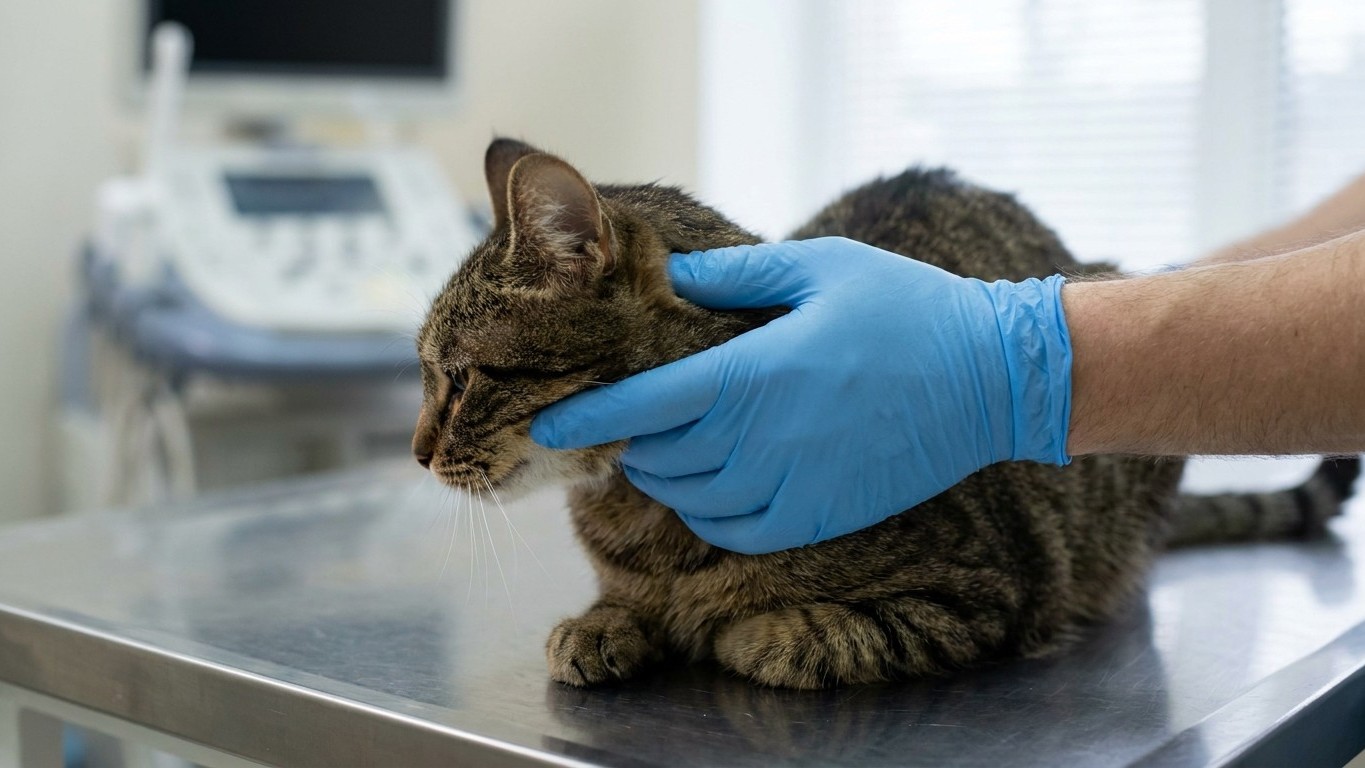
Permethrin poisoning is one of the most common calls received by veterinary emergency lines in Britain, and it almost always starts the same way: a well-meaning owner grabs whatever spot-on pipette is closest to hand. Permethrin poisoning is most common when a dog flea treatment is put on a cat by accident, but can also happen if a cat comes into contact with permethrin on a dog, for example when grooming or sharing a bed. What follows isn’t a mild upset stomach. It’s a full neurological cascade that can turn a healthy cat into an emergency case within a matter of hours.
Key takeaways
- A dog flea treatment contains 450-600 times more permethrin than cat-safe products—yet some owners think ‘just a little’ will be fine
- Symptoms can appear as early as 3 hours or be delayed up to 72 hours: twitching whiskers, seizures, full-body tremors that last days
- There’s no antidote, only emergency supportive care—and 10-40% of poisoned cats die or require euthanasia if treatment is delayed
Why one drop can be catastrophic for a cat but harmless for a dog
The chemistry here is brutally simple, and it explains why this mistake is so dangerous. Pyrethroids including permethrin are generally well-tolerated by dogs and many other mammals, but cats possess a significant deficiency in the liver enzyme glucuronyl transferase required for permethrin metabolism. Put another way, a dog’s liver processes and clears the chemical efficiently. A cat’s liver simply can’t do the job, so the toxin builds up rather than being flushed out.
The concentrations involved make this even more alarming. Canine marketed permethrin products typically contain 45-60% permethrin while safe feline marketed products contain less than 0.1%. That’s not a small margin, it’s a difference of several hundredfold. Many owners assume that using “just a little bit” or dabbing on a fraction of the dose will be safe if their cat is small. It won’t. Some owners use a dog flea product on their cat by mistake, assuming if a smaller quantity is used, it will be safe. Sadly, this isn’t the case, and even a very small amount of permethrin can make a cat seriously ill. A study of feline permethrin cases in Sydney found that some cats became sick even after having less than a full tube applied, and in a few instances owners had deliberately split one dose between several pets.
What the vet actually sees happening in the nervous system
Permethrin doesn’t poison the liver or the gut primarily. It targets nerve cells directly. Toxicity typically manifests as stimulation of the central nervous system, including central neuropathies such as excitability, twitching, tremor, hyperaesthesia and convulsions, alongside peripheral neuropathies including muscular weakness and fasciculations. Essentially, the chemical jams the sodium channels in nerve fibres open, so they keep firing long after they should have switched off. Permethrin is highly toxic to cats, it affects their nervous system, first causing it to become over sensitive (twitching/seizures) and then causing paralysis.
The timeline is what really catches owners off guard. Clinical signs of feline permethrin toxicosis usually present within 3 hours of exposure, but can be delayed until 72 hours. A cat might seem perfectly fine at bedtime and be twitching uncontrollably by breakfast. One documented case involved a cat that had roughly 0.5 mL of a 50% permethrin, 10% imidacloprid product intended for dogs over 40kg applied to its neck, and it was found convulsing in the garden hours later. In a separate case reported to poison control services, the owner noticed the cat’s ears and whiskers were twitching, and a few hours later the cat had two brief seizures and then started tremoring.
A large UK-based review from the Veterinary Poisons Information Service in London paints a sobering picture of just how common and severe this gets. In a review of 286 cases reported to the VPIS regarding inappropriate feline exposure to permethrin spot-on preparations, 96.9% were symptomatic, and increased muscular activity such as twitching, tremor, muscle fasciculations or convulsions occurred in 87.8% of cases. These aren’t brief blips either. The duration of increased muscle activity was long, with convulsions lasting on average 38.9 hours and tremors 32 hours, and recovery typically occurred within 2 to 3 days but in some cases took 5 to 7 days. Vets watching a case unfold describe the nervous system essentially stuck in overdrive: whiskers flickering, ears twitching, a rippling shudder along the spine, then full-body tremors that can tip into seizures if nothing is done.
What actually happens at the emergency vet, and how to prevent it
There’s no antidote. There is no known antidote for permethrin toxicity in cats, so treatment mainly consists of supportive care to treat the neurological signs. The vet’s job becomes damage limitation: stopping ongoing absorption and calming an overstimulated nervous system before it exhausts the body. That typically starts with bathing the cat in diluted dishwashing liquid to prevent further absorption of the product, followed by hospital-based monitoring. Muscle relaxants are the mainstay treatment, and treatment may include intravenous or intra-rectal methocarbamol, with seizures controlled by barbiturates, propofol, or inhalant anaesthetics, since diazepam is not as effective at controlling the seizures. Some emergency clinics now use a newer approach too. Intralipid therapy helps pull the permethrin out of cat tissues faster and lessens symptoms. A small case series published on this treatment involved cats presented to the emergency service for convulsive seizures following the accidental administration of a canine spot-on pesticide approximately 6 to 13 hours prior to presentation, which gives a real sense of how quickly things can spiral before help is sought.
Recovery odds are good when action is fast, but the numbers on delayed cases are genuinely sobering. From recorded cases, anywhere between 10% and 40% of poisoned cats may die or need to be euthanised because of the severity of the poisoning. That’s a staggering range for something entirely avoidable. The fix is straightforward: check the label, every single time, even if you’re in a rush and the packaging looks similar. Cats and dogs should also be kept apart for a few days after either has been treated, since when flea treating your dog, keeping them away from your cat for at least 72 hours prevents transfer through grooming or shared bedding. If you’ve made this mistake, or even suspect you have, don’t wait to see if symptoms appear. Contact your veterinary team immediately, because with permethrin, the hours you save by acting fast are quite literally the hours that keep your cat’s nervous system from spiralling out of control.
Sources : pmc.ncbi.nlm.nih.gov | furrycritter.com