
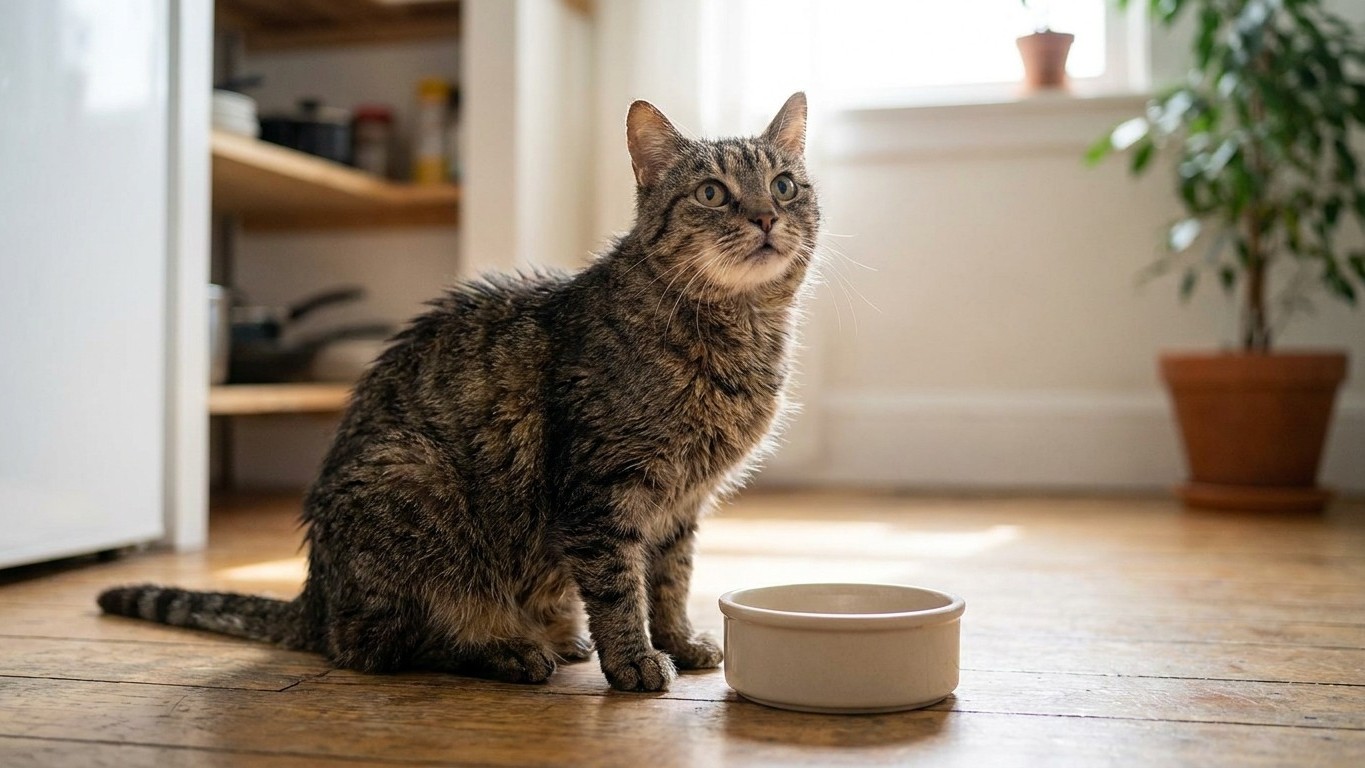
A ravenous 12-year-old cat pawing at your leg for extra dinner isn’t just being greedy. That constant begging, especially when it comes with steady weight loss rather than a chubbier belly, is one of the clearest warning signs vets see in senior cats, and it usually points to an overactive thyroid gland rather than simple hunger.
Doubling the portions felt like the obvious fix. More begging, more food, problem solved. Except the scales told a different story: less cat, not more, despite bowls being emptied twice as fast. That mismatch between appetite and body condition is textbook feline hyperthyroidism, and it’s far more common in older cats than most owners realise.
Key takeaways
- A hungry cat that’s losing weight isn’t being greedy—this dangerous mismatch is the #1 sign vets see in senior cats with thyroid disease
- One tiny blood sample can reveal what’s really happening inside, and the results often explain years of mysterious symptoms
- The good news: this condition is highly treatable with multiple options, from daily medication to permanent fixes with exceptional success rates
Why a hungrier cat can actually be a sicker cat
Hyperthyroidism in cats is a very common disorder, especially in more senior cats, and is caused by an over-production of thyroid hormones from the thyroid gland. Those two small glands sit either side of the windpipe, and when one or both develop a lump, usually benign, they start churning out thyroxine (T4) at a rate the body was never designed to handle. One or both of the lobes becomes enlarged and leads to an excessive production of T4 (Thyroxine) and T3 (Triiodothyronine), and in 98% of cases, the enlargement is benign.
The hormone surge sends metabolism into overdrive. When the gland produces too much of it, the whole body runs hot: the heart beats faster, weight falls away, and the cat burns through energy it cannot replace. That’s the cruel irony vets encounter daily: an animal eating enthusiastically, sometimes acting years younger and racing around the house, while quietly wasting away underneath a normal-looking coat. The classic combination is weight loss in the face of a strong, sometimes ravenous appetite, often with increased thirst, restlessness or a scruffy, unkempt coat. Some owners even mistake the burst of energy for a happy sign, a cat rediscovering her kitten years, when actually it’s a body running on empty.
Other clues can creep in alongside the appetite change. The most common symptoms associated with feline hyperthyroidism are weight loss, hyperactivity, increased appetite, and excessive drinking and urination, with intermittent vomiting and diarrhoea sometimes also occurring, as well as increased heart rate and arrhythmias. None of these on their own is proof of thyroid disease. Together, in a cat over eight or nine, they should trigger a vet visit rather than a bigger food bowl.
Why this happens to older cats, and how common it really is
This isn’t a rare fluke condition. The age range of cats diagnosed with this condition is between 4 and 22 years, with a median age of 13 years, and although hyperthyroidism is rare in cats younger than 4 years old, a few cases have been reported. Prevalence estimates vary quite a bit depending on where you look and how the studies were carried out. Studies report prevalence of 21% in Ireland, 20% in Poland, 3.9% in Hong Kong, 2.4 to 3% in the UK and 7% in South Africa, with age identified as a significant factor across all of them. That spread of figures reflects differences in testing habits and population studied as much as true biological variation, but the pattern is consistent everywhere: the older the cat, the higher the risk.
What’s driving the rise in diagnoses isn’t necessarily more cats getting sick, it’s vets getting better at spotting it. Awareness of feline hyperthyroidism among owners and veterinarians has increased significantly, and as a result, serum total thyroxine measurement has become a routine part of geriatric feline serum biochemistry profiles, leading to earlier diagnosis. That single blood sample your vet took wasn’t a random precaution. It was a targeted test for exactly this scenario, an older cat, an unexplained appetite surge, a body losing condition.
What that blood sample actually reveals
The test itself is refreshingly simple: a small blood draw, sent off for a T4 reading. The reference range for total thyroxine in senior cats is typically 10–35 nmol/L, and elevated levels above that may indicate hyperthyroidism. Interpretation isn’t always black and white, though. In older cats presenting with clinical features of hyperthyroidism, confirmation of a diagnosis of thyroid disease is usually straightforward, with over 90% of hyperthyroid cats showing a serum total T4 concentration that is clearly high. For the trickier borderline cases, vets have backup tools. Occasionally a cat suspected of having hyperthyroidism has a TT4 level within the upper range of normal, in which case a second test, usually a free T4 by equilibrium dialysis or a T3 suppression test, is performed.
Crucially, a vet won’t stop at the thyroid number alone. The diagnosis is rarely made on the number alone, as vets read it against classic signs like weight loss despite a hearty appetite, and against kidney values, because treating the thyroid can unmask kidney disease that the overactive gland was hiding. This is exactly why home remedies or simply feeding more are never the answer. An untreated overactive thyroid doesn’t just cause weight loss, it puts steady strain on the heart, and untreated hyperthyroidism can lead to kidney disease, hypertension, and diabetes, and may eventually lead to congestive heart failure.
The good news: treatable, manageable, often curable
Here’s the part that should reassure any owner staring at a diagnosis in disbelief. Feline hyperthyroidism responds well to treatment, and options range from daily medication to more permanent fixes. Treatment options include radioiodine therapy, antithyroid medication, thyroidectomy, and an iodine-deficient therapeutic diet. Radioactive iodine therapy in particular has an excellent track record because it targets only the overactive thyroid tissue, leaving healthy tissue alone, and treatment is usually very successful, as fewer than 2% of cats with hyperthyroidism have cancerous growths of the thyroid gland.
Medication, usually methimazole tablets or a transdermal gel rubbed into the ear, tends to be the first port of call because it’s reversible and lets vets monitor how the cat responds before committing to anything permanent. Whichever route is chosen, regular rechecks matter. Once a senior cat is diagnosed, it’s recommended to monitor T4 levels regularly, with testing every 2-3 months initially to assess treatment effectiveness, spacing out to every 6 months as stability improves.
If there’s one habit worth adopting from all this, it’s not waiting for obvious symptoms before booking that senior check-up. Annual blood and urine tests are important in all cats seven years and older to detect hyperthyroidism before potentially irreversible damage occurs. A cat begging harder than usual at dinnertime isn’t necessarily developing a bigger personality. Sometimes it’s the quiet sound of a metabolism racing out of control, and the fix starts with nothing more dramatic than a syringe of blood and a few days waiting for lab results.
Sources : vetlens.com | vetblood.io