
The vet’s diagnosis had nothing to do with taste preferences, texture, or a spoilt cat turning her nose up at dinner. It was the bowl. Specifically, the depth and shape of it, brushing against a part of the cat’s face that most owners never think twice about: her whiskers.
For years, countless cat owners have watched the same scene play out at feeding time. The cat approaches the bowl, looks hopeful, then starts scooping kibble out with a paw and eating it off the kitchen floor instead. Or she’ll grab a mouthful and stalk off to eat it in the hallway. The mess gets blamed on fussiness, on a diva cat being difficult for the sake of it. But if your cat is suddenly making messes with their food, pulling it out of the bowl to eat on the floor, or is more finicky about their food, whisker fatigue could be to blame, as the whiskers on your cat’s face are sensitive feeling organs that felines use to gather information about their environment.
Key takeaways
- A cat’s whiskers contain hundreds of nerve endings that can be overstimulated by deep bowl sides
- Switching to a shallow, wide bowl might solve mysterious eating problems—but the science is contested
- Food-related fussiness could signal serious health issues like dental disease or kidney problems requiring vet attention
What’s actually going on with those whiskers
Cat whiskers aren’t just decorative fluff either side of the nose. Whiskers act as high-powered antennae that pull signals into a cat’s brain and nervous system. Each one is packed with nerve endings, and anchored with roughly 100 to 200 neurons, collecting tactile data about the environment. That’s a staggering amount of sensory kit dedicated to a few dozen hairs on a face the size of a satsuma.
The theory, first raised in the veterinary press back in 2017 and covered by outlets including the New York Times, goes like this: if a cat has to eat or drink from a narrow, high-sided deep bowl, the whiskers may be overstimulated by the sides of the bowl, giving cats an unpleasant sensation which deters them from eating. Rather than push through that discomfort, some cats simply solve the problem themselves, dragging the food to a nice flat, whisker-friendly surface: the floor.
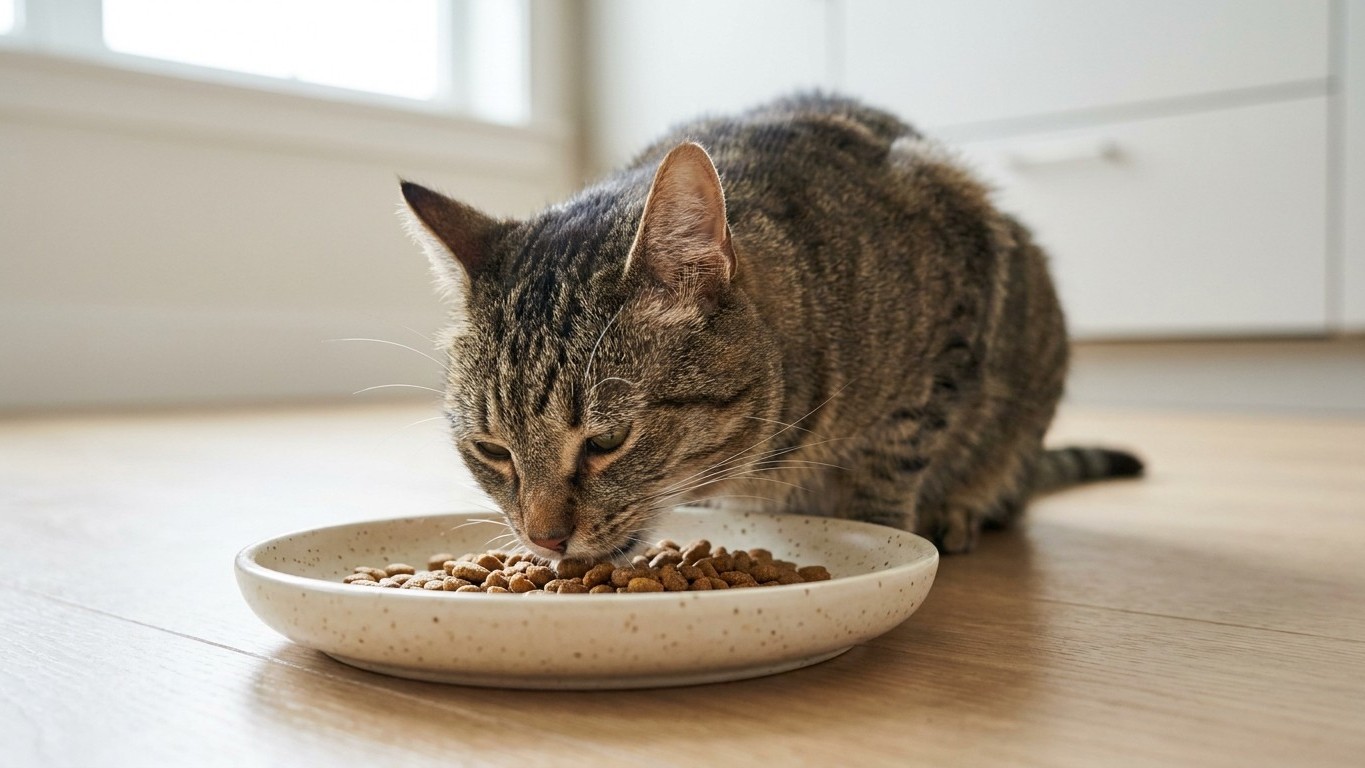
Practically, the fix vets suggest is refreshingly cheap. If your cat appears healthy and is not eating, try providing a flat surface or a wide-enough bowl where its whiskers won’t touch. No expensive gadgets required, a shallow plate or a wide, low-rimmed dish will do the job just as well as anything marketed specifically for the purpose. And whatever you do, resist any temptation to trim the whiskers themselves as a workaround. Trimming whiskers can mute a cat’s expression, dim its perceptions and in general discombobulate the cat, according to guidance from Oklahoma State University’s veterinary hospital. It’s a bit like blindfolding someone to stop them squinting.
Here’s the twist: vets aren’t all convinced
This is where I have to be honest with you, because good journalism means not pretending a tidy answer exists when it doesn’t. Whisker fatigue is genuinely contested within the profession. Despite the studies mentioned, there is no proof whatsoever for the existence of this condition, and many veterinarians doubt that it even exists. It has never quite made it into mainstream veterinary textbooks as an established diagnosis.
The most rigorous look at the question came from a piece of research published in the Journal of Feline Medicine and Surgery. In 2021, a study titled “Evaluation of whisker stress in cats” aimed to determine if cats fed from a commercially advertised whisker-friendly dish versus their normal food dish would spend more time at the food dish, eat more and drop less food. The result was underwhelming for anyone hoping for a slam dunk. The conclusion was that the type of bowl made no difference at all to these activities, but it did find that, given the choice, more cats preferred the whisker-friendly bowl.
So the science sits in an odd middle ground. It’s not proven that deep bowls cause measurable eating problems across the board, but plenty of individual cats do seem to have a preference. One vet quoted in industry coverage put it plainly: “As a veterinarian, I have seen a few cases where whisker fatigue caused a cat’s stress.” Anecdote and clinical proof aren’t the same thing, but when a low-cost change makes your own cat visibly happier at mealtimes, does it really matter which camp turns out to be right?
Don’t let the bowl distract you from bigger red flags
Here’s the genuinely important part, and the reason I’d never encourage anyone to diagnose this themselves and stop there. Food-related fussiness has a long list of causes, and some of them are far more serious than an uncomfortable dish. Cats with painful dental disease can exhibit the same symptoms as whisker fatigue, and cats with liver disease, kidney disease, or inflammatory bowel disease can also develop eating problems. Cats are notorious stoics too. They are masters at hiding pain and discomfort, having to be suffering significantly before they will let it show, so seek prompt veterinary attention if your cat’s eating behaviour changes significantly or if they’re losing weight.
There’s also a purely instinctive explanation that has nothing to do with sensory overload at all. Bowl placement Matters More Than most owners realise. Vets studying the drinking behaviour of domestic cats found that when given several bowls to choose from, cats would always choose a water bowl in a different room from their food bowl. Position food and water side by side, and some cats will simply refuse to settle, pacing or dragging food away rather than eating near what their instincts read as a contaminated water source.
I’d genuinely recommend trying the simple swap first: a wide, shallow bowl, positioned well away from the water dish, in a calm spot away from noisy appliances. Give it a week. If the pawing continues, or if you spot drooling, weight loss, bad breath, or reluctance to eat altogether, that’s your cue to book a vet appointment rather than keep experimenting with crockery. My own rescue moggy, incidentally, still occasionally flicks a single piece of kibble onto the lino before eating it, whisker-friendly bowl and all. Some habits, it turns out, are just personality.
Sources : news.okstate.edu | cathealth.com