
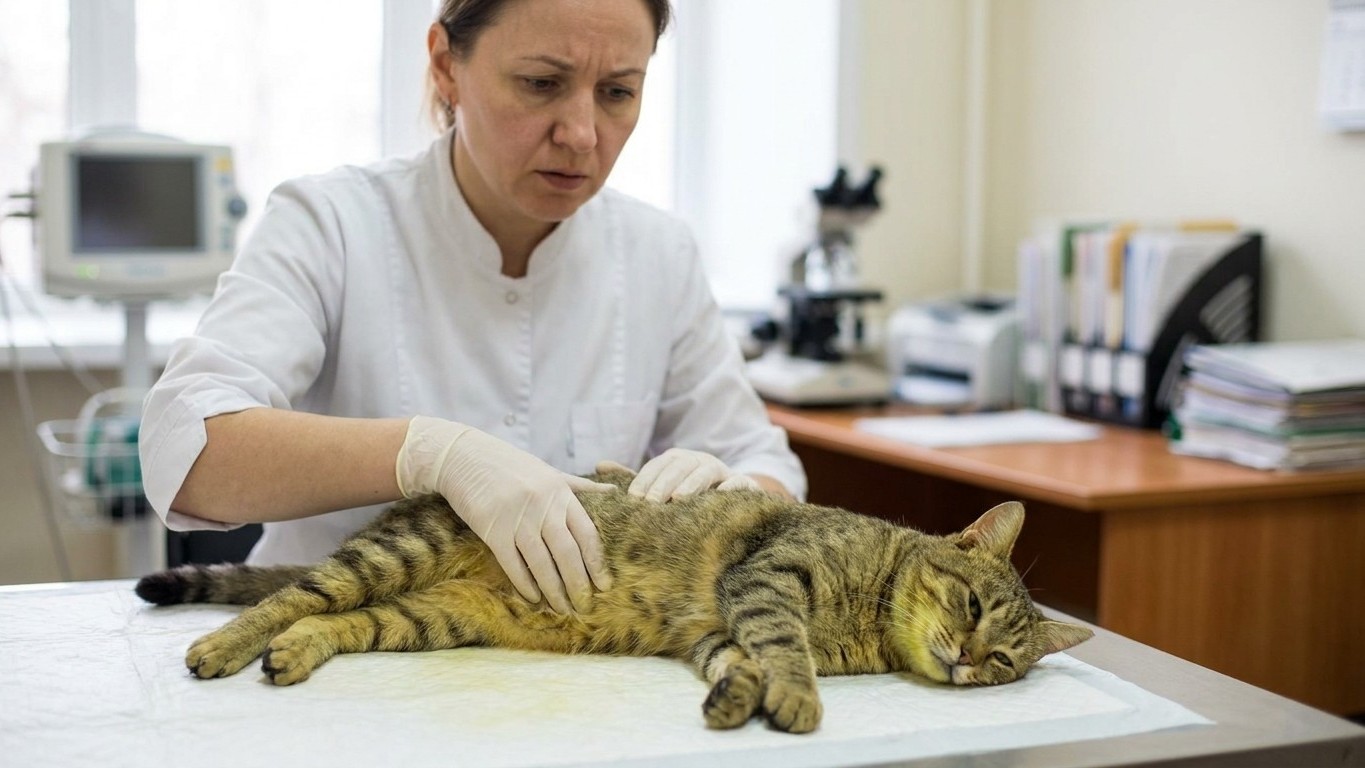
A full bowl of biscuits sitting untouched for three days doesn’t mean your cat has had access to food. It means something stopped him eating it, and that’s the detail nobody warns new cat owners about before they jet off for the holidays. When my own cat was checked by the vet after 72 hours alone, the bloodwork and scan revealed something I’d never heard of: hepatic lipidosis, better known as fatty liver disease, one of the most serious liver conditions a cat can develop, and it can start forming in less time than it takes to fly to Spain and back.
Key takeaways
- A full food bowl is a false sense of security—cats can stop eating due to stress, and this triggers a dangerous biological cascade
- Hepatic lipidosis can develop in as little as 48-72 hours, and the damage happens faster in overweight cats
- The condition creates a vicious cycle: poor liver function makes cats feel terrible, so they eat even less, worsening the damage
The bowl was full, but the cat wasn’t eating
Cats are creatures of routine, and disruption to that routine, even something as ordinary as an empty house, can trigger a genuine hunger strike. Environmental changes matter to cats because they are creatures of habit, and disrupting their normal routine is sometimes all that is needed to make them stop eating. A closed cattery door, an unfamiliar sitter, or simply the absence of their usual humans can be enough. Stress and anxiety can be a big contributing factor to fatty liver disease in cats, as stressed and anxious cats often don’t eat well, and stress can worsen existing health issues.
This is exactly why a full bowl is a false sense of security. You shouldn’t think that you can ‘out stubborn’ your cat by waiting for them to get hungry again, because they will always win this game, which means you’ll both lose. Unlike dogs, who can comfortably skip meals for days, cats aren’t like dogs who can go for several days to weeks without eating; if cats don’t eat for more than 3-5 days, they can develop inappropriate fat infiltration into the liver, what vets call hepatic lipidosis or “fatty liver”. Most adult cats only need around 200 to 220 calories a day, so even a couple of skipped meals starts eating into their reserves faster than most owners realise.
What actually happens inside the liver in 72 hours
The biology behind this is genuinely startling once you understand it. When a cat stops eating, the body starts breaking down fat stores for energy, exactly as it would in any starving mammal. When a cat stops eating, the body mobilizes fat stores for energy, but in cats the liver has a limited capacity to process the sudden influx of fat, so when fat arrives at the liver faster than it can metabolize it, the fat accumulates inside liver cells. That fat infiltration isn’t a minor inconvenience, it progressively shuts the organ down. Large amounts of fat get sent to the liver and end up inside liver cells, sometimes so much fat that the cells can no longer function normally.
The timeline is brutally short. Hepatic lipidosis is the most common liver disease in cats, triggered when a cat stops eating for more than 48 to 72 hours as fat mobilises to the liver. A vet from the University of Illinois College of Veterinary Medicine, quoted on the university’s own veterinary medicine site, put it plainly: “overweight or obese cats have a greater chance of developing hepatic lipidosis” according to Dr David Williams, a diplomate of both the European and American colleges of veterinary internal medicine. Cuddly and rounder cats, the ones we often think of as thriving, are actually carrying more risk on their bones. A 6kg cat that should weigh 4.5kg has significantly more fat available for mobilization, which means the liver gets overwhelmed faster. Given that the Association for Pet Obesity Prevention found that 61% of cats in the U.S. are overweight or obese, a similar picture likely holds in the UK, which means a huge proportion of cats are sitting closer to this cliff edge than their owners assume.
Once the liver starts filling with fat, the cat feels dreadful, which makes the situation self-perpetuating. Poor liver function makes a cat feel really bad, so they don’t eat, which makes their liver function even worse, and so the cycle continues. Jaundice is the classic giveaway vets look for. The cat usually becomes icteric or jaundiced, evidenced by a yellow colour in the whites of the eyes or in the skin. Lethargy, weakness, vomiting and sudden weight loss round out the picture, and any combination of these after a period alone should mean a same-day phone call to your vet, not a wait-and-see approach.
Treatment is intensive, but the outlook is genuinely hopeful
The good news, and it is real good news, is that this condition responds well to proper veterinary care. As long as they get the treatment they need, as many as 90% of cats with the condition can be expected to survive. The catch is that recovery is neither quick nor simple. Vets can’t just coax the cat back onto food with a tasty pouch, because forcing the issue often backfires. Force-feeding a cat who is nauseated usually backfires, as they tend to “blame” the food for how bad they feel and can quickly develop an aversion to eating anything at all. Instead, most cats need a feeding tube placed into the oesophagus, allowing precise, stress-free nutrition delivered several times a day. This nutritional support takes an average of six to seven weeks to allow the liver to resume functioning normally. It’s a slow, syringe-by-syringe process at home, guided closely by the vet, but it works.
What I’d tell any cat owner before their next trip away
Leaving out extra food isn’t a substitute for a proper check-in system, however tempting it is before a hectic pre-holiday morning. A twice-daily visit from a sitter or trusted neighbour catches the early warning signs, an untouched bowl, a hunched posture, hiding, before they tip into a medical emergency. Even if you’re only leaving for a couple of nights, getting a pet sitter or at least someone who will reliably stop by once to twice a day to scoop litter boxes, check in, feed, and play with your cat is important. If you do come home to a cat who hasn’t touched his food, don’t gamble on him getting hungry eventually. Ring the vet within 24 hours, not 72. My cat pulled through, tube fed and monitored for weeks, but he lost a fifth of his bodyweight before anyone realised the bowl being full was the actual problem, not the reassurance I’d taken it for.
Sources : dialavet.com | urgentpetcareomaha.com