
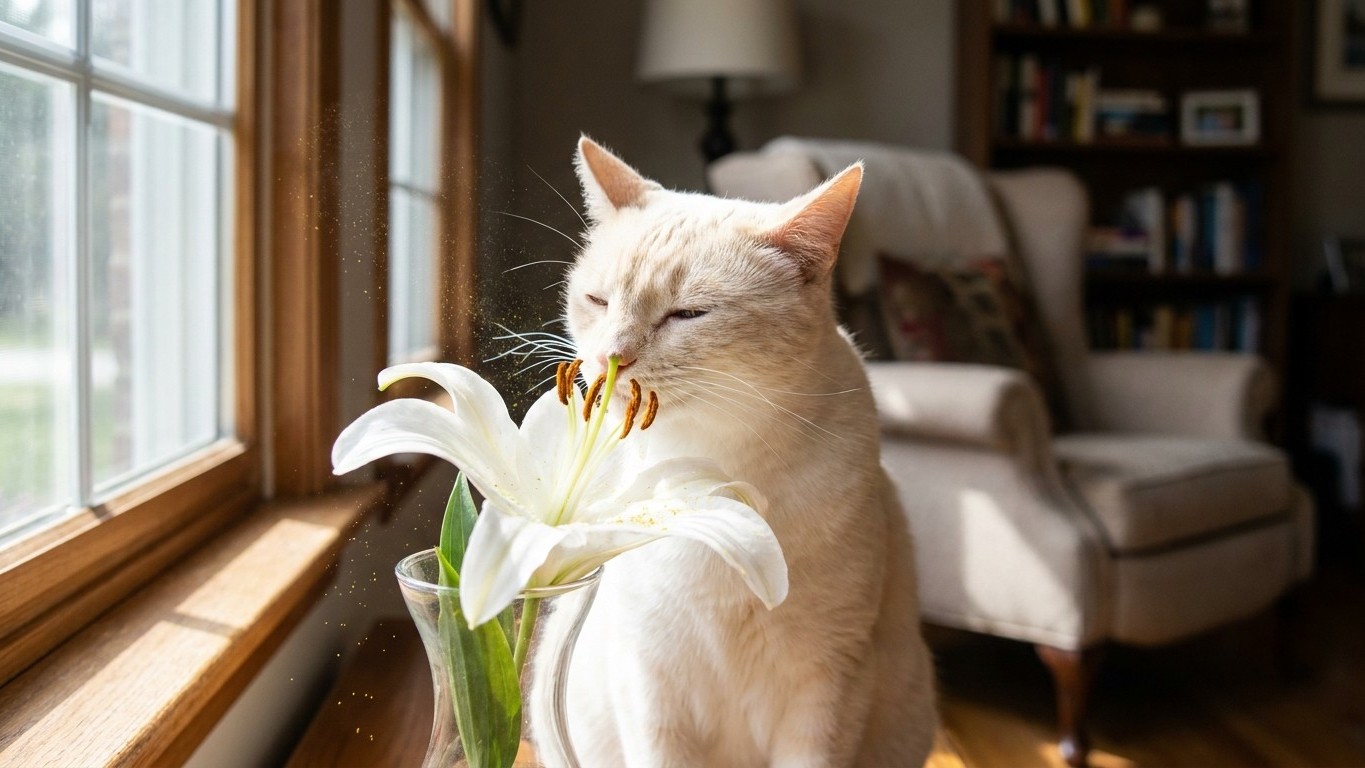
A single grooming session is all it takes. If a cat brushes past a vase of lilies and picks up even a dusting of pollen on its coat, the routine act of washing itself afterwards can trigger irreversible kidney failure within days. Eating just a small amount of a leaf or flower petal, licking a few pollen grains off its fur while grooming, or drinking the water from the vase can cause your cat to develop Fatal Kidney Failure in less than 3 days. No teeth need to touch the flower. No obvious poisoning moment. Just a cat being a cat, and a vase on the table that looked entirely innocent.
This is the story I heard from a vet friend after a client brought in a Bengal that had done nothing more dramatic than rub against a bouquet left by a well-meaning relative. Within a day, the cat was lethargic and drooling. By the time bloodwork came back, the kidneys were already in trouble. The owner had no idea lilies were involved in the first place, and honestly, that’s the part that unsettles me most.
Key takeaways
- A cat can develop fatal kidney failure within 36-72 hours from minimal lily exposure
- There is no antidote—only supportive treatment, and timing decides everything
- 73% of cat owners don’t know lilies are toxic to their pets until it’s too late
Why this flower is a feline-specific killer
Every part of the true lily is dangerous. The entire lily plant is toxic: the stem, leaves, flowers, pollen, and even the water in a vase. What makes this genuinely strange from a biological standpoint is that the toxin, which only affects cats, has not been identified, and dogs that eat lilies may have minor stomach upset but they don’t develop kidney failure. Scientists still don’t fully understand why feline kidneys react so catastrophically while canine ones barely notice.
Not every plant sold as a “lily” carries this risk, and the naming confusion causes real harm. Easter lilies, Stargazer lilies, and Asiatic lilies seem to be the most hazardous, and daylilies, in the genus Hemerocallis, are also toxic to cats and can cause kidney failure. Peace lilies and calla lilies, despite the name, work differently: they contain insoluble crystals of calcium oxalates, and when a cat chews on or bites the plant, the crystals are released and directly irritate the mouth, tongue, throat, and oesophagus rather than attacking the kidneys. Unpleasant, yes, but not the death sentence a true lily represents.
Florists sometimes sell “pollen-free” lilies as a compromise for cat owners, which sounds sensible until you realise the marketing is misleading. As international feline welfare charity iCatCare notes, pollen-free lilies are often marketed as a ‘safe’ option for cat owners, but as all parts of the lily are toxic, not just the pollen, a pollen-free lily will not be safe for cats. There is genuinely no version of this flower that belongs in a home with a cat.
The clock starts ticking faster than you’d think
What frightens vets about lily toxicosis is the speed and the deceptive quiet phase in the middle. Initial clinical signs of lily poisoning in cats include vomiting, lethargy, drooling, and loss of appetite, and increased urination and dehydration may be seen 12 to 24 hours after ingestion and are signs of kidney damage. A cat can seem to perk up between the first and second phases, lulling an owner into thinking the worst has passed, when in fact the kidneys are quietly failing underneath. A cat that has consumed the lily toxin can experience kidney failure, which can lead to death, within 36 to 72 hours unless he or she receives appropriate treatment.
There’s no antidote. None. Treatment is entirely supportive, and timing decides almost everything. Delayed treatment, by more than 18 hours after ingestion, generally leads to irreversible kidney failure. Vets who catch it early will typically induce vomiting if ingestion was recent, give activated charcoal to help absorb toxins, and start aggressive fluid therapy over 24 to 72 hours to help flush toxins from the kidneys and maintain hydration. Some severely affected cats need dialysis, a costly and not always accessible option, just to keep their kidneys functioning long enough to recover.
What genuinely surprised me researching this piece was a statistic buried in ASPCA guidance for veterinary professionals: according to one study, 73% of owners whose cats were exposed to a lily didn’t even realise the plant was toxic to their pets. Three in four. That’s not a niche gap in knowledge, that’s practically the norm, and it explains why emergency vets keep seeing these cases every spring when supermarket bouquets fill up with lilies for Easter and Mother’s Day.
What actually protects your cat
The advice from every credible veterinary body is blunt and doesn’t leave much wiggle room. The best way to prevent lily toxicity is to keep your cat away from these particular types of lilies. Do not bring lilies into your home if you have a cat, and do not plant them in your garden if you or your Neighbours have cats that have access to the outdoors. If someone gifts you a bouquet and you’re not sure what’s in it, don’t take the risk of leaving it out to check later. Photograph the flowers, ask a florist, or simply bin the lily stems before they go anywhere near a vase.
Should the worst happen, speed matters more than almost anything else in veterinary toxicology. In the UK, the Veterinary Poisons Information Service’s Animal PoisonLine provides 24-hour specialist telephone advice to UK pet owners who are worried their pet may have been poisoned. Don’t wait for symptoms. Don’t clean the cat up yourself and hope for the best. Get the animal, and ideally a photo or sample of the plant, straight to a vet.
Here’s the detail that tends to stick with people once they’ve heard it: a cat doesn’t need to nibble a petal to end up in kidney failure. Pollen brushed onto fur during an ordinary sniff of a bouquet, then licked off hours later during a completely unremarkable grooming session, carries exactly the same risk as eating the flower outright. The safest lily, for any cat owner, is the one that never comes through the front door.
Sources : petnation.care | topazvet.com