
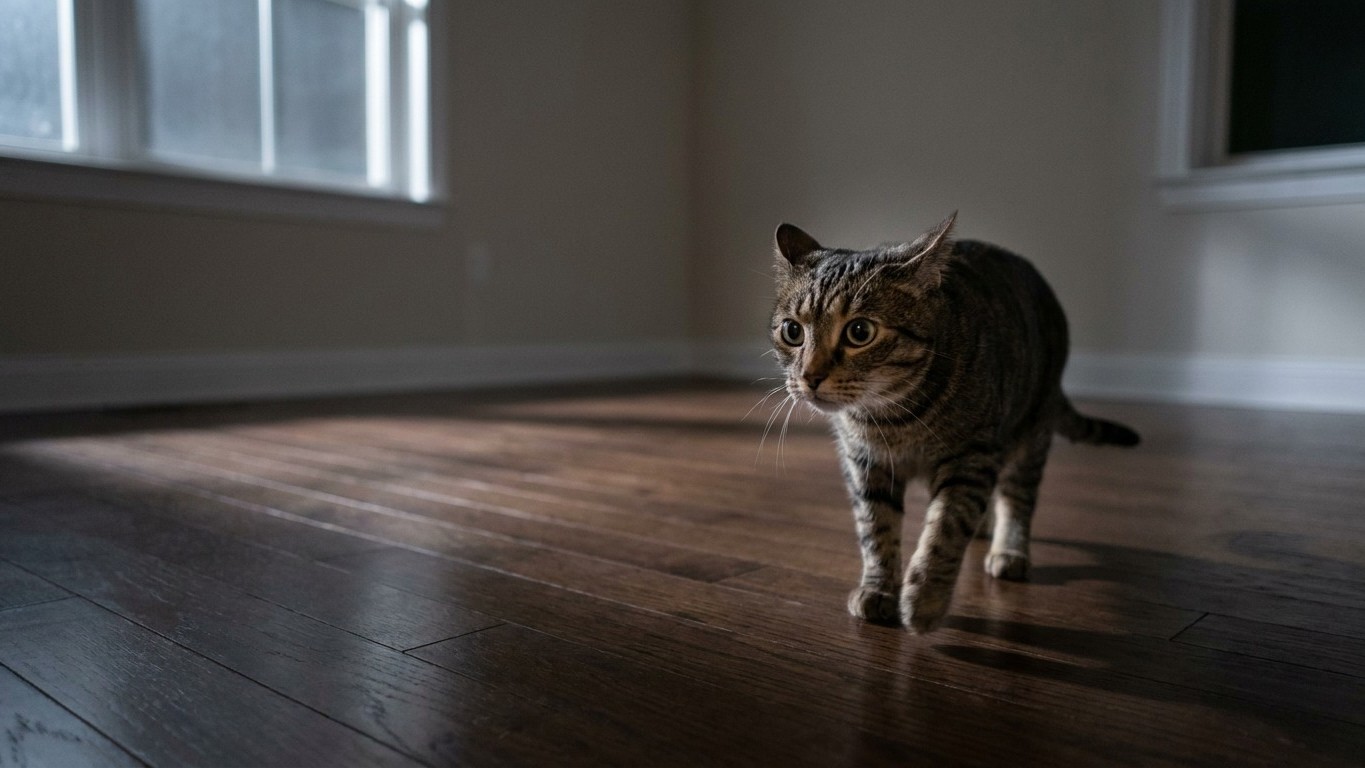
Three in the morning. Your cat is tearing through the hallway like something is chasing it, or sitting bolt upright in the kitchen yowling at the wall. You’ve rolled over, muttered something unkind, and gone back to sleep, assuming it’s just the usual feline madness. Most Cat Owners do exactly the same. But vets have a different view: consistent disruptive behaviour at night might signal an issue that needs attention, and if your cat seems urgently trying to wake you, or the waking is persistent, it could be a sign of a health problem. That nightly drama deserves a closer look.
Key takeaways
- Most owners dismiss nighttime cat chaos as normal, but vets say sudden changes in these episodes could signal serious hidden health problems
- Senior cats with new nighttime behavior may be experiencing hyperthyroidism or cognitive dysfunction—conditions affecting 10-50% of aging cats
- A cat running from pain looks identical to playful zoomies in the dark, making it dangerously easy to miss signs of arthritis, fleas, or acute distress
The “Crepuscular Myth”, and Why It Only Explains So Much
Many people mistakenly believe cats are nocturnal. In truth, cats are not nocturnal, they are crepuscular. Crepuscular animals are most active around dawn and dusk. So a young cat bouncing off the walls at 9pm after a day of sleeping? Entirely predictable. Because today’s house cats tend to sleep more during the day when their owners are at work, their schedules can shift, leading to zoomies later in the night. That’s the benign version of events.
The problem is that owners tend to file all nighttime behaviour under this comfortable explanation, even when the pattern changes. Vets say you need to be concerned if your cat has sudden increases in nighttime activity, or if they seem to be awake through the night and a lot of the day, or if they are pacing, scratching, licking, or engaging in behaviours that suggest discomfort or stress, or if they are vocalising incessantly. The key word is “sudden.” A cat that has always had the 3am zoomies is a very different animal from one that developed them last month.
These episodes, known technically as Frenetic Random Activity Periods (FRAPs) — are described as a sudden, “switch-flipping” burst of energy that lets cats release pent-up excitement by energetically sprinting around the house. Harmless when they fit the context. The context is everything.
When the Zoomies Are Actually a Cry for Help
A far less common but serious reason for the zoomies is acute pain, and health-related issues that could cause a cat to race around include sleep alterations potentially caused by disease. When a cat experiences acute pain due to arthritis or has been bitten by fleas, they may try to escape the pain or itchiness by running wildly. Running from pain is not playfulness. It looks identical from across the landing at 3am, which is precisely why it gets missed.
Cats in pain may meow or yowl excessively, have a hunched or stiff posture, improperly groom themselves, eat less, or display aggression. Watch body language during those nighttime episodes. A lowered tail, exposed claws, and flat ears are all signs of distress, not a cat having the time of its life. Anxiety or distress can trigger zoomie-like behaviour, though these episodes typically look different from playful ones: anxious cats often appear uncoordinated or frantic during these moments.
There are also medical conditions that wear the mask of nighttime mischief rather convincingly. In some cases, excessive nighttime activity may be a sign of an underlying medical issue such as hyperthyroidism. If Your Cat’s Nighttime Behaviour suddenly changes or becomes more extreme, it’s essential to consult with your veterinarian to rule out any potential health problems. Conditions such as kidney problems or diabetes can also cause restlessness, watch for other symptoms like frequent drinking, increased urination, or changes in weight.
The Senior Cat Exception, and the Condition Most Owners Haven’t Heard Of
If your cat is over ten years old, the 3am behaviour carries a sharper edge. Hyperthyroidism stands as one of the most common medical causes of increased vocalisation in cats over 10 years old. The condition affects approximately 10% of senior cats and causes weight loss despite increased appetite, hyperactivity, and excessive meowing, particularly at night, because elevated thyroid hormones accelerate metabolism and create a state of constant physiological agitation.
Then there is feline cognitive dysfunction, cat dementia, in plain English. Among the most troubling of age-related feline disorders is cognitive dysfunction, a progressively debilitating condition whose signs resemble those associated in humans with Alzheimer’s disease. The behavioural signs tend to become clearly noticeable in cats that are 10 years of age or older and include altered cycles of sleep and wakefulness and seemingly unprompted episodes of loud vocalising, frequently in the middle of the night.
Cognitive Dysfunction Syndrome (CDS) affects approximately 28% of cats aged 11–14 and 50% of cats over 15. Research published in the Journal of Feline Medicine and Surgery found that inappropriate vocalisation is the most common symptom of feline cognitive dysfunction, affecting 40% of diagnosed cats. A startling figure, and one that explains why the yowling cat kept awake in a corner of an otherwise silent house is not just being dramatic. Cats with cognitive dysfunction often exhibit nighttime vocalisation patterns similar to “sundown syndrome” observed in human dementia patients: as daylight fades, disorientation and confusion increase, leading to increased vocalising during evening and nighttime hours.
Night-time vocalising is also relatively common in hyperthyroid cats or cats with hypertension, and hypertension can cause retinal detachment and blindness, leading to anxiety and confusion. So a cat yowling at 3am may not be able to see properly, or may be genuinely lost in a flat it has lived in for a decade.
What to Do, and What Not to Do
For younger cats with no new symptoms, the answer is usually practical. Daytime adjustments can reduce nighttime activity: playing with your cat regularly throughout the day and ensuring their environment is enriched and stimulating is a great way to help them burn off energy and sleep more throughout the night. Giving the main meal just before you go to bed mimics what happens in the wild: after a cat eats a meal of prey, they take a nice long nap. A wand toy session before bed, followed by food, followed by sleep, that sequence works for many owners.
What you should not do is reward the behaviour with immediate attention. If your cat is making a ruckus at night because they want attention, provide that attention throughout the day, but do not indulge them at night, they will only learn that they receive the desired outcome when causing trouble. Equally, never punish a cat for nighttime activity. Some nighttime activity is perfectly natural, and if you punish them, you will only cause stress — and the added anxiety may even make your cat more active at night.
But when the behaviour is new, escalating, or accompanied by anything else, weight loss, increased thirst, changes in litter box use, or a coat that’s lost its usual condition — a previously calm cat who suddenly begins frantic nighttime activity might be experiencing pain, hyperthyroidism, hypertension, or cognitive dysfunction, and any dramatic change in activity patterns warrants a veterinary examination. Always consult your vet before drawing your own conclusions.
One final thing worth knowing: “All of the signs of dementia can go away if you get the pain management right,” according to veterinary specialists, and cats mask pain especially well, so if you are seeing signs, that probably means the issue is much bigger than it appears. The cat keeping you up at 3am may simply be Trying to Tell You something it has no other way of saying.
Sources : petsradar.com | vetbilim.com