
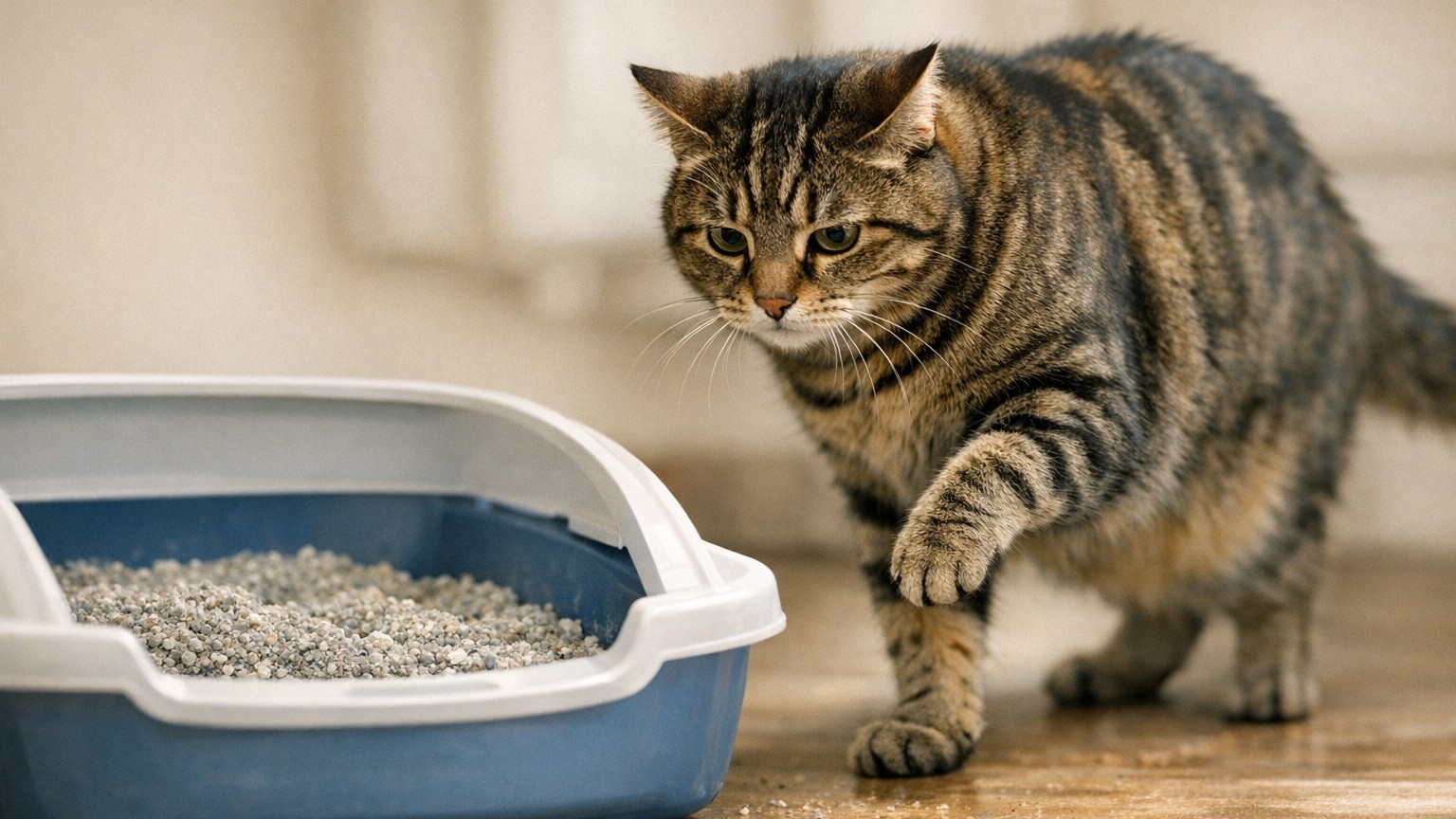
My cat had been using the same litter without complaint for four years. Then one week, she started stepping out of the tray the moment she’d finished, leaving Everything uncovered, no scratching, no ritual. Nothing else had changed, or so I thought. What the vet told me next reshaped how I understand my cat entirely.
Cats are naturally clean animals, and their litter box habits are a direct reflection of their instincts. In the wild, cats bury their waste to avoid attracting predators and to mark their territory subtly. Burying faeces serves as camouflage, masking scent to reduce their footprint. This deeply ingrained instinct is seen in almost every domestic cat, even those who have never known danger. So when a cat who has reliably covered her waste for years suddenly stops, it’s not laziness. It’s a signal.
Key takeaways
- A once-reliable litter habit vanished overnight—and the vet’s diagnosis revealed something the owner had completely missed
- Six in ten cats over age 6 deal with a condition that silently stops them from burying waste, but owners rarely connect the dots
- The real culprit wasn’t what changed in the litter box—it was what changed inside the cat
The litter itself might be the problem
Some cats simply don’t like the litter. Whether it has a strong scent or is uncomfortable on the cat’s paws, the texture or smell of litter can put a cat off entirely. This was the first thing my vet asked about. Had the formula changed? A new batch? Even a subtle reformulation, a different clay grain size or an added fragrance, can be enough to put a fastidious cat off the whole digging ritual.
Cats may develop strong preferences for specific types of litter, which can impact their litter box usage and overall well-being. Research published in 2025 in the IAABC Foundation Journal tested nine cats across seven different litter substrates, including clay, pea husk, tofu, and olive pit, collecting separate data on urination and defecation preferences. The results underscored just how individual these preferences are. Previous studies have also shown that cats prefer a small particle size of litter as compared to pellets or pearl particulates, and that cats find strong perfumes aversive. If you’ve recently switched brands or even gone through a different batch of the same brand, that shift alone could explain the change.
Litter aversion syndrome is a behavioural issue where cats display undesirable behaviours such as depositing waste outside of the litter box, shaking paws after exiting, or running away from the box. The acceptability of litter can be affected by both its odour and texture, with heavily perfumed litters and litters with accumulated waste being repelling to cats. If your cat is scratching at the wall beside the tray or at the floor nearby, she may be trying to cover her waste using any available surface, a sign that the substrate itself isn’t meeting her standards.
Pain is hiding in plain sight
This is where my vet surprised me. The real culprit, in my cat’s case, wasn’t the litter at all. It was the beginning of joint Discomfort. Cats experiencing pain and discomfort may not go through the trouble of burying their poop due to musculoskeletal pain, arthritis, neurological disease, gastrointestinal discomfort, or paw sensitivity. Conditions affecting the paws, such as wounds, infections, or nail pain, as well as mobility-limiting diseases, may make digging uncomfortable.
Cats are masters of hiding discomfort and pain, so often won’t show the obvious signs you might expect. They restrict their activity to stop them having to use their sore joints, meaning they don’t tend to show the same signs of arthritis as other animals. Veterinary researchers estimate that arthritis affects 60% of cats older than age 6, and 90% of cats older than age 10. Those are staggering numbers, and yet most owners, myself included, don’t think to connect a skipped scratching ritual with joint pain.
Elderly cats may stop covering their poop due to discomfort from arthritis, or due to the cognitive decline that can happen with geriatric cats, those older than 12 years. Cats with joint pain and osteoarthritis may stop using the litter box altogether, and this can happen for a few reasons: the cat may not be able to comfortably jump over the lip of the box, and the small pieces of litter may be irritating the pressure points on the cat’s feet. Covering requires sustained weight-bearing on the front paws while digging. If that hurts, a cat will cut the visit short.
Cats may also stop burying their poop if they aren’t feeling well. This can happen during a variety of illnesses, from digestive diseases that cause diarrhoea and vomiting to upper respiratory infections that may make your cat feel too tired to bother with the task. Digestive issues can also play a role. If your cat is experiencing gastrointestinal discomfort, the urgency to eliminate may lead them to skip the usual routine. Chronic constipation, diarrhoea, inflammatory bowel disease, or other gastrointestinal problems could make the litter box an unpleasant experience.
When stress rewrites the routine
When cats are experiencing a stressful situation, they may stop performing normal behaviours, including covering their poop. Cats could become stressed by new family members, loud noises, or moving. Cats may stop covering their poop because they are seeking the comfort of their own scent to help them manage their anxiety. Counterintuitive as it sounds, leaving waste uncovered allows their scent to linger, which can actually be self-soothing for an anxious cat.
The type of litter box or litter you use can also play a role. If the box is too small, too dirty, or in an inconvenient location, your cat may avoid using it properly. The location of the litter box matters, too. Cats need a quiet, private area to do their business. If their box is placed in a high-traffic or noisy area, they may become too uncomfortable to fully engage in their usual habits. A box wedged next to the washing machine, for instance, is a ticking time bomb for litter box aversion.
In multi-cat homes, the dynamic gets more layered. In multi-cat households or areas where they encounter other animals, cats may leave their poop uncovered as a way to assert dominance. It’s their way of saying “this is my space.” Cats are territorial by nature, and their scent glands, found in their paws, face, and anal region, play a major role in how they communicate. This is known as “middening,” a behaviour more common in wild or outdoor cats than house cats. But a new pet in the household can trigger it indoors too.
What to actually do about it
Start with a vet visit. If your cat suddenly stops burying, has litter box avoidance, shows behavioural changes, or has symptoms of illness such as straining, blood, lethargy, or appetite loss, seek veterinary evaluation. This is especially true if the change is sudden in a cat who has always been consistent. Sudden behavioural shifts in adult cats rarely appear from nowhere.
Once health causes are ruled out or treated, look at the environment. Common reasons for a cat not to cover their poop in the litter box include the box not being as clean as the cat would like. Clean the litter box once or twice daily with a scoop, and completely change the litter every 30 days to keep it up to the cat’s standards. Providing a litter box with lower sides or easier access can make a big difference, particularly for older cats who may be dealing with joint stiffness they cannot easily communicate.
Don’t try to force your cat to cover her poop, such as moving her front legs through the litter in a burying motion. This could potentially cause your cat stress and create fear around using the litter box. That instinct to intervene directly tends to backfire. The goal is to make the tray so comfortable, clean, and accessible that the cat wants to be there, not to override what feels wrong to them.
One detail worth knowing: sometimes cats have a personal reason for not covering their poop. If a cat’s mother never buried her poop, then the kitten won’t learn to cover their poop and will carry this behaviour into adulthood. If your cat has never covered consistently from the beginning, this may simply be her normal, not a red flag. The concern is always the change, not the habit itself.
Sources : askavet.com | journal.iaabcfoundation.org