
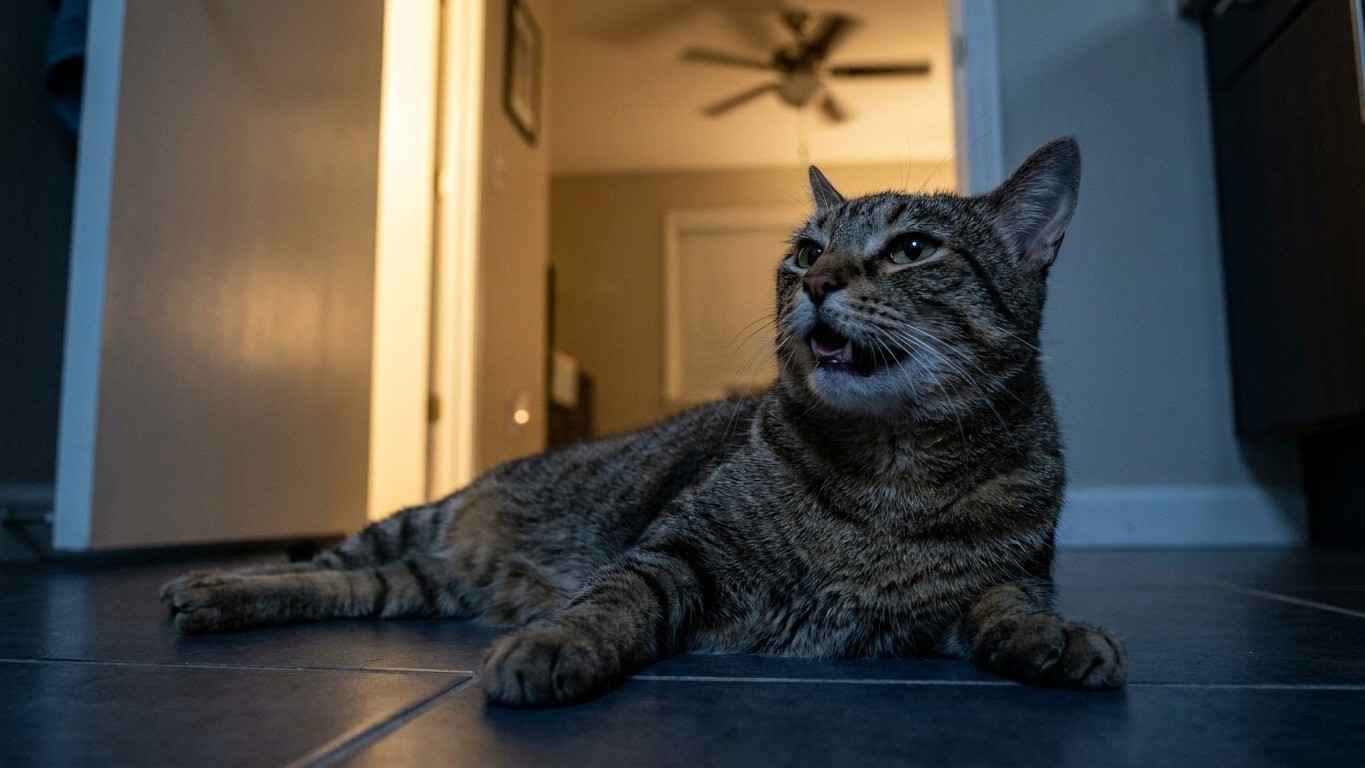
Cats don’t pant. Not like dogs do, anyway. A dog spread-eagled on the kitchen floor, tongue out, during a hot July afternoon is entirely normal. A cat doing the same thing is your signal to act. That distinction, so easy to miss, so medically important, is exactly what trips up even the most attentive cat owners, particularly during the warm nights that increasingly visit British homes in summer.
Cats rarely pant unless they’re overheated or stressed. Unlike dogs, cats don’t normally pant to cool down, so this behaviour should always raise concern. The problem is that many of us see it happen once and, because the cat seems to recover, we absorb it into our mental category of “cat weirdness” and move on. That was my mistake. Night after night, the fan was going full speed, the windows were cracked open, and my cat was lying flat on the bathroom tiles with her mouth slightly open, breathing in short rapid bursts. I told myself she was just being dramatic.
Key takeaways
- Cats pant as a last resort when their limited cooling mechanisms are overwhelmed—not as a normal response like dogs
- A fan circulating warm air creates a false sense of security while your cat struggles silently below
- Heatstroke can escalate from mild discomfort to organ damage in just 20-30 minutes, with complications appearing days later
Why a fan isn’t enough, and why cats struggle more than you think
Cats, unlike humans, do not sweat through their skin to regulate body temperature. Instead, they rely on panting and sweating through their paw pads, which are inefficient cooling mechanisms. This physiological limitation makes them particularly vulnerable to heat stress and dehydration. A fan circulating warm air in a stuffy bedroom doesn’t change the ambient temperature, it just moves the heat around. For a cat whose only real options are grooming, paw-pad sweating, and (as a last resort) panting, that distinction matters enormously.
Unlike humans, cats only sweat through their paw pads. They also pant to expel heat through the mucous membranes in their mouth. Licking their fur helps to cool them down by allowing saliva to evaporate, simulating the cooling effect of sweat. So when your cat is already panting, those other cooling mechanisms have already been exhausted. Panting is not the first response, it’s something closer to a distress signal.
High temperatures, especially with humidity, can quickly overwhelm these cooling mechanisms. British summers have a particular cruelty to them in this regard: sticky, muggy nights where temperatures barely drop after dark, with humidity that makes air feel thicker than it should. A fan running all night in those conditions offers comfort to humans, who sweat efficiently. For cats, it can create a false sense of security for the owner while the animal continues to struggle.
The signs that should send you straight to the phone
Some panting may be normal on a very hot day, or after a “mad five minutes”, but constant or very heavy panting is a sign that they are much too hot, and may even indicate heatstroke is starting. The critical word there is “constant.” A few seconds of open-mouth breathing after a sprint down the hallway is not the same as sustained panting through the night.
Many cats first become restless, seek cooler surfaces, drool, or breathe faster than normal. Some will pant, which is unusual for cats and should raise concern right away. Others may hide, stop interacting, or seem suddenly tired after being in a warm environment. As overheating worsens, the signs become more urgent. You may see vomiting, diarrhoea, red or tacky gums, wobbliness, weakness, or collapse.
That progression matters, and it moves faster than most owners expect. Heatstroke can progress from mild Discomfort to a dangerous emergency within 20-30 minutes. A cat’s normal body temperature is around 100-102.5°F, and organ damage begins when their temperature exceeds 104°F. Prolonged high body temperature can damage a cat’s kidneys, liver, heart, and brain. Kidney problems are common after heatstroke and may not show symptoms until days later. That last point is the one that shook me most when the vet explained it. The danger doesn’t always announce itself immediately. Your cat can seem to recover overnight and still be quietly developing organ complications by morning.
Flat-faced cats (such as Persians), those that become very stressed in hot temperatures, and very young or old cats are at greater risk. Flat faced, brachycephalic breeds who cannot breathe as effectively often struggle to pant, preventing them from cooling down, this means that they suffer heatstroke more often. If your household includes a Persian, a British Shorthair, or an elderly cat, treat any panting at night as an urgent situation rather than something to monitor until morning.
What to actually do while you wait for the vet
The instinct to grab a bag of ice cubes is understandable, but wrong. You can begin cooling them gently with cool, not ice-cold, water on their paws, coat and skin, and use a fan if available. Avoid using ice or very cold water, as this can make things worse by narrowing blood vessels too quickly.
Dampen a towel with cool (not cold) water and gently apply it to your cat’s belly, paws, and neck. Avoid covering their entire body, as this can trap heat. Replace the towel as it warms. Offer small sips of cool water if your cat is conscious and able to drink. Then call your vet. Even if symptoms seem to be easing, call anyway. A helpful rule is this: if your cat is showing any heat-related signs and cannot cool down quickly in a safe indoor space, call your vet while you are heading in. Cats can look only mildly affected at first and still develop delayed kidney, liver, or clotting complications later the same day.
As for the fan: keep it running, but pair it with something that actually lowers the room temperature. Cats often seek out cool areas like bathrooms, where the floors stay cool, leave the bathroom door open so they can rest there during hot days. Place multiple water bowls throughout your home, ideally in shaded, cool areas away from their food. Fans can help circulate air, but avoid placing them directly on the cat, as some may find the noise or airflow stressful.
The thing I’d been doing wrong for months
When I finally called the vet that evening, the answer was mortifyingly simple. I had the fan positioned to blow across the bed, our bed, and the warm air it displaced was pooling around the lower half of the room where my cat slept. The floor-level temperature was higher than the ceiling, and she had no way to escape it because I’d closed the internal doors to “keep the cool in.” She had no access to tile floors, no route to a cooler room, and the one water bowl I’d put out was sitting next to a south-facing window, warming up throughout the day.
Some cats also pant when they’re under a lot of stress. The vet gently flagged that panting sustained across multiple nights could also point to an underlying medical cause, cats with heart conditions such as hypertrophic cardiomyopathy may pant if they develop congestive heart failure, which occurs due to fluid buildup in or around the lungs. Heat wasn’t the only thing worth ruling out. A blood panel and a check on her breathing confirmed she was physically sound, but the conversation was a reminder that if your cat is suddenly panting but has not been exercising or playing intensely, is not anxious or stressed, and is not hot, seek veterinary attention.
One thing worth knowing: adding ice cubes to your cat’s water can make it more enticing, especially during the hottest parts of the day. Cats are notoriously indifferent to drinking enough at the best of times, and in heat their need for hydration increases while their instinct to drink doesn’t always follow. A cold, freshly refilled bowl placed on a cool tile surface, not near a window, is one of the quietest, most effective things you can do on a hot night. The fan stays on. But now it’s pointed at the hallway, and the bathroom door is always open.
Sources : gsvs.org | frontierveturgentcare.com