
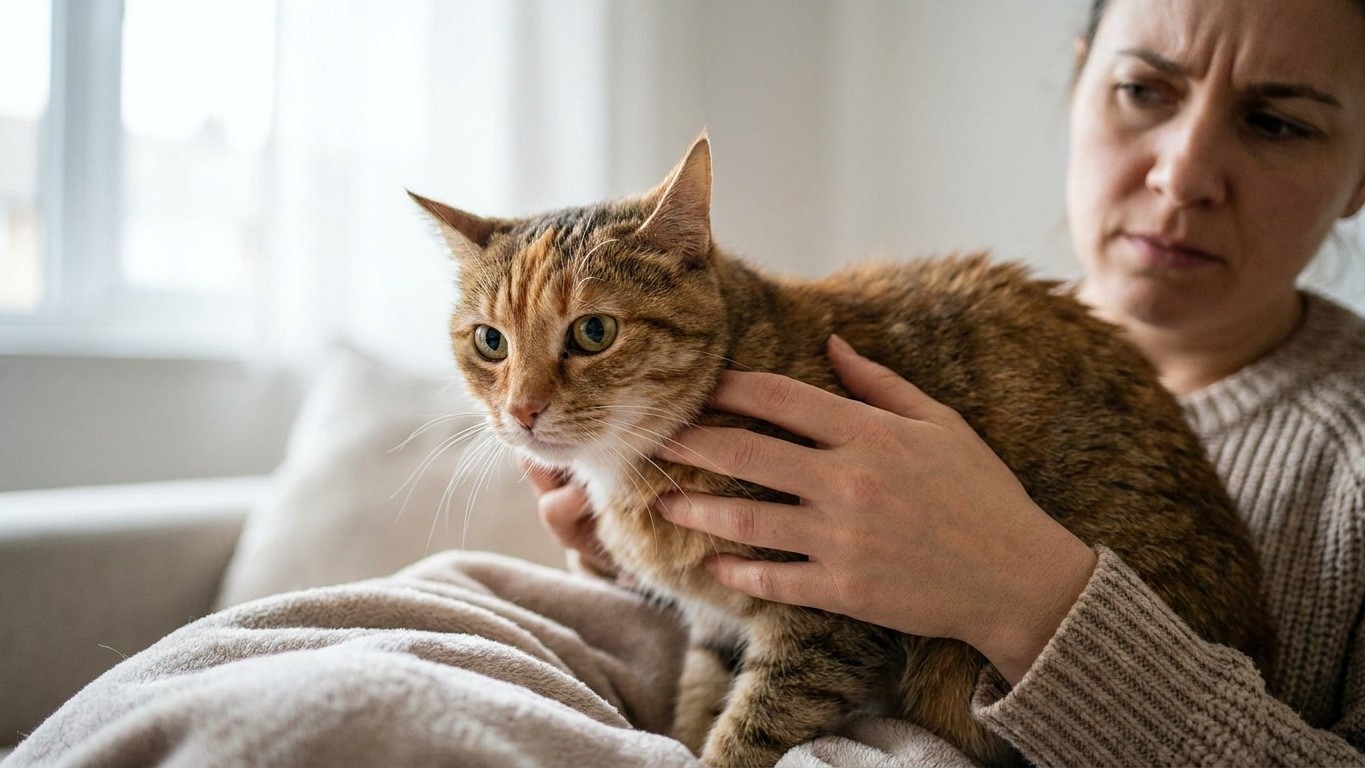
Flea treatments are one of the most routine purchases a pet owner makes. They sit on supermarket shelves, cost a few pounds, and look almost identical regardless of which animal they’re designed for. That familiarity breeds a dangerous assumption: if it’s safe for the dog, surely a smaller dose on the cat won’t hurt? That reasoning sends hundreds of Cats to Emergency Vets across the UK every year, many of them critically ill within hours of a well-intentioned application.
Key takeaways
- A single dog flea product can contain a lethal dose for a cat, even in tiny amounts
- Poisoning symptoms appear within hours—drooling, tremors, seizures, and potentially death
- There’s no antidote; emergency treatment costs thousands and doesn’t always work
The chemical that splits dogs and cats in two
The culprit in most cases is permethrin, a synthetic insecticide that belongs to the pyrethroid family. Permethrin is used to kill fleas and is safe to use on dogs, but is extremely poisonous for cats. This isn’t a minor sensitivity difference or a matter of dilution. A cat’s liver can’t break down certain chemicals into a harmless form, so the harmful substance builds up in the body, causing serious illness, and permethrin is just one reason why we must never assume that a product safe for dogs will also be safe for cats.
Cats don’t have the protein needed to help break down permethrin in the body; as a result, it builds up and causes toxicity. The biology here is pretty unambiguous. Dogs have a wide safety margin with permethrin. Cats have none. Some owners use a dog flea product on their cat by mistake, assuming that if a smaller quantity is used, it will be safe, but even a very small amount of permethrin can make a cat seriously ill.
Permethrin is found in a number of different flea products for dogs, including spot-on treatments, shampoos, sprays and flea collars. The spot-on pipettes are particularly concentrated. Canine permethrin flea treatments can be highly concentrated, which means that a number of these products can contain a lethal dose in a single application if used on a cat. That’s not scaremongering, that’s the pharmacology.
What happens inside a cat’s nervous system
Permethrin is highly toxic to cats; it affects their nervous system, first causing it to become over-sensitive (twitching and seizures) and then causing paralysis. The speed of onset is what makes this so alarming. Permethrin is absorbed very quickly, so signs of poisoning usually appear within a few hours, though they can take up to 36 hours. In practice, most owners are watching their cat deteriorate before they even realise something is wrong.
The symptoms follow a recognisable and deeply distressing pattern. These include agitation, tremors, difficulty walking, increased body temperature, and increased sensitivity to stimuli. Drooling is often one of the first signs, the product is intensely bitter, and cats who lick the application site react immediately. From there, the cat’s liver is not capable of processing permethrin, which causes it to build up and lead to toxicity; if symptoms are not treated, this may lead to seizures and death within a few hours.
There is a subtler risk that many multi-pet households overlook entirely. Poisoning can also happen when a cat comes into contact with a dog that has recently been treated with a permethrin-based product. When a cat rubs against a dog, or even sits on the same furniture, permethrin can transfer to the cat’s coat and cause poisoning. In households where the dog and cat share a sofa or a bed, this is a very real danger even if the cat was never directly treated.
At the vet: what treatment actually looks like
The first and most urgent step, if you realise what has happened quickly enough, is decontamination at home before the journey to the clinic. If your cat has had contact with permethrin, wash it off immediately using warm water and dilute washing up liquid, if they will allow you to, and call your vet straight away. One critical detail: hot water has the potential to increase dermal absorption, and cold water should be avoided since hypothermic patients may show worsening clinical signs, lukewarm is the word.
Once at the practice, the situation becomes more serious. There is no known antidote for permethrin toxicity in cats, so treatment mainly consists of supportive care to treat the neurological signs and symptoms. The vet’s job is to keep the cat alive and stable while the toxin clears. It is likely that the cat will need to be admitted for treatment, which may include washing off any remaining permethrin, anti-seizure medication if they are having seizures, medication to stop permethrin causing further damage, and a fluid drip to keep the cat hydrated.
Muscle tremors caused by permethrin can lead to hyperthermia, and in severe cases this may result in rhabdomyolysis or DIC, conditions that go far beyond the original poisoning and can damage the kidneys. It is likely the cat will be hospitalised for up to three days while undergoing treatment. The bill will be substantial. The irony of trying to save money on flea treatment is not a gentle one.
Around 80 to 90% of cats who are treated promptly will recover from permethrin poisoning. That figure is genuinely encouraging, but it hinges entirely on speed. Once the stage of seizures and coma has been reached, the prognosis rapidly worsens, and a cat may die from this poisoning within 24 to 48 hours of the antiparasitic treatment.
Protecting your cat going forward
Permethrin toxicity is one of the most common feline poisonings worldwide, with hundreds of cases reported every year in the UK. A significant proportion of those cases happen in households where the owner was not careless, just uninformed. The packaging on dog flea treatments typically carries a warning, but it’s easy to miss in small print when you’re in a rush at the checkout.
If you have both a dog and a cat under the same roof, the safest route is to choose a dog flea product that doesn’t contain permethrin at all, and to discuss all flea prevention with your vet rather than selecting from a supermarket shelf. If you own a cat, it’s best to avoid using permethrin flea treatments for any dog in the same house; and if you do choose to use a product containing permethrin, make sure your cat does not come into contact with it or lick it off your dog for 72 hours after application.
One thing worth knowing, especially for owners who’ve previously used low-dose permethrin collars on their cats: there are cat flea collars containing low doses of permethrin available to buy, which have been classified as safe by the Veterinary Medicines Directorate (VMD). The concentration is the critical variable, what makes spot-on dog treatments so dangerous is the sheer potency of the formulation, not simply the presence of permethrin. But that nuance is not a green light to experiment. Always check with your vet, always read the label, and always remember that “for use on dogs only” is not a suggestion.
Sources : vet-emergency-london.co.uk | petplace.com