
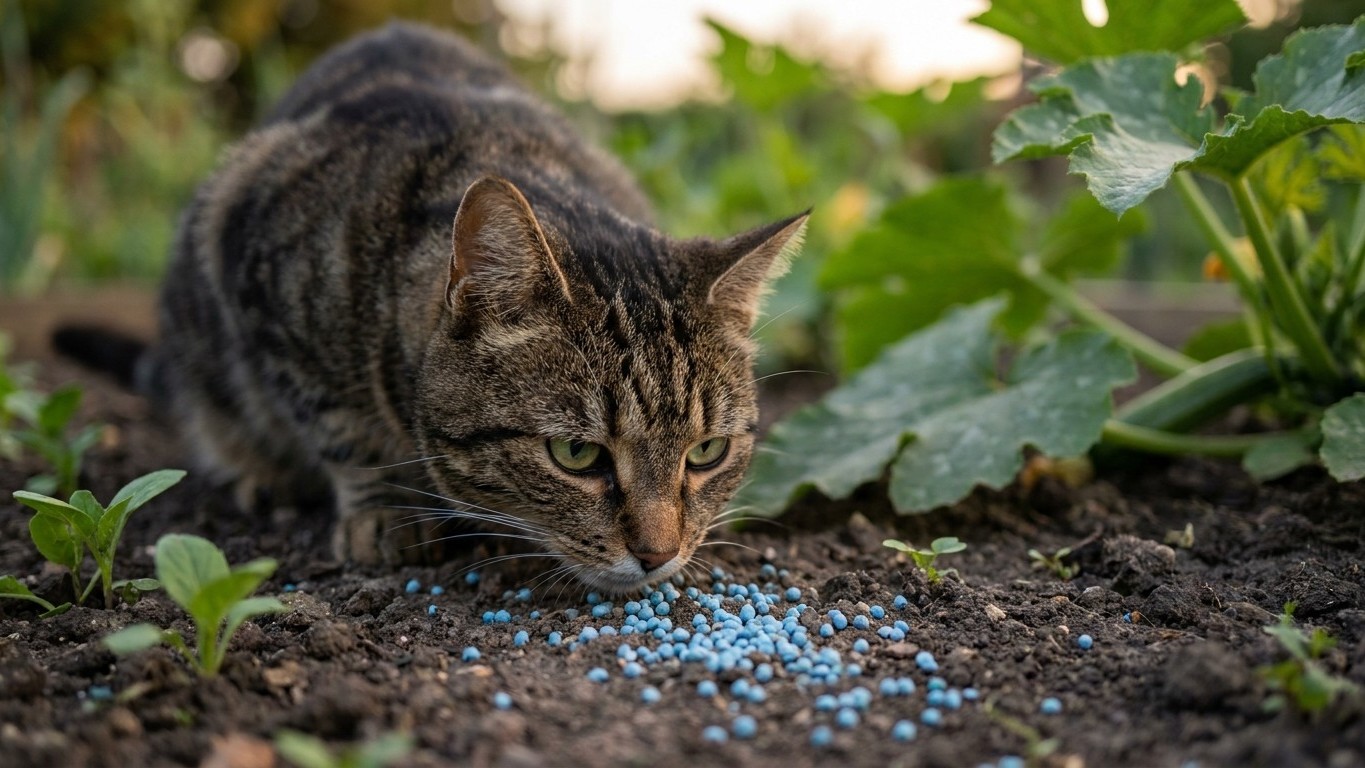
Those cheerful little blue granules scattered between your courgette seedlings and runner bean rows look harmless enough, a bit of spring tidying, a bit of slug management. But to every cat padding across your veg beds at dusk, they look and smell like something worth investigating. The reason is blunt and rather alarming: to attract slugs, slug and snail baits often contain bran or molasses, making them tasty to other animals. Cats, with their finely tuned noses and insatiable curiosity, are not immune to that appeal.
Key takeaways
- A cat can show serious poisoning symptoms in just 15-30 minutes after ingesting slug pellets, with tremors and seizures that may leave lasting damage
- Even ‘pet-safe’ ferric phosphate baits contain hidden dangers and lack the bitter taste deterrent that stops cats from eating them
- The solution isn’t about choosing the right chemical bait—it’s about avoiding them entirely and using proven natural alternatives instead
The pellets in your shed may already be illegal
Before we even get to toxicity, there’s a legal question worth raising. As of April 2022, metaldehyde slug pellets are illegal to sell, supply, store, or use for outdoor purposes in the UK. Yet a surprising number of sheds and garages across Britain still hold half-used tubs of the old blue pellets, bought years ago, tucked on a shelf, forgotten. Garden ecology experts have issued warnings for Brits to check their sheds for any old slug repellents and to dispose of them if they contain metaldehyde.
Metaldehyde was the dominant active ingredient in slug pellets for decades. Often the pesticide included bran or molasses to attract pests, making it attractive to household pets as well. The colour, that distinctive blue, was chosen partly to deter birds, but it does nothing to put off a cat. The formulation of slug pellets resembles that of dried cat or dog food, which is precisely why cats and dogs approach them without hesitation.
The mechanism of poisoning is devastating in its speed. Metaldehyde appears to interfere with chemical transmission in the brain, leading to the classic symptoms of incoordination, tremors and convulsions, and clinical signs can start within just 15 to 30 minutes of ingestion. Early signs may include drooling, vomiting, panting, and anxiety, which can progress to include depression, a wobbly gait, or the characteristic muscle tremors, seizures, and hyperthermia. In cats specifically, rapid, flicking eye movements known as nystagmus may also occur. And crucially, there is no specific antidote for metaldehyde toxicity.
The “pet-safe” alternative is not the free pass it’s marketed as
Today, the primary active ingredient found in commercially available slug pellets, especially those approved for organic gardening, is ferric phosphate (iron phosphate). This is what replaced metaldehyde after the ban, and it is widely sold as the safer option, sometimes even labelled as suitable for use around children and wildlife. The reality is more complicated.
Ferric phosphate, now the most common active ingredient in slug pellets, kills slugs by iron poisoning. Like many things, iron is very beneficial in the correct amounts but can be extremely toxic when ingested in excess. The trouble is that most ferric phosphate products also contain a chelating agent called EDTA, which makes the iron more soluble and effective against slugs. EDTA, or Ethylene diamine tetra acetic acid, which is found in most ferric phosphate slug pellets, can be toxic to various animals, even small amounts can cause severe gastrointestinal issues and red blood cell damage.
Ferrous oxide is only partially absorbed in the gut, so toxicity is less common. But it can accumulate in the body over time, and repeated ingestion of small amounts can still be dangerous. Excess iron in the body will damage many cell types and organs. There’s an additional concern: unlike metaldehyde baits, the iron phosphate baits do not appear to contain Bitrex to prevent unintentional ingestion by pets and children. Bitrex is an extremely bitter-tasting substance that most mammals will not eat. Without that built-in deterrent, a cat can easily consume a dangerous quantity before any taste triggers avoidance.
The conclusion from Cats Protection is clear: if possible, it’s best to avoid chemical slug pellets altogether. That applies both to your own garden and to your neighbour’s, because cats roam. A cat who never touches the pellets in their own garden may happily investigate whatever is scattered three doors down.
What to do if your cat is affected, and what to try instead
Speed matters enormously here. Treatment of slug poison intoxication is difficult and requires intensive care and hospitalisation, but many cats will make a full recovery over days to weeks. Unfortunately, some cases will be left with long-term complications such as brain, liver or intestinal problems, which may require long-term treatments or specialised diets. If you see your cat stumbling, drooling, twitching or fitting after they’ve been in the garden, phone your vet immediately. Do not wait for symptoms to worsen.
On the prevention side, the options are genuinely good. The use of beneficial nematodes, microscopic roundworms that parasitise slugs, is gaining significant traction, particularly in organic gardening. These nematodes are safe for humans, pets, and other wildlife, and offer a targeted, natural solution. One application can release enough nematodes to control slugs for about six weeks. Nematodes are light sensitive, so apply them in the early morning or at dusk.
Physical barriers work well for raised beds and containers. Copper tape creates a small electrical charge when slug slime interacts with it, giving slugs an unpleasant sensation that deters them. Beer traps, sunk into the soil at ground level, are effective and completely safe for cats, beer traps work over a short distance as long as the contents are replaced regularly. Physical barriers such as wool pellets or rough materials like eggshells or coffee grounds can help deter slugs, and encouraging natural predators such as birds, hedgehogs and frogs can also help reduce slug numbers.
One underappreciated fact worth keeping in mind: problems occur more commonly when the instructions haven’t been followed and the pellets have been put in a pile rather than scattered thinly, making it easier for an animal to consume a large amount of bait in one go. Even gardeners who do choose to use ferric phosphate pellets should scatter them sparsely and cover them with a tile or piece of slate so slugs can reach them but cats and birds cannot. And if you have any metaldehyde pellets in the shed at all, bin them today, because keeping them is no longer just unwise. It’s illegal.
Sources : amazon.co.uk | animalemergencycare.net