
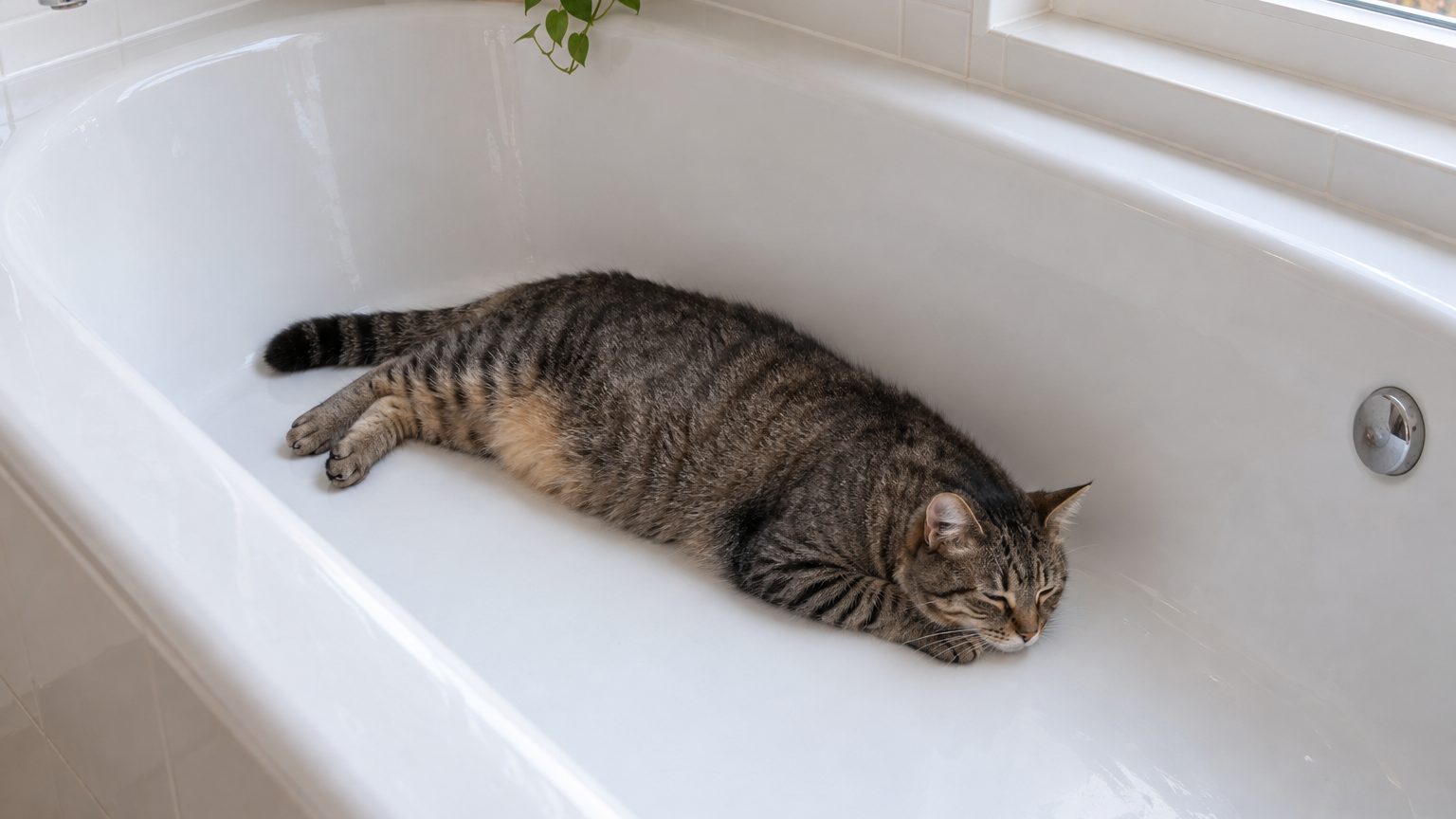
A cat in the bath is usually after a cool, enclosed, quiet spot that smells reassuringly of its owner. Behaviourists tend to give five overlapping reasons, and most of them are perfectly harmless. A couple deserve a closer look.
None of them is a love of getting wet.
- Ceramic and enamel surfaces pull heat from cats’ bodies, making bathtubs ideal cooling spots on warm days.
- High-sided baths provide enclosed, defensible spaces where cats can rest while monitoring their surroundings.
- Bathrooms carry concentrated scents of their owners, creating reassuring smells that help cats feel secure.
Cool ceramic and a snug little den
Temperature comes first. Domestic cats descend from the African wildcat, a species of dry, warm country, and they are built to conserve heat and cope poorly with Overheating because they sweat very little. Enamel, acrylic and ceramic all pull warmth away from the body, so on a muggy afternoon a bath works like a stone slab in a larder. A cat sprawled flat on the bottom, belly pressed to the surface, is often just cooling down.
Swap the season and the logic holds, oddly enough. A bath that has just been used can hold residual warmth, and a dry tub with a folded towel in it is a decent suntrap if the bathroom has a radiator or a sunny window.
Then there is the shape. Cats like to tuck themselves into spaces that surround them on several sides, which is why a cardboard box beats an expensive bed more often than owners care to admit. Research on shelter cats has found that those given a hiding box settled and showed fewer signs of stress than those without one. A bath has high, smooth sides, a single open top and a view of the door, so a cat can rest while still watching for trouble. It’s a fortress with a lookout.
Water, scent and the pull of your company
Water does play a part, though not in the way people assume. Many cats are drawn to moving water rather than a still bowl, and a dripping tap is a small, irresistible event. Pawing at drops, licking the plughole or sitting directly under the spout is often curiosity mixed with a preference for fresh-tasting water. If your cat does this regularly, a pet drinking fountain is worth trying.
Scent is the fourth reason, and probably the most overlooked.
The bathroom is among the smelliest rooms in the house from a cat’s point of view, thick with your soap, your towels, your skin and your bath mat. Cats rely heavily on smell to feel secure, and they deposit their own scent by rubbing their cheeks and flanks on things that matter to them. Settling into the bath, particularly if you’ve left a damp towel or worn clothing nearby, wraps them in the most familiar smell they know. Some cats also learn that the person making this smell turns up in the bathroom several times a day, so sitting in the tub is simply a good way to wait for company.
That attention-seeking element is worth taking seriously. If you laugh, speak to your cat or fill a bowl every time it hops in, you have taught it that the bath is where good things begin. Cats are quick studies.
When the bath becomes a hideout
The fifth reason is the one that needs watching: stress or illness. A cat that starts retreating to the bath after a house move, a new pet, building work or a change of routine may be looking for the quietest, most defensible corner it can find. Hiding more than usual is one of the commonly recognised signs that a cat is unsettled or unwell, and the bath’s smooth, hard surface can also appeal to a cat that feels hot or uncomfortable.
Sudden change is the thing to look for. A cat that has always napped in the tub is probably just being a cat, but one that has started doing so out of the blue, or that is also drinking more, eating less, grooming less or avoiding the litter tray, should see a vet. Increased thirst and seeking out cool surfaces can accompany conditions that are common in older cats, and only an examination and tests can tell them apart from harmless habit. Don’t wait for it to pass.
For the cat who simply loves its tub, a few sensible adjustments keep everyone happy:
- Lay a thick towel or fleece in the bottom so the cat can choose between cool and cosy.
- Make sure the plug is out and the bath is dry before you leave the room, since standing water and a slippery surface are a poor mix.
- Rinse away bath cleaner and bleach thoroughly, because cats lick their paws and fur.
- Check the cat is out before you run a bath, then wait for it to leave on its own terms.
Offering a legitimate alternative can also help, such as a cardboard box with a cut-out entrance placed somewhere quiet, or a cooling mat in warm weather. If the cat swaps the bath for the box, you have your answer about what it wanted. If it keeps returning to the bath regardless, it may be the tap, the smell or you.
One small detail sometimes surprises owners: the cat that stays in the bath when you run the shower isn’t necessarily brave. Splashing water is often the very thing it is trying to get away from, and the bath may be where it feels safest, so the tap is best left off until it has hopped out.