
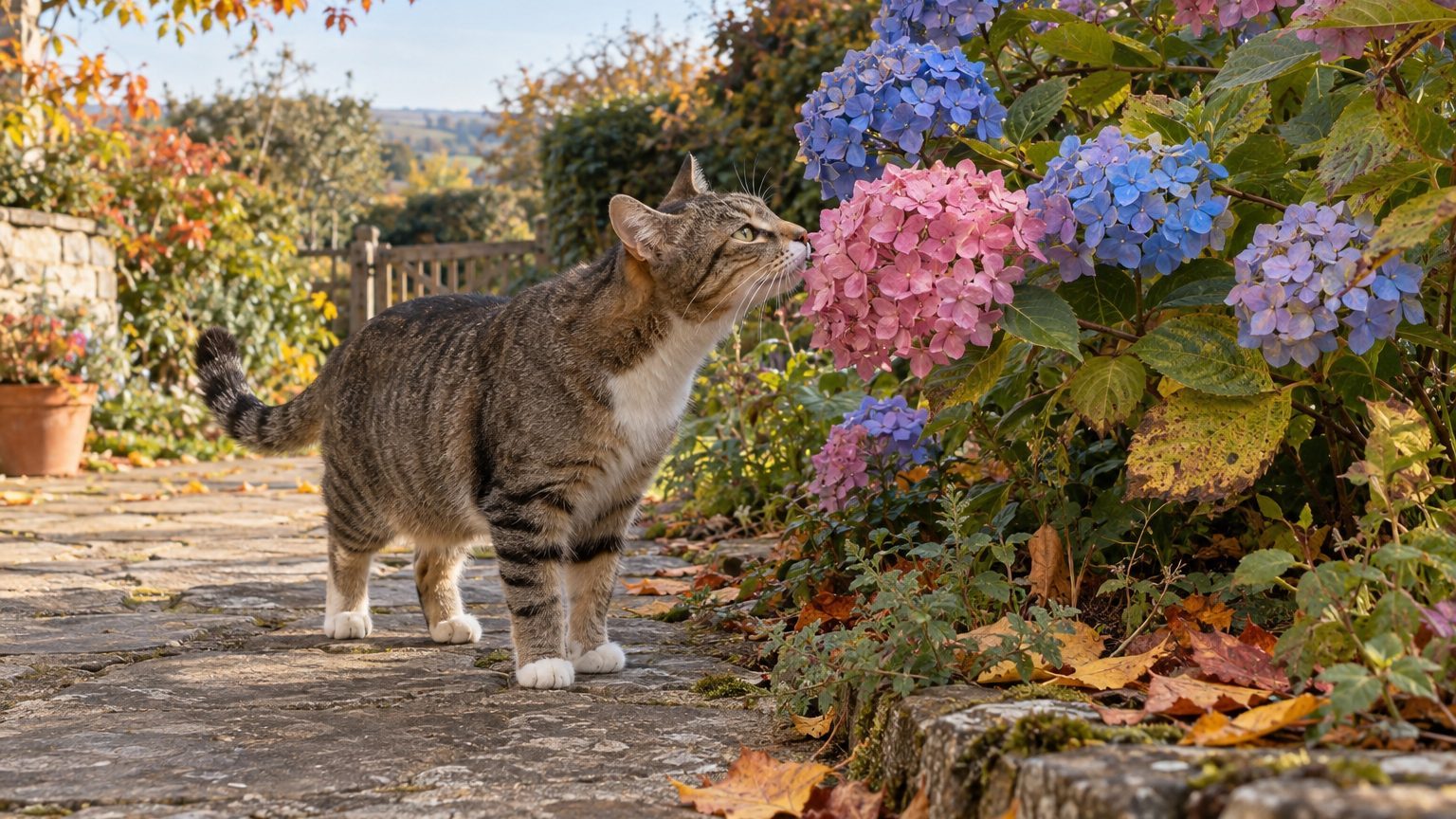
Yes, hydrangeas are poisonous to cats. Every part of the plant, from the leaves and flower heads to the buds and stems, contains cyanogenic glycosides, compounds that can release cyanide when plant tissue is chewed and digested.
The good news is that serious poisoning is uncommon.
Cats are obligate carnivores and tend not to eat much greenery, and hydrangea leaves are not especially appetising. Kittens, bored indoor cats and the inquisitive nibblers every household seems to have are another matter. The usual result is an upset stomach rather than a medical drama, though that is no reason to relax about the plant.
- All parts of hydrangeas contain cyanogenic glycosides that release cyanide when chewed and digested.
- Mild poisoning causes drooling, vomiting, diarrhoea, appetite loss and lethargy within hours of ingestion.
- Severe cases show rapid breathing, bright red gums, dilated pupils, tremors and collapse—these are emergencies requiring immediate vet care.
Why hydrangeas are a problem, and which parts carry the risk
The name comes from the Greek for “water vessel”, a nod to the plant’s thirst. The toxins are less poetic. When a cat chews a leaf or petal, enzymes break the glycosides down and hydrogen cyanide is released, which interferes with how cells use oxygen. The amount of toxin varies between species, seasons and growing conditions, and flower buds and young leaves are often described as the most potent. Since nobody can judge the dose by looking at a shrub, it makes sense to treat the whole plant as risky.
That includes every garden type, from mopheads and lacecaps to the cone-shaped panicle varieties. It is the same genus, and the same chemistry applies. Gardeners who coax their hydrangeas blue with acidic soil are growing exactly the same toxins as those with pink flowers, because soil pH changes the colour but not the plant’s defences.
Dried and cut stems deserve the same caution as living plants.
Dried hydrangea heads are hugely popular in UK homes, particularly through autumn and winter, and a cat batting at a loose papery bloom may end up chewing it. I would not assume drying makes a plant safe. Vase water is a lesser worry, but it is easy to keep cats away from altogether.
Symptoms to watch for
Mild poisoning usually looks like a classic stomach upset. Expect drooling, vomiting, diarrhoea, a drop in appetite and general sluggishness, and some cats simply go quiet and hide. These signs tend to appear soon after the plant has been eaten, so a cat that was fine in the morning and flat by teatime, with a chewed bloom nearby, is worth a phone call to the vet.
Severe cases are rare, but they are the reason the plant is taken seriously. Cyanide poisoning can bring rapid or laboured breathing, bright red gums, dilated pupils, tremors, wobbliness and collapse. Cats can deteriorate quickly once these signs begin, and they are an emergency rather than something to monitor overnight.
Laboured breathing or collapse means going to a vet immediately.
What to do if your cat has eaten hydrangea
Start by taking any plant material out of your cat’s mouth and moving her away from the shrub or bouquet. Note what she ate, roughly how much and when, and take a photo of the plant or keep a piece in a bag, since this helps the vet. Do not try to make her sick at home. Salt water, washing soda and similar folk remedies can do real harm to cats.
Ring your vet straight away, even if she seems perfectly well. If it is evening or the weekend, use the out-of-hours number, which practices usually put on their voicemail message. Early advice costs little, and some cats hide discomfort until they are quite unwell.
Treatment depends on the signs and timing. A vet may induce vomiting safely, give activated charcoal to limit absorption, and provide fluids or oxygen support if needed. Mild cases that are treated promptly often settle well, but only a vet can judge your own cat’s situation.
Prevention is mostly about the indoors, since garden cats are hard to police. Put bouquets in a room with the door shut, choose heavy, tall vases, and keep dried arrangements out of reach of climbers. If you want a cat-friendlier display, the ASPCA lists roses, sunflowers and snapdragons as non-toxic to cats, though it is worth checking any specific plant before you buy.
Check mixed bouquets for lilies too, because true lilies are far more dangerous to cats than hydrangeas. Even a little pollen licked off the fur, or a sip of vase water, can cause kidney failure, so a bouquet containing them needs to stay out of the house altogether.