
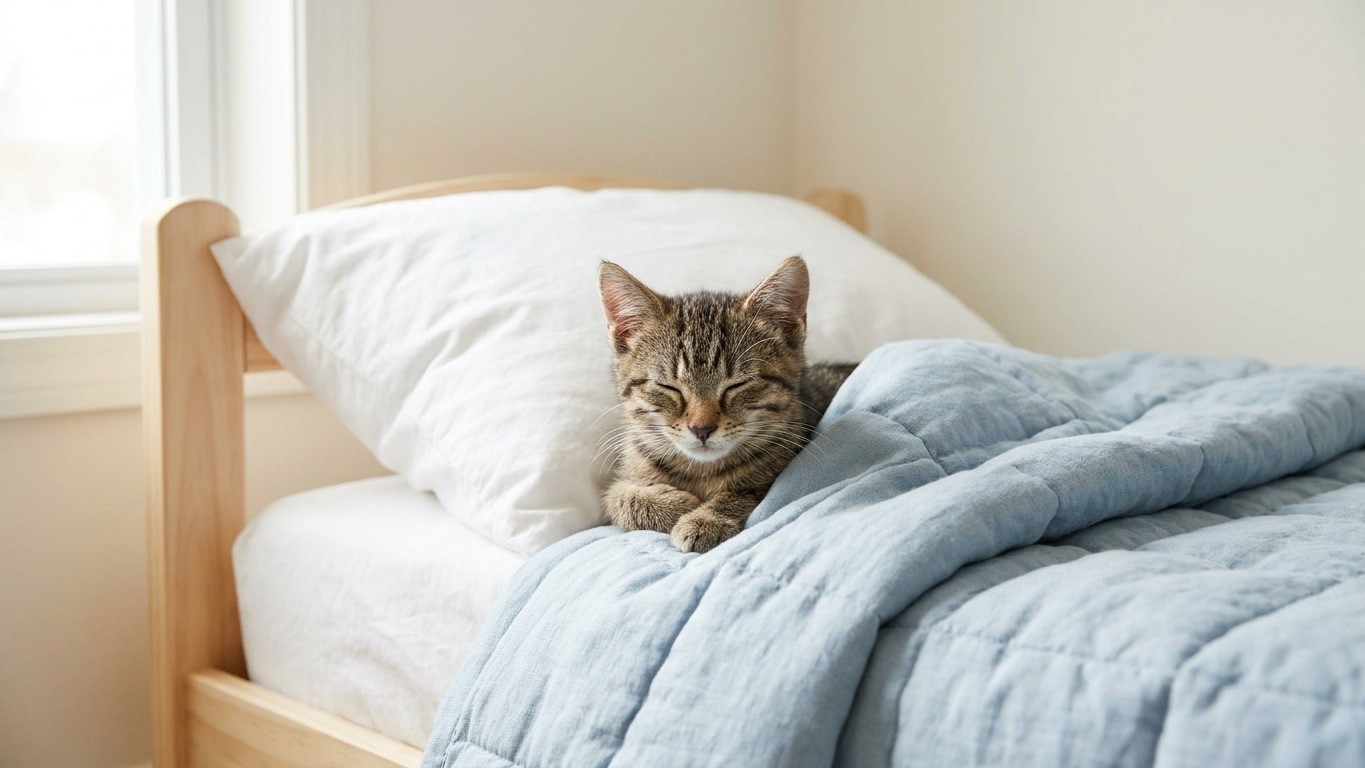
Eighteen months. That’s how long ringworm spores can lie dormant in your carpet, sofa or – worse – your child’s bedroom rug after an infected cat has been anywhere near it. The ringworm fungus can remain infectious for up to 18 months in the environment and re-infection may occur. It’s precisely why vets treating cats fresh from a packed rescue centre will often insist on a strict quarantine before that cat gets anywhere near a family bed, however much the kids are begging for a cuddle.
Ringworm isn’t actually a worm at all, despite the alarming name. It’s a common zoonotic fungal disease that infects the skin, hair, and nails of mammals, and cats are frustratingly good at carrying it without looking particularly unwell. Ringworm fungi feed on the protein that makes up the outer layers of the skin, hair, and nails. The classic sign is a circular, crusty bald patch, but plenty of cats show almost nothing at all. A “cigarette ash” scaling in the depths of the coat may be the only visible indicator of ringworm infection in cats. Vets sometimes reach for a black light in the consulting room, because a common method for detecting ringworm is to examine the skin under a black light, or a Wood’s lamp, and certain strains will glow bright purple. Not every strain lights up though, which is why a proper fungal culture from your vet remains the gold standard rather than relying on a torch alone.
Key takeaways
- A common fungus from overcrowded shelters can hide dormant in your carpets for over a year and a half
- Children’s bedrooms present a higher risk than other rooms—and the danger works both ways between species
- Proper quarantine and decontamination make rescue cat adoption safe, but vets need proof of treatment before giving the all-clear
Why rescue overcrowding turns up the risk
Shelters bursting at the seams aren’t just stressful for staff. They’re a genuine breeding ground for this fungus. Group housing of animals such as pet shops, animal shelters, and rescue situations can increase risk for disease, because successful development of infection requires exposure to a critical load of infective spores, increased moisture on the skin, and microtrauma. Kittens bear the brunt of it. Ringworm outbreaks due to M. canis commonly occur in the summer and fall (“kitten season”) when large numbers of kittens are admitted to shelters and kept in stressful high density housing areas. The stress itself matters too – it’s not just proximity. In overcrowded feline groups, social stress may play an important role, and together with the environmental resistance of fungal spores, this can make eradication of ringworm very difficult in catteries or shelters.
Skin damage is the real gateway for infection, more than simple contact. Key to establishment of infection is damage to the skin because healthy skin is a natural barrier to infection, and skin can be damaged by ectoparasite infections, respiratory discharges from eyes and nose, and diarrhoea. Put a young, stressed, poorly-nourished kitten with fleas and a snotty nose into a crowded pen, and you’ve built the perfect conditions for a fungus that’s already looking for an opening. I’ve spoken to shelter vets who describe ringworm less as a single problem and more as a symptom of an overwhelmed system – too many cats, not enough space, not enough time to isolate new arrivals before they mingle.
The particular worry with children’s bedrooms
Any household surface can harbour spores, but a child’s bed carries specific concerns. Kids tend to bury their faces in fur, let cats sleep tucked against bare skin, and are less likely to wash their hands religiously after fussing over a new pet. Younger, thinner skin with more frequent minor grazes and scratches offers exactly the kind of microtrauma the fungus exploits. It’s also worth remembering this is genuinely a two-way street between species. Ringworm in humans generally responds well to treatment, but the fungus can remain infectious for up to 18 months in the environment and re-infection may occur. That’s the sting in the tail: even after the cat is fully treated and cleared, the fungus can sit patiently in a rug or a duvet, waiting for the next bit of skin contact.
This doesn’t mean every shelter cat is a walking hazard, and I’d hate for anyone reading this to write off adoption altogether. There is a low risk for environmental transmission; the highest risk is cat to cat contact. Plenty of cats picked up in intake screening turn out to be what shelter vets call “dust mop” carriers rather than truly infected animals. These “fomite” or “dust mop” cats have no skin lesions but are positive on diagnostic tests due to carriage of fungal spores in their coat; they are not truly infected and should be treated once with a lime sulfur dip to kill the spores on their coat, after which they do not need to be isolated. A decent rescue will already be sorting genuine cases from these false alarms before the cat ever reaches your door.
What sensible quarantine actually looks like
A responsible approach isn’t about banishing a new cat to the shed for a year and a half. Deep environmental cleaning and an adequate quarantine period of at least 3 to 6 weeks are recommended, though this depends on the veterinarian’s decision. Treatment itself is usually a combined effort. Treatment for ringworm in cats is usually a combination of medication applied to a cat’s skin and oral medication, lasting for a minimum of four to six weeks. Vets typically won’t call it done on a hunch either – they want proof. Ringworm cultures are performed after the start of treatment, and treatment is typically continued until two consecutive negative cultures are obtained, usually two to four weeks apart.
On the home front, bleach remains the unglamorous hero of decontamination. A solution of one pint of chlorine bleach (500 ml) in a gallon of water is effective on hard surfaces suitable for dilute bleach. Fabric rugs and bedding are trickier and usually need washing on a hot cycle or, frankly, replacing if heavily contaminated – vacuuming alone won’t cut it, since spores cling stubbornly to fibres. If your vet clears the cat and confirms via culture that treatment has worked, there’s no reason a former rescue cat can’t eventually curl up on a child’s pillow exactly as any other beloved family cat would. The eighteen-month figure sounds terrifying, but it’s a worst-case survival estimate for untreated, uncleaned environments, not a guaranteed timeline for your own home once you’ve disinfected properly and your vet has given the all-clear.
Sources : catster.com | sheltermedicine.wisc.edu