
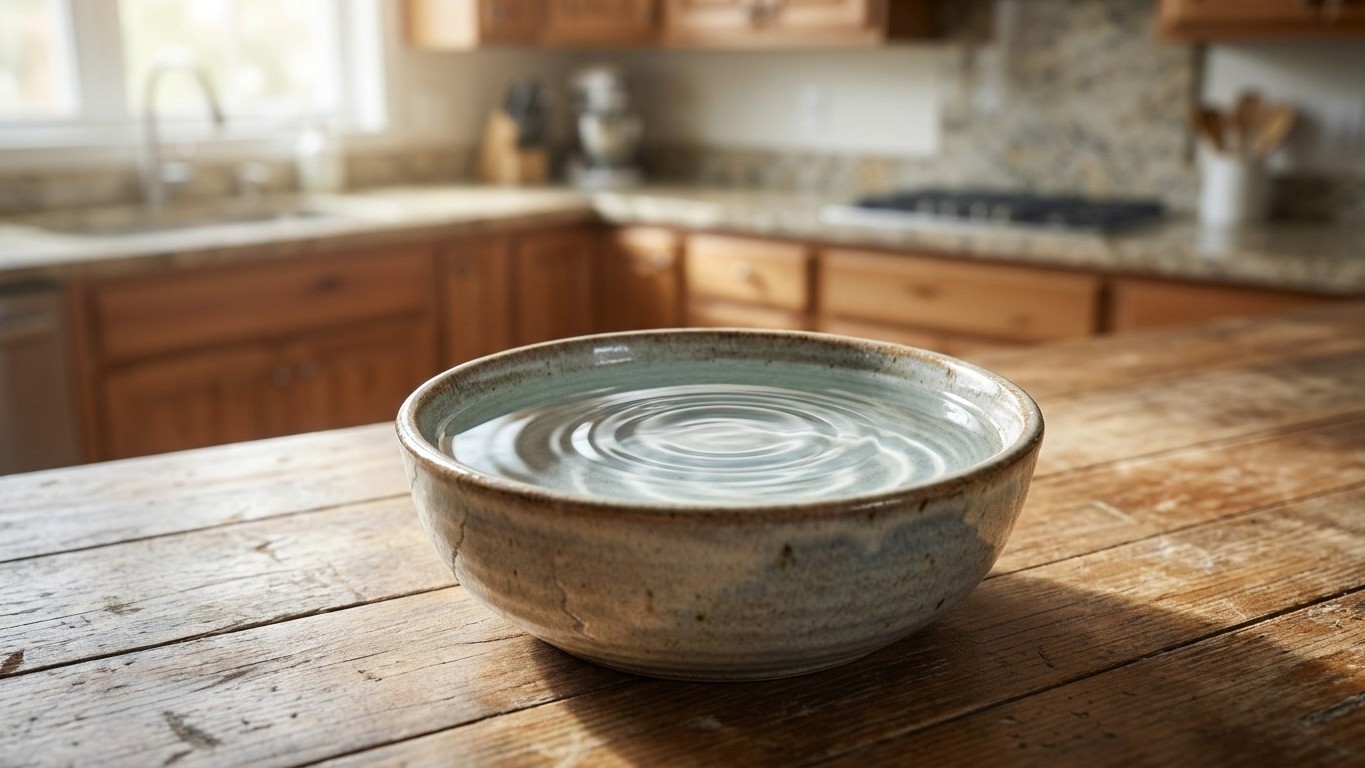
Ten years of cat ownership. Two cats, then three. Countless tins of food, vet checkups, late-night worry spirals over sneezes. And yet, during one otherwise routine appointment, a vet asked a simple question that stopped me cold: “How often do you wash the water bowl?” The answer, a mumbled “I top it up every day”, said it all. That single habit, repeated daily for a decade without question, was quietly undermining everything else I thought I was doing right.
Key takeaways
- Pet water bowls ranked among the germiest places in homes, harboring biofilm up to 1,000 times more resistant to antibiotics than regular bacteria
- Cats have low thirst drives from desert ancestry, making clean water critical—yet most owners only ‘top up’ rather than wash bowls daily
- Chronic dehydration from contaminated bowls contributes to kidney disease, affecting 20-30% of cats and ranking as a leading cause of death in older cats
The bowl you barely think about
While pet owners often pay close attention to food quality, they may forget to check what’s happening inside their pet’s water bowl. That innocent-looking dish can harbour harmful bacteria, mould, or even algae if not cleaned properly. “Topping up” is not the same as cleaning, and there is a biological reason that distinction matters enormously.
Pet bowls have been studied and found to be the fourth germiest place in the home. Only about 12% of people wash their pet’s bowl daily, and 18% wash only every three months, if at all. Every time your pet takes a lap of water, they deposit microbes from their mouth into the bowl. That slimy film you might have noticed coating the inside of the bowl? It has a name: biofilm. Biofilm is made up of colonies of hazardous microorganisms that stick to surfaces. The bacteria within this biofilm is up to 1,000 times more resistant to antibiotics and disinfectants than other bacteria.
Veterinary writers warn that chronic exposure to these biofilms is associated with dental plaque and periodontal disease, systemic inflammation, cardiovascular issues, urinary tract infections, and chronic kidney disease, particularly in cats. the bowl you fill every morning might be doing more harm than good. Pets will avoid drinking water with biofilm, putting them at risk of dehydration. Dehydration is serious for any pet, especially those with underlying medical issues such as kidney disease. A cat that starts drinking from the bathroom tap or a vase of flowers is not being quirky. Cats that suddenly start drinking from a dripping faucet, the toilet, or a random flower vase while ignoring the fountain are sending you a cleanliness error message.
Why hydration is a bigger deal for cats than most people realise
Cats evolved from desert-dwelling ancestors that obtained much of their required moisture from prey rather than from standing water. As a result, modern domestic cats retain a relatively low thirst drive compared to dogs and other mammals. This evolutionary adaptation explains why some cats may not seek out water even when their intake is lower than ideal.
One of the most significant issues is dry food’s low moisture content, typically around 5-10%. In contrast, a cat’s natural prey consists of about 70% water. So a cat fed exclusively on kibble, drinking from a bowl they find mildly off-putting due to biofilm, is caught in a genuinely bad situation. One of the biggest concerns with feeding cats only dry food is the increased risk of urinary tract problems, such as feline lower urinary tract disease (FLUTD) and urinary crystals. The low moisture content of dry food can lead to more concentrated urine, which can irritate the bladder lining and increase the likelihood of crystal formation. Chronic dehydration can also contribute to kidney disease. The kidneys play a vital role in filtering waste products from the blood and regulating fluid balance. When cats are consistently dehydrated, their kidneys have to work harder, which can eventually lead to kidney damage.
It is estimated that 20-30% of cats will suffer from chronic kidney disease, with dehydration being a significant risk factor for its development. That is not a small number. Kidney disease is one of the leading causes of death in older cats, and its seeds are often sown years earlier through the daily habits we consider completely ordinary.
What good water hygiene actually looks like
Fresh, clean water should be available at all times, and you should wash and refill your cat’s water bowls daily. That is the baseline. But the practical details matter too. Veterinarians recommend emptying the water bowl and washing it with hot water and pet-safe dish soap at least once per day, giving the bowl a thorough scrubbing to remove any organic matter or biofilm. In addition to daily washing, disinfect the bowl completely once a week with diluted bleach or vinegar. Soaking the bowl for five to ten minutes before rinsing will kill parasitic cysts or bacterial growth.
Bowl material is equally worth reconsidering. Plastic bowls are convenient but often crack and retain bacteria, making them less than ideal as permanent options. Stainless steel, ceramic, and glass are the best materials for cat water bowls. They are easy to clean, hygienic, and do not retain odours. Avoid plastic bowls, as they can harbour bacteria and contribute to feline acne. The shape of the bowl is also worth a thought. Choose a shallow and wide bowl. Many cats dislike having their whiskers brush against the sides of the bowl, sometimes described as “whisker fatigue.”
Placement matters more than most owners expect. Cats often avoid water bowls placed near food dishes or litter boxes due to instinctual hygiene concerns. Wild cats do not usually eat and drink in the same spots. They often drag their meal away from a stream or puddle, because their ancient ancestors knew that prey could contaminate the water source. A bowl wedged between the food dish and the litter tray is violating two instincts at once.
More than just the bowl: addressing the full hydration picture
Cat fountains provide a constant circulating stream of filtered water, unlike a stagnant bowl. The moving water encourages cats to drink more, since it mimics natural drinking sources. The constant circulation also inhibits bacterial growth. That said, fountains are not a solution in themselves. Fountains require a weekly deep clean and periodic filter changes. A neglected fountain can develop biofilm just as quickly as a static bowl.
On the dietary side, the conversation between wet and dry food is worth having openly with your vet. Wet food, with its high water content, supplements hydration and supports kidney and urinary tract health. Adding water to dry food is also a simple way to increase water consumption without changing the diet completely. Start with a small amount and gradually add more to help your cat accept the change. Any significant dietary adjustments should, of course, be discussed with a vet first, particularly for cats with existing health conditions.
Since cats age faster than humans, an annual veterinary exam with diagnostic testing is equivalent to a human visiting a doctor every four to five years. Senior cats, those over eight to nine years old, should go to the vet twice a year or more often. Older cats are more likely to get sick, and catching problems early matters enormously. A habit as small as a dirty water bowl, repeated across those compressed feline years, adds up faster than most of us would like to admit. The good news is it is also one of the easiest things to change, starting tonight.
Sources : petlibro.com | cleanwaterstore.com