
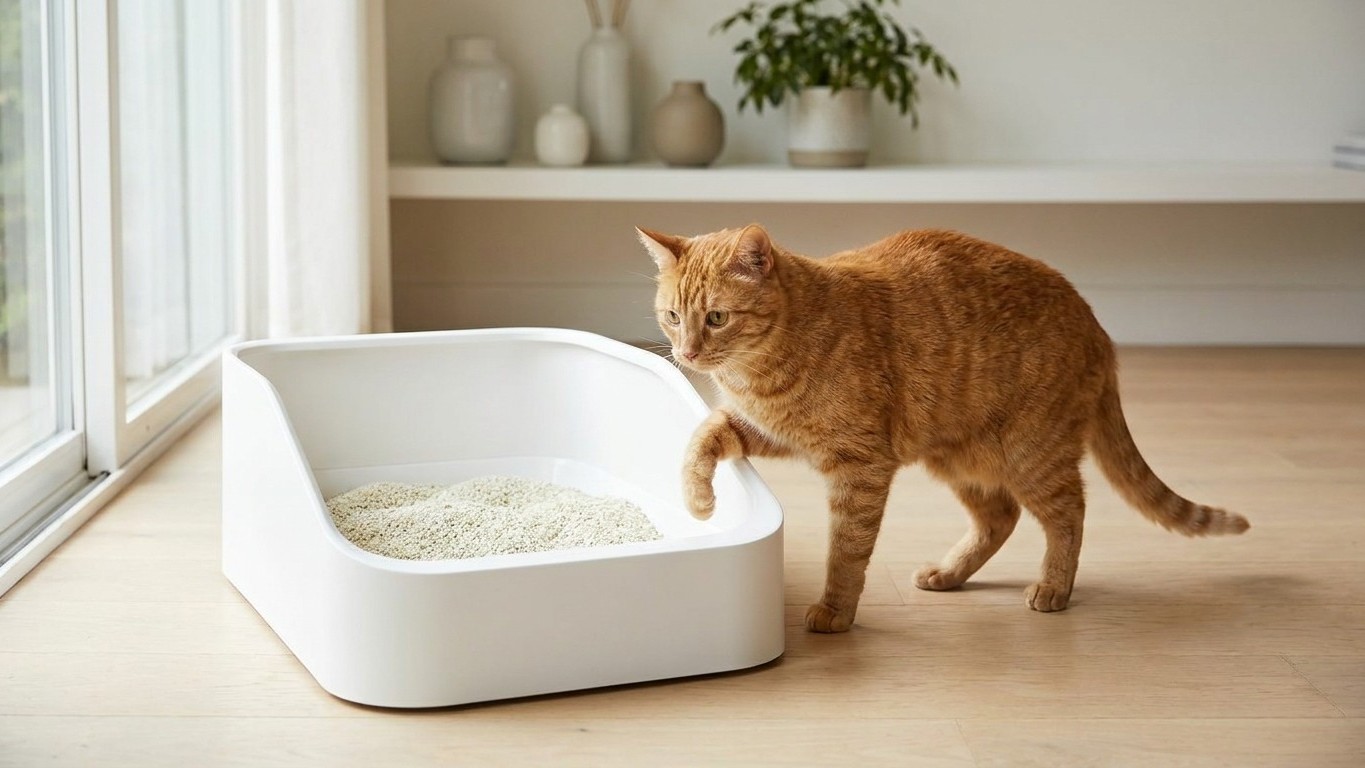
One extra litter box. That’s the entire secret. When a vet finally explained the “number of cats plus one” rule to a friend of mine whose flat had turned into a peculiar minefield of stray puddles despite a spotless tray, the penny dropped: a single clean box isn’t a solution if your cat doesn’t see it as theirs to use whenever they need it, without negotiation.
The rule itself comes straight from feline medicine, not from an internet myth. The rule of thumb is one litter box for each cat plus one additional box, or one litter box for each social group plus one additional box, if the number of social groups is known. So one cat needs two boxes, two cats need three, three cats need four, and so on. It sounds almost comically generous until you Understand the psychology behind it.
Key takeaways
- A vet’s golden rule about litter box quantity changes everything—but most cat owners have never heard of it
- Your cat isn’t being difficult: it’s about territory, not hygiene, and one detail explains why puddles appear right beside a spotless box
- The surprising reason two litter boxes in the same room don’t count as two resources, and where placement actually matters
Why “clean” isn’t the same as “available”
Here’s what nobody tells new cat owners: scooping the tray twice a day solves the hygiene problem but not the territory problem. Cats are solitary hunters by nature, and their sense of territory plays a central role in how they interact with their environment, and research shows that even in multi-cat households where animals are friendly with one another, each cat still prefers to control its own resources, including litter boxes. A tray isn’t just a toilet to a cat. It’s a signpost, a scent-marked outpost that says “this patch is mine.”
Providing multiple litter boxes reduces competition and the potential for one cat to guard the litter box, which can lead to stress or inappropriate elimination behaviors. In practice this means a confident cat can simply sit near the entrance to the tray, radiating quiet menace, and a more timid housemate will hold on for hours rather than risk the confrontation. Eventually the bladder wins the argument, and it happens two feet from the box because that’s as close as the anxious cat dared to go.
Cleanliness still matters enormously, mind you. A study published in the Journal of Veterinary Behavior found that cats prefer clean litter boxes over dirty ones, regardless of which cat used the box previously, which underscores the importance of maintaining clean litter boxes in multi-cat households. One vet quoted by PetMD puts it bluntly: “I use the analogy of a Porta Potty. Who wants to use one of those when it’s dirty, and you can smell it before you see it?” But a spotless single tray in a multi-cat home is still, socially speaking, a bottleneck.
The placement trap that ruins the maths
Getting the number right only half solves it. Where you put those boxes matters just as much, and this is where most of us go wrong even after buying an extra tray. Two boxes shoved side by side in the utility room don’t count as two resources in a cat’s mind. Guidelines recommend placing boxes in different locations rather than side by side, because cats often view adjacent boxes as one shared resource, which defeats the purpose of having multiple boxes. Spread across rooms, or ideally across floors if you’ve got stairs, each tray becomes its own territory that a shy cat can claim without walking past a rival.
Size is the other quiet culprit. Most shop-bought trays are built to fit supermarket shelving, not actual cats. It is recommended that the litter box be at least one and a half times in size based on the length of the cat from nose to tip of the tail, which means most manufactured boxes are not large enough. A study cited by feline behaviourists found something similar: cats significantly preferred larger litter boxes (86 cm by 39 cm) compared to smaller ones (56 cm by 38 cm), suggesting that providing spacious litter boxes can enhance comfort and encourage proper use. If your cat perches on the rim rather than stepping fully in, that’s often the real complaint, not the cleanliness at all.
Location, food bowls, and the trigger nobody mentions
Cats also refuse to toilet near where they eat, which sounds obvious once you say it aloud but catches out plenty of well-meaning owners who tuck a tray into a corner of the kitchen for convenience. Keep food and litter well apart. Noisy utility rooms, draughty hallways, spots near a boiler that clunks on unexpectedly: all of these can turn a technically “available” box into one your cat quietly avoids, preferring the eerie stillness of the guest room carpet instead.
This is precisely why the extra “plus one” box matters even in a single-cat household. It’s not there to double the cleaning workload for no reason. It’s insurance. If one tray becomes soiled, or a door swings shut, or the resident cat simply develops a fussy preference for peeing in one and doing Everything else in another, the spare box means there’s never a moment where the only option feels wrong.
When it really isn’t about the box
None of this replaces a vet visit, and I’ll say that plainly because it’s the single most important line in this whole piece. Sudden changes in toilet habits are one of the classic early warning signs of a genuine medical problem, particularly in male cats, where a blocked bladder can turn life-threatening within hours. Cats may urinate over the edge of the litter box if it’s too dirty, too small, or uncomfortable to use, and in other cases, pain, arthritis, weakness, or other mobility problems can make it difficult for a cat to squat normally, causing urine to go over the edge of the box. Straining, crying while urinating, blood in the urine, or a cat that simply can’t produce anything at all: these are emergencies, not quirks, and they need same-day veterinary attention rather than a bigger litter tray.
If your vet has ruled out infection, crystals, kidney disease and arthritis, and the puddles keep appearing right beside an apparently spotless tray, go back to the maths. Count your cats, add one, check the boxes aren’t lined up like buses on the same street, and measure whether the tray would actually fit your cat lying flat inside it, tail included. Nine times out of ten, that combination, not another round of scrubbing, is what finally stops the puddles.
Sources : scienceinsights.org | justcatsclinic.com