
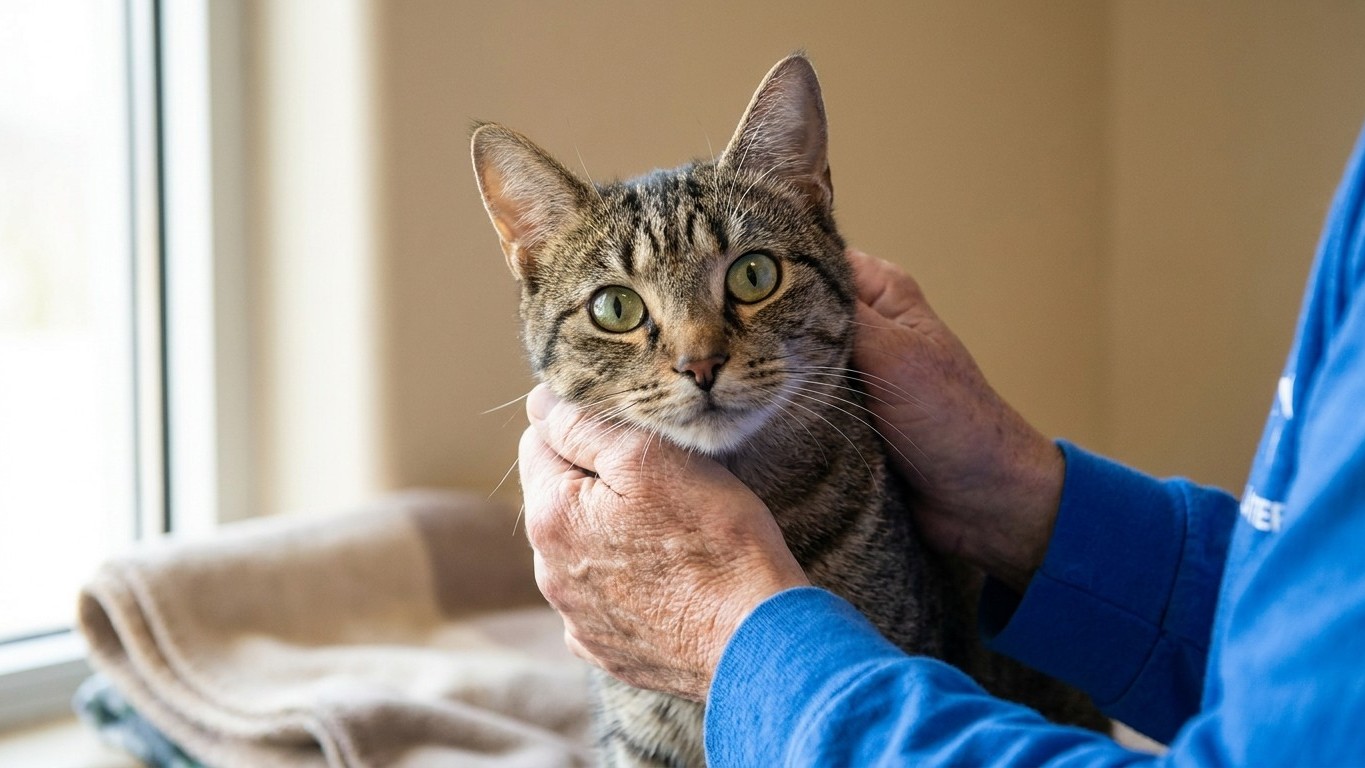
Five days. Five agonising days of posting on neighbourhood Facebook groups, shaking a treat bag at the back door and lying awake catastrophising. And then a shelter rings, your cat’s been found. Relief floods in, followed almost immediately by something much more uncomfortable: the address attached to the microchip is the one you left three years ago. The shelter had to play detective to track you down. Your cat was safe. The system, though, had quietly failed.
This scenario plays out across the UK with depressing regularity. Many cats simply cannot be reunited with their owners because contact details are out of date. The microchip is there, doing its job, a scanner picks up the number in seconds, but the system’s effectiveness depends entirely on accurate and up-to-date information. If contact details are outdated, even a scanned chip may fail to reconnect pets with their families. A chip with a stale address on it is, as one microchip registry chief once put it, “like having a Social Security card with no name on it.”
Key takeaways
- A cat went missing for five days and was found by a shelter, but the microchip led to an abandoned address
- Microchips aren’t GPS trackers—they only work when someone scans them and the database has your current number
- Since June 2024, all cats in England must be microchipped by 20 weeks old, but many owners never update their contact details
How the microchip actually works (and what it can’t do)
A small microchip inside medical glass is inserted just under the skin, typically between the shoulder blades. The whole thing is approximately the size of a grain of rice, around 12mm long. No battery, no moving parts, no signal pinging to a satellite. This last point trips people up constantly. Microchips are not GPS trackers. They cannot show your cat’s location in real-time. They only work when scanned by a compatible reader at veterinary practices, animal shelters, and rescue centres.
So the chain of events relies entirely on a human picking up your cat, taking them to a vet or shelter, the staff there scanning the chip, and then, this is the critical link, the database returning a phone number that actually connects to you. Scanning the cat gives a unique serial number that is checked against the relevant microchip database, which contains contact details for the cat’s owner. The owner is called, and they can be reunited with the cat, typically within a matter of hours. “Typically within hours” only holds if your number hasn’t changed since the Blair era.
There’s a further complication many owners don’t realise: in the UK, there are many different microchip database companies, so it’s important to make sure that your cat is registered with one approved by the UK Government. Your cat might be chipped but registered on a database you’ve long forgotten about, with login credentials sent to an email address you haven’t used since 2019.
The law changed, and it now applies to cats too
As of June 2024, it is now a legal requirement that all pet cats in England are microchipped before they reach the age of 20 weeks. This brought cats in line with dogs, for whom microchipping has been compulsory since 2016. The microchipping law has only been introduced in England at the current time, but Cats Protection continues to campaign for this same approach to be introduced in Wales, Scotland and Northern Ireland.
The fine for non-compliance is steep: failing to have a cat microchipped can lead to a fine of up to £500 and will delay the return of the cat in the event they go missing. But here’s what the legislation also demands, and what far fewer owners pay attention to: as part of the new rules, you must keep your contact details up to date on a Defra-approved microchipping database. Chipping your cat and never logging into that database again is not legally compliant, and it is certainly not practically useful.
Before the June 2024 law came into force, the gap in coverage was stark. Around three-quarters of pet cats in the UK were believed to be microchipped, which still meant that approximately 2.4 million pet cats were not microchipped. The law has pushed that figure in the right direction, but a chip with wrong details attached is only marginally better than no chip at all.
Updating your details: genuinely five minutes of your life
The barrier here is usually not cost or effort, it’s simply that people forget it needs doing. Moving house triggers a cascade of admin: redirect your post, update your bank, notify your GP, transfer your car insurance. Telling a pet database? It slips the list entirely.
If you move house or change your phone number, you must tell the database you’re registered with so that they have your up-to-date contact details. It can be near impossible to reunite pets with their owners if the owner cannot be contacted. The process itself is straightforward. Keep your cat’s microchip number stored safely. Not sure what it might be? Call your vet to see if they have it in their records, or take your cat to the vet to have them scanned. Once you have the number, you may be able to check which database your cat is registered with by entering their microchip number into the Identi look-up tool. Then go to the database’s website to change your address or phone number.
Some databases charge a small fee for updates; others are free. Changing your contact details on a cat microchip database can sometimes mean paying a fee. Depending on the database, this might be a one-off fee for the lifetime of your cat, or a cost every time you update. Either way, it’s far less painful than five days of frantic searching and an apologetic phone call from a shelter.
One smart habit: set a recurring reminder in your phone calendar for the same week every year : National Microchipping Month falls in June, which makes a tidy anchor — to simply log in and confirm your details are still correct. Some lost pets brought to shelters have microchips that aren’t linked to their family’s contact information, or lead to a disconnected phone number. Providing multiple ways to contact you helps ensure that if your missing pet is found, you can be reunited as quickly as possible. Adding a second contact, a partner, family member or trusted neighbour, costs nothing and doubles the chances of someone picking up that call.
There is one statistic worth sitting with. Research published in the Journal of the AVMA found that one in 50 cats in animal shelters was returned to their owner without a microchip, but when microchipped, nearly two out of five cats were reunited with their families. The chip makes an enormous difference. The database makes the chip worth anything at all. And keeping that database current? That’s simply the part too many of us treat as optional, right up until a shelter rings and asks if we still live at an address we vacated years ago.
Sources : check-a-chip.co.uk | avma.org