
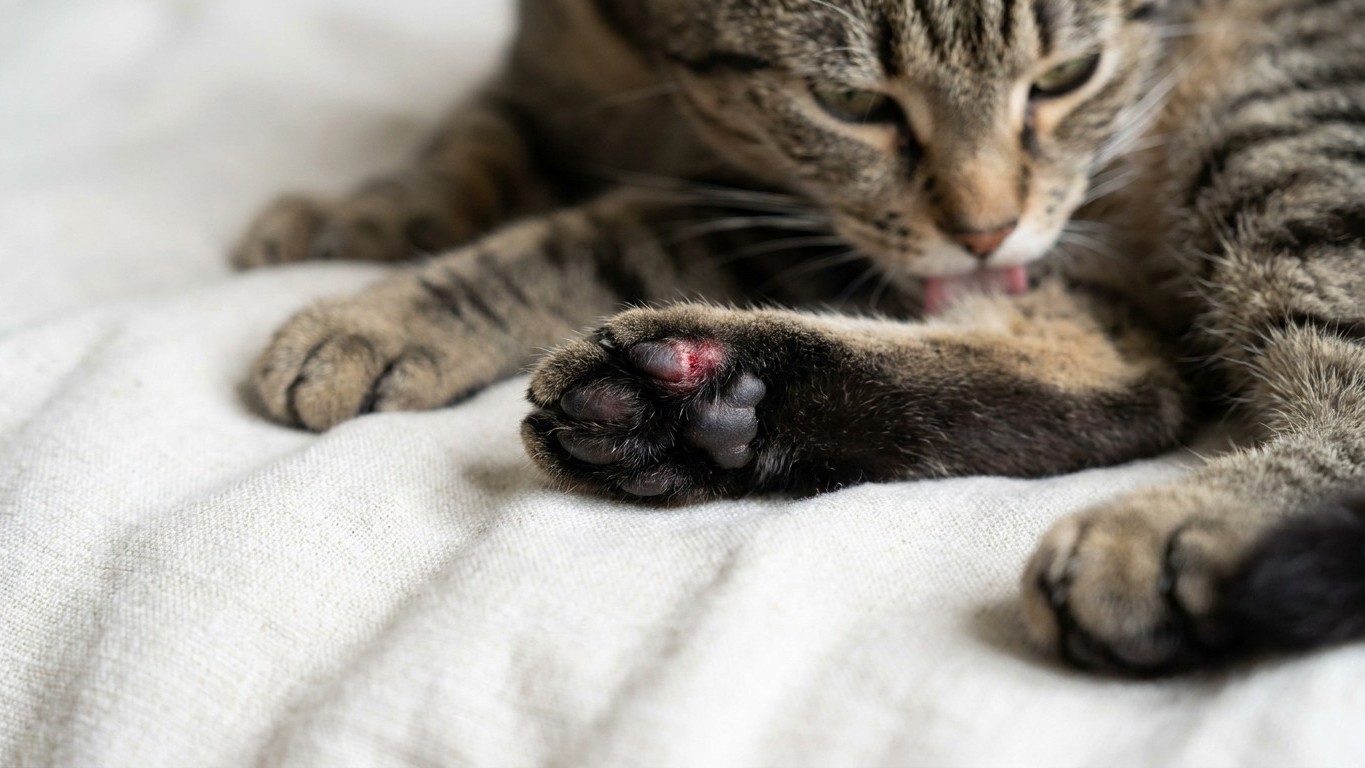
A cat wandering home from the garden with a swollen paw looks like a minor nuisance, a little limp, maybe some pawing at the foot, nothing to ring the alarm bells about. But that tiny puncture mark could mean a bee stinger is still embedded in the skin, quietly pumping venom into your cat’s body long after the insect has gone. A bee’s stinger can continue pumping venom into the wound for up to three minutes after the sting occurs. Three minutes doesn’t sound like much, but when you’re dealing with a small animal and a concentrated toxin, that’s a meaningful amount of venom spreading systemically — which is exactly what a vet might mean when they say the venom is already “spreading.”
Key takeaways
- A bee’s barbed stinger remains embedded in skin, continuously injecting venom for up to three minutes after the sting
- Most cat stings happen on the paw when they try to catch the insect—but hidden signs of pain mean owners often miss the injury
- Anaphylactic shock can develop within 15–20 minutes and get worse with each sting, turning a ‘minor’ incident into a medical emergency
Why the paw is ground zero
Most cats get stung on their face or a paw, this is because they’re usually trying to catch the insect that bites or stings them. It’s pure predatory instinct: a bee buzzing along a flower border is just an irresistible, wing-flapping toy as far as your cat is concerned. The paw makes first contact, and that’s where the sting lands.
Unlike wasps, a bee’s stinger, covered with barbs, gets stuck in the skin when it stings, and the bee then dies and injects all its venom into the skin. Wasps, by contrast, do not usually leave a stinger in the skin, but they compensate by being able to sting multiple times. Wasps keep their stingers intact, which makes it possible for them to sting their victims multiple times, which could increase the danger to your pet. Two very different mechanics, but both capable of triggering a serious reaction.
A cat bee sting on the paw can be painful and may cause limping. You might also notice your cat licking obsessively at one foot, holding it slightly off the ground, or becoming unusually quiet and withdrawn. Cats are very good at hiding when they are in pain, so some signs of having been stung may be very subtle if displayed at all. This is precisely why a paw sting can catch owners off guard, what looks like a mildly grumpy cat pottering indoors might actually be an animal in real Discomfort.
When “just a sting” becomes a genuine emergency
If your cat gets stung by a bee or wasp, they’ll usually experience pain, irritation and mild swelling at the site of the sting, just as a human would. In most cases, this discomfort should ease after a short period of time. That’s the reassuring version of events. The less reassuring one is anaphylaxis.
Anaphylactic shock is a rare, life-threatening, immediate allergic reaction to an insect sting. The most common signs occur within seconds to minutes after exposure, and include severe respiratory distress and the sudden onset of diarrhoea, vomiting, excessive drooling, excitement, incoordination, shock, seizures, coma, and death. The venom itself isn’t what causes this cascade, it’s the immune system’s overreaction to it. During an anaphylactic reaction, the immune system floods the body with chemicals that cause inflammation. These chemicals have a negative effect on breathing, blood flow and the gut. The body’s cells do not get enough oxygen and nutrients to function properly, and many organs can be damaged as a result.
Some allergic reactions cause mild symptoms, but others can be very severe, and can cause severe symptoms (anaphylaxis) within just a few minutes, similar to the life-threatening reaction some people have with nuts. One particularly unsettling fact: some allergic reactions get worse each time they happen, so if you know your cat is allergic to something, it’s important to keep them protected and get help quickly if you see one developing. A cat that sailed through a sting last summer is not necessarily safe this summer.
Watch for these warning signs after any suspected sting: severe and rapid swelling around the bite or sting site, hives or a severe rash, rapid breathing or breathing difficulties, and vomiting and diarrhoea. Within 15–20 minutes, your cat might show signs of anaphylaxis, including swelling, weakness or pale gums. Pale gums in particular are a red flag no cat owner should ignore.
First aid at home: what to do (and what not to do)
Stay calm, your cat will pick up on your stress. The first priority is removing the stinger if it’s visible. Don’t try to remove it with tweezers or by squeezing it out, as you could accidentally release more venom from its sac. Instead, scrape over the area with a clean, rigid piece of card to remove the stinger.
Once the stinger is out, the type of insect matters for your next step. Bee stings are slightly acidic, so a simple home remedy such as bicarbonate of soda paste, one teaspoon of bicarbonate of soda mixed with one teaspoon of lukewarm water — may help ease symptoms. Unlike bee stings, wasp stings are alkaline, so dab a spot of vinegar onto the affected area with a small wad of cotton wool to help neutralise the sting. Home remedies such as vinegar for wasp stings and bicarbonate and water for bee stings do no harm, however they may not relieve the symptoms as much as we think they do.
After that, a clean cloth or tea towel run under cold water used as a cooling pad can help ease discomfort and swelling. Applying ice or a bag of frozen veg wrapped in a cloth will have the same effect, but try not to shock and further distress your cat with the sudden change of temperature.
Antihistamines can help reduce swelling, but you should contact your vet before giving your cat any medication. Your vet will advise whether an antihistamine is appropriate for your cat and ensure you’re giving the right drug and dose. This cannot be emphasised enough, some over-the-counter human antihistamines contain ingredients that are toxic to cats. Never self-medicate without speaking to a vet first.
What the vet will do, and how to prepare
If your cat has been stung but appears bright and not overly traumatised, it is usually safe to monitor them at home. However, if they are becoming distressed, or you are at all worried, do not hesitate to contact a vet for advice. Signs of a severe or allergic reaction can still appear up to 24 hours after a sting, so don’t assume your cat is in the clear after an hour of calm behaviour.
At the clinic, treatment will depend on the severity of the reaction. If your cat is having a severe allergic reaction, they may need intensive care in the veterinary hospital. This is likely to include strong doses of anti-inflammatories straight into their bloodstream, antihistamines, a fluid drip and, if necessary, breathing support. If they are treated quickly, their outlook is likely to be good, but left untreated, severe allergic reactions can be fatal.
Cats that experience anaphylaxis should be monitored closely by a veterinarian for at least 48–72 hours after the reaction. It’s important they are observed for an extended period because clinical signs can improve and then quickly reappear after several hours. That rebound effect is something many owners don’t realise is possible, a cat that seems to recover at the clinic may relapse at home if discharged too quickly.
One thing worth doing even after a mild sting with no dramatic reaction: let your vet know your cat was stung, and if you know what type of insect it was, include that information too. That way, it’s in their medical record for the future. Should your cat ever be stung again, that history could help a vet act faster. Unfortunately, it’s not possible to predict whether a cat might have an anaphylactic reaction before they experience one for the first time, but once you know they’re sensitive, you can plan ahead with your vet for how to handle the next encounter before it happens.
Sources : dialavet.com | merckvetmanual.com